
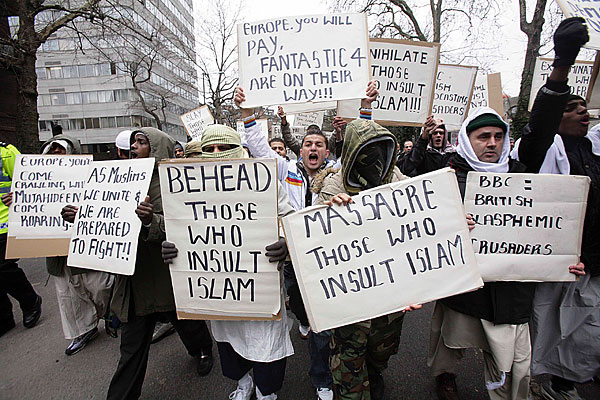
 I am persuaded that a civil war in the U.K. is becoming increasingly inevitable. It’s a sure bet that the kingdom will be engulfed in a major civil war that no developed country has suffered in modern times. Give it at most five years. Before the year 2030 to be specific. That civil war will be the opening shot of a war that will either be the end of civilization or end Islam. It’s a binary, not an analog, outcome.
Since humanity is too resilient to end by 2030, that only means that Islam is poised at the beginning of its end. Give it another 10 years, by 2040 Islam will be over.
Since the loss of its empire in the mid-20th century, the U.K. has been declining dramatically. For reasons I cannot fathom, its leaders (particularly post the Margaret Thatcher era) appear to be hell-bent on committing civilizational suicide. They opened the gates to barbarians from Islamic nations, particularly from Pakistan and Bangladesh.
What the hell is wrong with the British? What are they thinking, for crying out loud!
The U.K. is no stranger to religious wars in centuries past. In the 17th century CE, there were the First, Second and Third English civil wars in England, and concurrent wars in Scotland and Ireland. The latter wars involved religious conflict. Continue reading “The Upcoming Civil War in the U.K.”



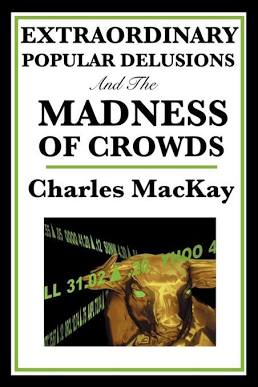 Instances of mass hysteria, herd behavior, and financial bubbles may seem to be modern afflictions though actually they have been around for hundreds of years. In 1841, Scottish journalist Charles Mackay investigated them and published his findings in his 1841 book “Memoirs of Extraordinary Popular Delusions and the Madness of Crowds.”