
 If you know anything about me at all, you’d know that I have an uncommon attachment to music. My taste in music ranges all across the spectrum: from classical to pop, Western and Indian, vocal, instrumental, trance, electronic, world music, and everything in between.
I have a good ear for music, and I like to think that my musical taste is sophisticated. I can reliably tell if a note is wrong, but I cannot for the life of me produce any music. I am glad that I’m alive at a time when an infinite quantity and variety of great music is available whenever and whenever I want.
We all are amazingly lucky.
One of my favorite composers is the late Ennio Morricone (1928–2020). He was one of the most versatile, prolific, and influential composers in cinema history. In a career spanning more than six decades, he composed over 400 scores for cinema and television, and more than 100 classical works. (See note [1].)
I first encountered Morricone’s music thanks to the spaghetti Westerns that showed up in Indian movie theaters when I was growing up. Those Westerns were directed by another Italian, Sergio Leone. As it happens, Sergio and Ennio grew up in Rome, and were classmates in elementary school in the 1930s. How great is it that one gets to professionally collaborate with a childhood friend!
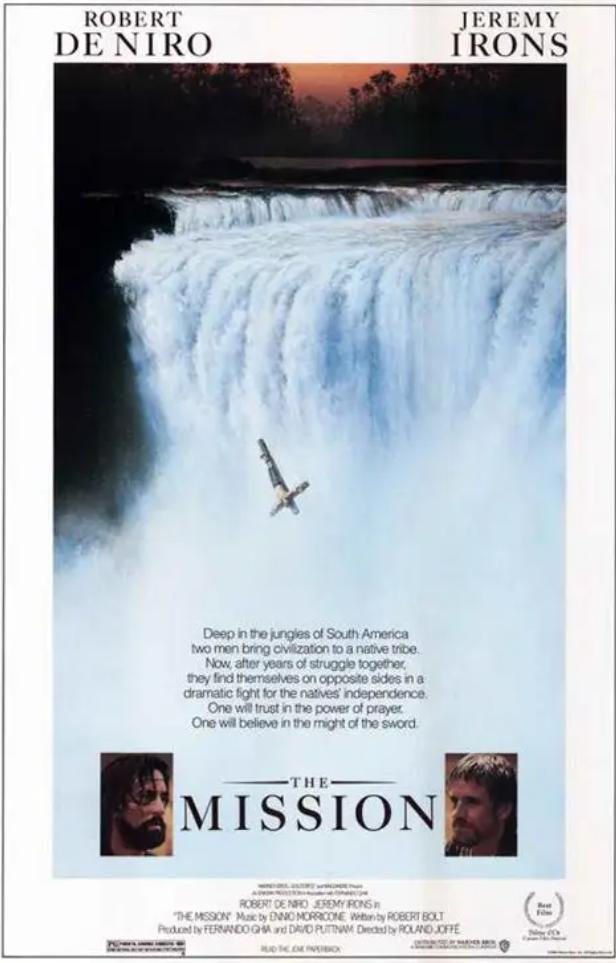
Of all the scores that Morricone did, I love the score for the movie The Mission (1986) the most. That is the focus of this post. You may ask, what gives me the right to opine about music since I am only a music consumer and not a recognized expert music critic? I claim that right because I love it.
Let’s talk about the score for The Mission. When director Roland Joffé screened a rough cut of the movie for Morricone in London, the composer was moved to tears. Morricone told Joffé that the film was already too beautiful and that any music he wrote would only ruin it. Therefore he would not write the music.
Persuaded to reconsider, Morricone delivered what is one of the greatest cinematic scores ever composed: a breathtaking fusion of European sacred counterpoint, South American indigenous percussion, and pure melodic lyricism. (Source: Gemini.)
Let’s listen to that track.
One of the comments to that YouTube video says, “God sent Morricone to us to create music on earth as it is in heaven.” I agree.
The core musical theme is titled “Gabriel’s Oboe.” Father Gabriel (played by Jeremy Irons) is a dedicated 18th-century Spanish Jesuit missionary who ventures into the South American rainforest above Iguazu Falls to establish a mission among the indigenous Guaraní people.
He embodies Christian pacifism. His initial breakthrough is through his oboe in the jungle. Here’s a bit from the movie. This moves me to tears.
Naturally, I ask my friends to watch The Mission. It is a complex movie about faith, pacifism, redemption and martyrdom. I love those aspects of Christianity. Only it among the three world religions values the virtues that are congruent with the virtues the dharmas promote.
Back to Gabriel’s oboe. Here’s maestro Morricone conducting “Gabriel’s Oboe.”
Now we have Henrik Chaim Goldschmidt playing the song.
That’s an old man. Definitely he plays it well. But what about a young one? Here’s a young oboe player Maja Łagowska, conducted by Andrzej Kucybała
And now a 10-year-old playing the oboe:
That’s awesome. Now two women, Mari Samuelsen and Sylvia Schwartz with their rendition of “Nella Fantasia.” Mari is wonderful. Previously I posted a bit from Vivaldi’s Four Seasons by her.
How did we transition from Gabriel’s Oboe to Nella Fantasia? The story is that Sarah Brightman pestered Morricone.
In the mid-1990s, soprano Sarah Brightman fell in love with the piece and envisioned it with operatic vocals. Morricone viewed the instrumental purity of “Gabriel’s Oboe” as complete on its own. He flatly refused.
But Brightman she recounted: “So, every two months I would send yet another begging letter, until I think he became so sick of me that he finally relented. And I am really glad that he did, because I think it works beautifully as a song.”
Let’s listen.
Italian lyricist Chiara Ferraù wrote the poetry (“In My Fantasy”). The lyrics reflect a humanist, utopian longing—dreaming of a world where all souls are free and filled with compassion, echoing the spiritual ethos of The Mission.
Here is the translation of the Italian lyrics:
In my imagination, I see a just world
There everyone lives in peace and honesty
I dream of souls that are always free
Like clouds that fly
Full of humanity in the depths of the soul
In my imagination, I see a bright world
There even the night is less dark
I dream of souls that are always free
Like clouds that fly
In my imagination, there is a warm wind
That blows over the cities, like a friend
I dream of souls that are always free
Like clouds that fly
Full of humanity in the depths of the soul
The original Italian lyrics are here. [Note 2.]
Many excellent vocalists recorded the song. Here’s Chloe Agnew from the Celtic Woman group. I rate Chloe’s version above Sarah’s. The way she holds that pure note at 1:00 timestamp is breathtaking.
But let’s not restrict ourselves to female singers. Here’s Andrea Griminelli.
And a tenor, Glen Ward.
And another. Nathan Pacheco.
I’d like to wrap up this piece with strings. Cello and violin.
Be well, do good work and keep in touch.
This post is brought to you in appreciation of my friend APD, and one of my esteemed virtual economics teachers Prof Pierre Lemieux.
NOTES
[1] From the wiki:
Morricone’s filmography includes more than 70 award-winning films, all of Sergio Leone’s films from A Fistful of Dollars on, all of Giuseppe Tornatore’s films since Cinema Paradiso, Dario Argento’s Animal Trilogy, as well as The Battle of Algiers (1966), 1900 (1976), La Cage aux Folles (1978), Le Professionnel (1981), The Thing (1982), The Key (1983) by Tinto Brass and Tie Me Up! Tie Me Down! (1989). He received the Academy Award for Best Original Score nominations for Days of Heaven (1978), The Mission (1986), The Untouchables (1987), Bugsy (1991), Malèna (2000) and The Hateful Eight (2015), winning for the last.[4] He won the Academy Honorary Award in 2007.[5] His score to The Good, the Bad and the Ugly (1966) is regarded as one of the most influential soundtracks in history.[6] It was inducted into the Grammy Hall of Fame in 2008
[2]
Nella fantasia io vedo un mondo giusto
Lì tutti vivono in pace e in onestà
Io sogno d’anime che sono sempre libere
Come le nuvole che volano
Pien d’umanità in fondo all’anima
Nella fantasia io vedo un mondo chiaro
Lì anche la notte è meno oscura
Io sogno d’anime che sono sempre libere
Come le nuvole che volano
Nella fantasia esiste un vento caldo
Che soffia sulle città, come amico
Io sogno d’anime che sono sempre libere
Come le nuvole che volano
Pien d’umanità in fondo all’anima


Thank you for this post. Very enjoyable!
LikeLike
Very nice post. Beautiful music!
LikeLike