
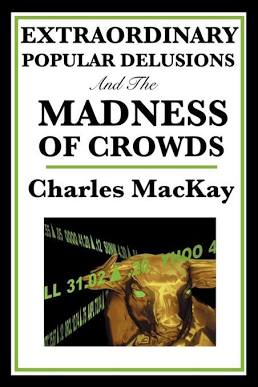
 Instances of mass hysteria, herd behavior, and financial bubbles may seem to be modern afflictions though actually they have been around for hundreds of years. In 1841, Scottish journalist Charles Mackay investigated them and published his findings in his 1841 book “Memoirs of Extraordinary Popular Delusions and the Madness of Crowds.”
His conclusion: “Men, it has been well said, think in herds; it will be seen that they go mad in herds, while they only recover their senses slowly, and one by one.”
MacKay wrote about sociological and psychological panics such as witch hunts across Europe that led to the horrifying deaths of thousands. His book has important lessons for economists and psychologists. It provided the early framework for understanding irrational exuberance, cognitive bias, and speculative contagion.
Financial bubbles had to wait till the financial system became sophisticated enough for them to infect it. The South Sea Bubble of 1720 is an example. Speculation in the South Sea Company in Great Britain involved even intelligent people—including Sir Isaac Newton, who said that he could “calculate the motions of heavenly bodies, but not the madness of people.”
Modern times, modern examples of manias. Most of us have heard of the Dot-Com bubble (1995 – 2000), and many including me have witnessed it play out. And then there’s the Cryptocurrency matter. It has had repeated serious drawdowns, leading to the collapse of leveraged lenders and exchanges. Crypto mini-bubbles and busts are a regular feature. I think quantum computers may deal the death blow to cryptocurrencies like Bitcoin.
Aside. Bitcoin has no intrinsic value. Buffet and Munger had absolutely no use for it. I think Bitcoin works for now because of the fear of missing out (FOMO) factor and the “Greater Fool” phenomena (that another buyer would pay a higher price tomorrow.)
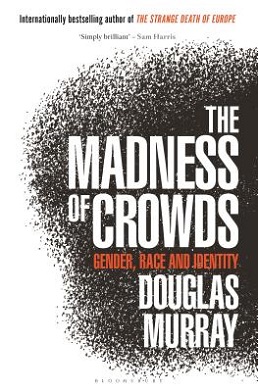 I admire Douglas Murray, the conservative British journalist, author, social critic, public intellectual and all-round good guy. His 2019 book “The Madness of Crowds: Gender, Race and Identity” is important in the modern context.
Although an atheist, Murray argues that with the decline of traditional structures such as religion and compassionate political dialog have been replaced with culture-war battles, identity politics and irrational victimhood narratives.
Murray, who is gay, examines how the gay rights movement, which was about equal legal rights, shifted into a dogmatic identity framework. He has disdain for modern feminism and sexual politics because it conflates equality of opportunity with biological sameness. He discusses how the goal of racial equality morphed into critical race theory which reinforces racial divisions instead of resolving them.
Martin Luther King, Jr.’s dream of a day when people will be judged not by the color of their skin but on the content of their character has been turned on its head. Now in the US and in the UK, people are judged solely on the color of their skin.

The recent Jason Arday affair epitomizes that insanity. An inveterate liar and an extreme fabulist, Arday was appointed solely because of his skin color, not because he was competent in any stretch of the imagination.
Climate Change
Then there’s the madness of climate change. It’s the most deranged hysteria that has consumed Western governments and is likely to cause immeasurable harm to the poorest of the poor. To put the world on a path to superabundance, we need energy from all the sources available to us. For now fossil fuels are the major source. Sure, in a decade or so, we could end our dependence on it but not until we get thousands of fission reactors on-line and hopefully fusion reactors.
I will put some links to my posts on the global warming hysteria. Later.
I am merely observing phenomena of mass madness and delusion. I confess that I am not qualified to analyze them. But this is a personal blog, not a peer-reviewed paper. You gets what you pays for.
So, what’s going on? A societal level psychosis where too many people lose contact with reality, experience hallucinations and delusions, and become incapable of clear thinking. How and why?
My guess is that much of the West is a victim of its own success. For too many people, life presents very few challenges. Physical comfort and material abundance have led people to seek something to fight for and fight against. To give meaning and purpose to their hollow existence, they have to invent monsters to fight. Racism in the West was dying but they had to breathe new life into it.
There’s ample evidence that wealthy white, liberal (American meaning of the word, not the classical meaning) women are guilty of inventing problems where none existed. But of course that does not mean that the men are blameless; they should have been a counter force but do not.
Loss of Meaning and Purpose
My sense is that the West has lost one of the anchors that stabilizes society: spirituality. Aleksandr Solzhenitsyn put it thus:
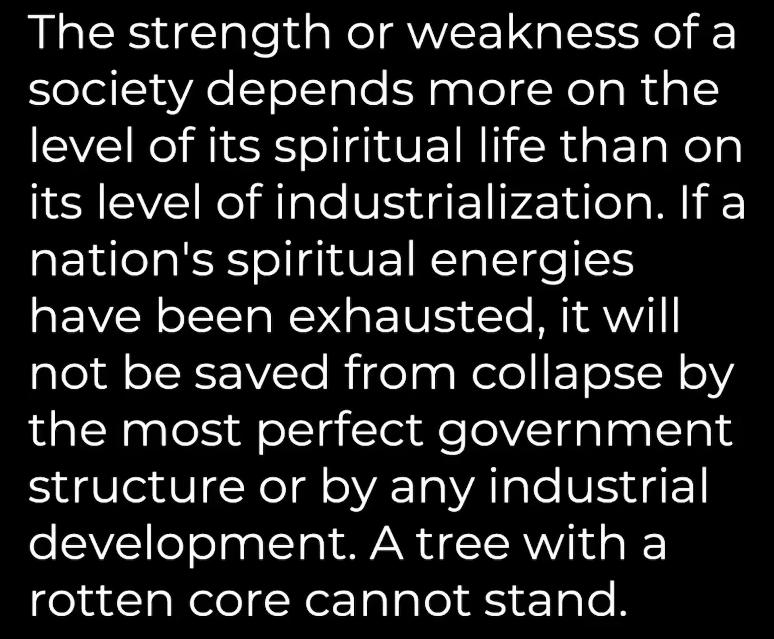 The strength or weakness of a society depends more on the level of its spiritual life than on its level of industrialization. Neither a market economy nor even general abundance constitutes the crowning achievement of human life. If a nation’s spiritual energies have been exhausted, it will not be saved from collapse by the most perfect government structure or by any industrial development. A tree with a rotten core cannot stand.
Spirituality
Though religion and spirituality are often spoken of in the same breath, I think there is an essential difference. Religion has been a source of solace and comfort in a world beset with material deprivation and powerlessness. But the modern world is too wealthy for religion to continue to exercise its control. Religion is about the next world, about heaven and hell, about a God who is the ultimate dictator. But now too many people are too educated to be enthralled by the promises that religion makes about the next world.
Spirituality is a journey undertaken here and now, an inner exploration of one’s self to answer questions like who am I and why am I here. Those questions provide the greatest challenge that anyone can face. It’s said that there are three levels of struggles. The first is man against nature; the second is man against man; and the third is man against himself.
After we have conquered nature, after we have overcome the challenge of dealing with others, we finally come to the ultimate challenge of facing ourselves. That’s what we need spirituality for: to know ourselves.
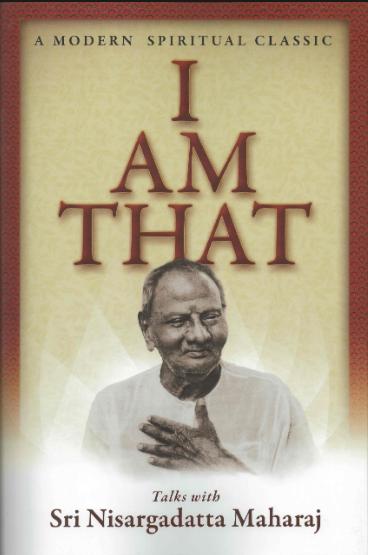 A few decades ago, I came across Nisargadatta Maharaj‘s book I AM THAT (published 1973.) Born in 1897, he passed away in 1981.
He was a family man, the owner-operator of a small corner store in Mumbai. He learned Advaita Vedanta from his teacher in his mid-thirties. After having finished his family duties by his fifties, he started speaking.
He did not write anything. He would just sit in his modest home and talk to people. His students collected his discussions and began publishing them.
I believe that Advaita Vedanta is the kind of spirituality that will rescue the world from the malaise that it has sunk into. I believe that the West is going through the problem of adjusting to a world of abundance.
Good news: popular delusions are temporary. All things pass, and this too shall pass.
Music time. A Small Adventure by Amethystium.
Be well, do good work, and keep in touch.


You make a wonderful connection between bubbles, Charles Mackay (one of my favourite books), Crypto Mania, and Advaita Vedanta. Buffett, who has made a fortune by being contrarian, famously says, “Be greedy when others are fearful and fearful when others are greedy.” It works both ways, although most of the work by economists has focused on the more common phenomenon of bubbles.
In 1979, BusinessWeek ran a cover story on the “death of equities,” essentially questioning the future of the stock market and, by implication, American capitalism. It is easy to be part of a bubble and painful to be a contrarian. Betting against the crowd is always emotionally difficult, while going along with the crowd feels much easier—and, ironically, can ultimately be far more financially painful.
Buffett himself has been sitting on a massive pile of cash for more than five years now, and yet the bubble continues. That, perhaps, is the hardest part of being a contrarian: being right about the eventual outcome does not tell you when it will happen – K
LikeLike