
 There’s a funny story in Robert Heilbroner’s 1953 book The Worldly Philosophers (which has been republished dozens of times):
One evening Keynes was having dinner with Max Planck, the physicist who was responsible for the development of quantum mechanics. Planck turned to Keynes and told him that he had once considered going into economics himself. But he decided against it – it was too hard. Keynes repeated this story with relish to a friend back at Cambridge. “Why, that’s odd,” said the friend. “Bertrand Russell was telling me just the other day that he’d also thought about going into economics. But he decided it was too easy.” Continue reading “Ask Me Anything — Is Economics Hard?”
 Probably because I associate trains with holidays when we were growing up I love trains. One time many years ago I even got to ride a diesel-electric locomotive hauling a passenger train in India — a rare treat. Thanks to YouTube, these days you can get a virtual ride in a locomotive. My favorite train-driver’s view channel is one that goes by the handle HinduCowGirl.
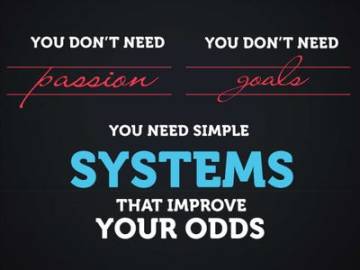 I like Scott Adams. He’s down to earth, quite clever, knows how to make it. His book How to Fail at Almost Everything and Still Win Big: Kind of the Story of My Life outlines his system. He says — and I agree 100% — that goals are for losers. Winners don’t set goals; they create a system, and then work as hard as they can. If you have a good system, you will make it. The focus is on the process, not the outcome.[1]
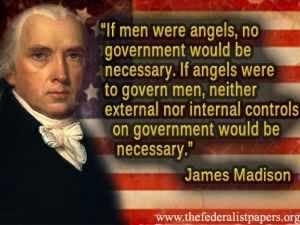 We take the existence of governments for granted. This is understandable since we have been under some form of government all our lives, and we also believe that some form of government must have existed for as long as recorded history. Government appears to be something as natural as the air we breathe, and therefore we are easily persuaded that it must be as necessary as air. Not just necessary but also that it is a net positive. This does not stand scrutiny, however.
 In the previous post,

 Economists understandably get worked up about the “Nobel” prize in economics (Nobel in quotes because it was instituted in 1968 by the Bank of Sweden “in the memory of Alfred Nobel,” unlike the Nobel prizes in physics, chemistry, medicine, literature and peace.)
 Atanu Dey : Life is a Random Draw