
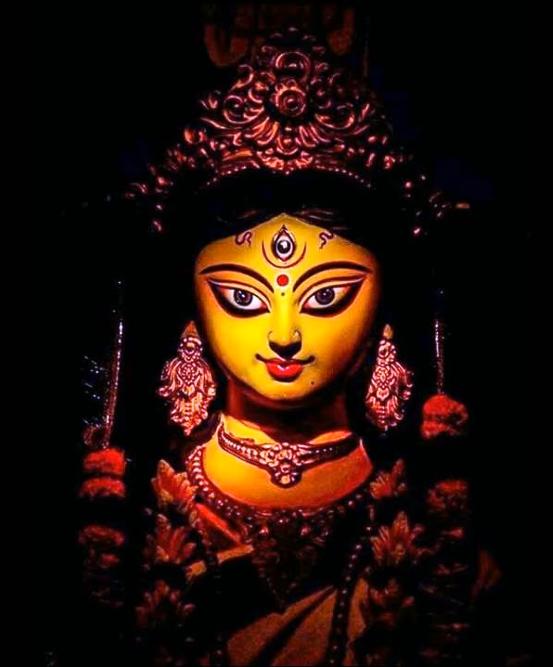
Today is Bijoy Dashami (or Vijay Dashimi) the final day of Durga Puja or simply pujo as we Bengalis call it. It is the most important festival for Bengalis.
Today, Durga, the beloved daughter of the family, returns to her husband’s home after visiting her maternal home for four days. The backstory goes thusly.
Durga is married to Shiva, an eccentric yogi who resides on icy Mount Kailash. He doesn’t care much for a domestic life. He hangs out with all sorts of characters who exist on the fringes of society.
Shiva’s day job is vital, though. He is the adi-yogi, the original yogi. He gave the world the knowledge of yoga. More than that, he is Nataraja, the king of dancers. Shiva as Nataraja dances the universe into existence and also dances it out of existence. The cycle of creative destruction has to go on.
That dance is known as the Tandava. It’s Shiva’s cosmic dance.
Durga as Shiva’s wife is known as Uma or Gauri. Though she is divine, she’s also a married daughter. Her parents are always a bit concerned about her. Is she doing ok on Mount Kailash? She needs a break, a holiday, doesn’t she? She’s asked to come home for a few days. She visits with her four children.
For four days during her visit, there’s sheer indulgence, feast, and celebration, mirroring how parents pamper a daughter during her brief holiday. The final day of her visit is Bijoya Dashami.
Durga occupies a unique dual identity. She’s a precious daughter and she’s also Mahisasuramardini, the invincible cosmic warrior who slays the demon Mahisasura. (See this post on Mahalaya for more.)
Durga is not approached with distant fear or detached reverence; she is held with fierce intimacy—both the protector of the cosmos and the cherished child whose absence leaves an ache until she returns the next year.
The iconography is fascinating.
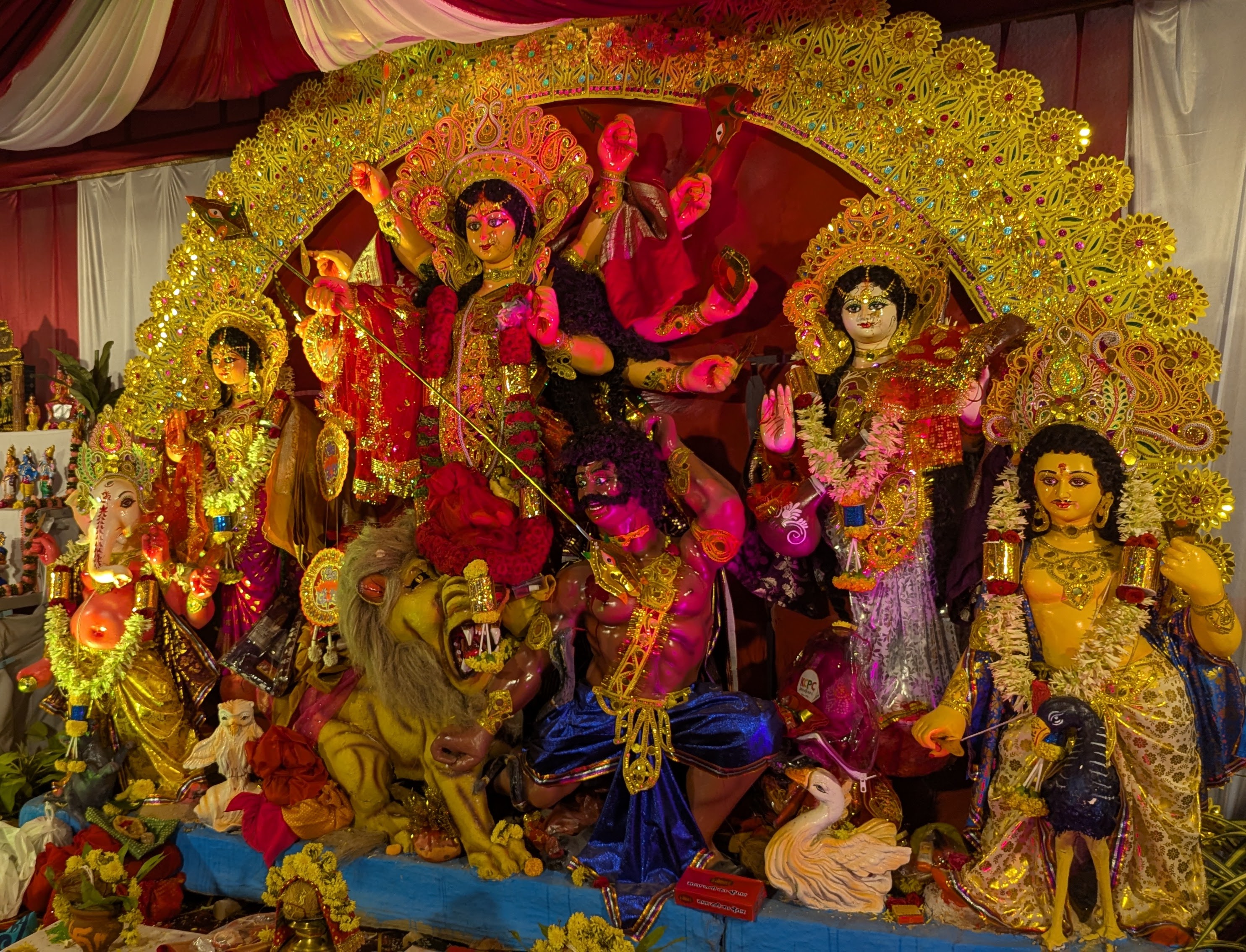
Unlike in other traditions, Bengalis have an elaborate tableau. Durga, in the center, is ten-armed. She has a tranquil expression even as her trident pierces Mahisasura, epitomizing effortless strength. The Bengali pratima depicts an entire familial household framed together under a single arch.
To Durga’s right is her daughter Lakshmi who symbolizes wealth, material abundance, and prosperity. To Durga’s left we have Saraswati who represents learning, music, and the fine arts. On the extreme right is Ganesha, the remover of obstacles. He represents wisdom. On the extreme left we have Karthikeya representing valor and youthful beauty.
Bijoya Dashami is the day we bid a deeply poignant farewell to the divine mother. The pratima is taken to a water body and returned to the elements from which it was built. That is called visarjan.
Once the immersion takes place, interpersonal reconciliation begins. Juniors touch the feet of elders (pranam), peers embrace (kolakoli), and differences are forgiven over plates of food.
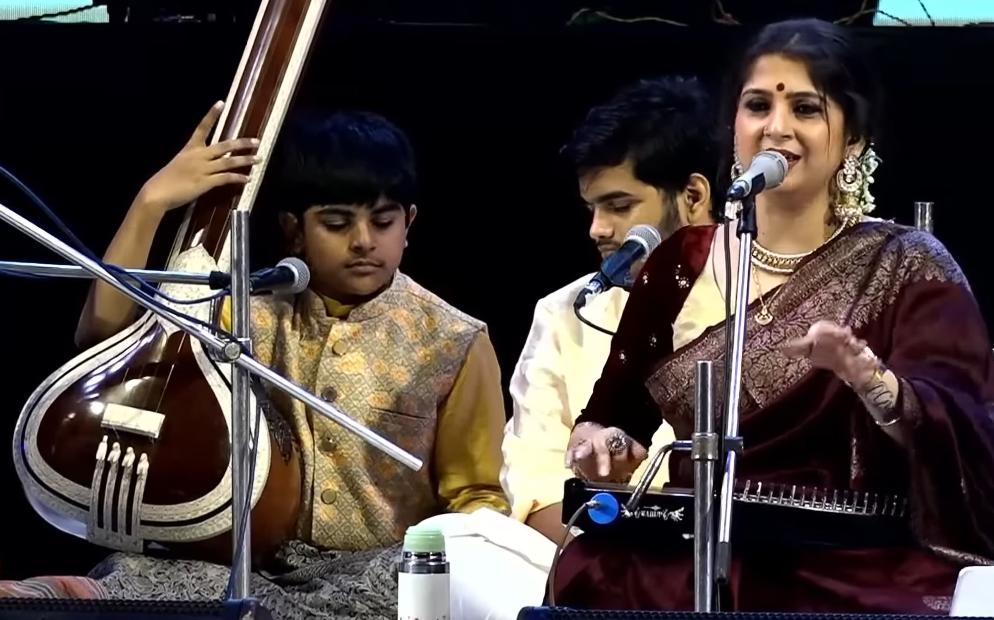 Time to listen to a classical piece. This is another daughter of Bengal, the incomparable Kaushiki Chakraborty. In this performance, sitting behind her on her right playing the tanpura (the drone) is her son Rishith.
I have cued up the video to the point where she starts the invocation “Jai Jai Jai Durge Mata Bhavani.” It means “Victory to Mother Durga, the giver of existence and source of life.”
I love it that she encourages, first, the pakhawaj (a type of drum) player and then the flautist to take the lead, and then invites her son to pitch in. The voices of both the mother and son are pretty similar since he’s still a boy. Click this link to go to the video on YouTube.
The recording is from a concert held in Kolkata called “Dugga Dugga Festival 2023.” (Dugga is an affectionate pronunciation of Durga.) Kaushiki speaks in Bangla when introducing her son.
Shubho Bijoya! everyone.


