
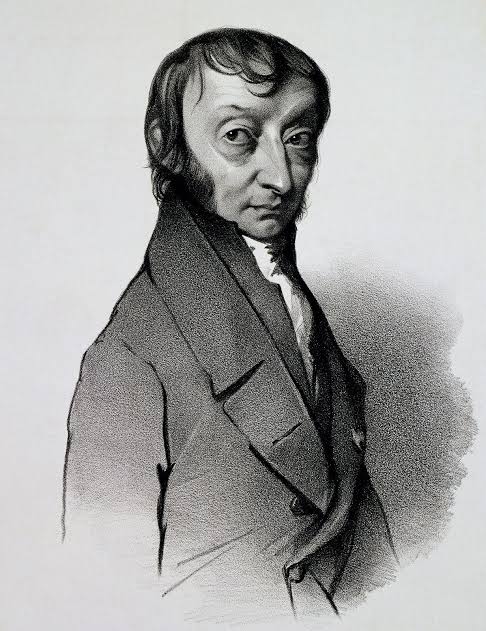
Today is Avogadro’s Day. October 23rd.
The most striking fact about Avogadro’s number is that Amedeo Avogadro never calculated it, nor did he ever suggest the specific value associated with his name today.
Instead, the number arose through a century-long detective story that bridged the gap between macroscopic chemistry and the microscopic reality of atoms.
In 1811, Italian physicist and lawyer Amedeo Avogadro published a paper addressing a dilemma raised by John Dalton’s atomic theory and Joseph Louis Gay-Lussac’s law of combining gas volumes. Avogadro proposed what is now known as Avogadro’s Hypothesis:
Equal volumes of all gases, at the same temperature and pressure, contain the exact same number of molecules.
Avogadro realized that gaseous elements like hydrogen, oxygen, and nitrogen travel as diatomic pairs (H2, O2, N2) rather than isolated atoms. While revolutionary, his proposal was largely overlooked for nearly half a century because contemporary chemists conflated atoms with molecules. Continue reading “Avogadro’s Day”

