
Lots of stuff happening on (and around) the same day.
Sharad Purnima
 Today it’s Sharad Purnima, a Hindu tradition. It is a harvest festival that is celebrated on the full moon day of the lunar month of Ashvin. It’s also called Kojagiri Purnima. It’s the birthday of Devi Lakshmi, and she is worshipped on this day. Also worshipped are Indra, and Shiva and Parvati. Lots of worshipping going on among Hindus.

Today it’s Halloween, a Christian tradition. The all-knowing Wiki says, “Halloween is the evening before the Christian holy days of All Hallows’ Day on 1 November and All Souls’ Day on 2 November, thus giving the holiday on 31 October the full name of All Hallows’ Eve (meaning the evening before All Hallows’ Day). … These three days are collectively called Allhallowtide and are a time for honoring the saints and praying for the recently departed souls who have yet to reach Heaven.”
Today we will also have a blue moon. And talking of time, today is the last day of Daylight Saving Time. Tomorrow morning at 2 AM, the clock will be set back to 1 AM. That will bring us back to Standard Time. I think this shifting of clocks business is insanely stupid. It makes no sense to keep shifting between DST and ST. Just stop this crap, people. Continue reading “Once in a Blue Moon”
 Economists are uniquely qualified in their understanding of one particular aspect of human activity, and that activity is unique to humans. No other animal trades, or exchanges, among its kind. Adam Smith wrote that “the propensity to truck, barter and exchange one thing for another is common to all men, and to be found in no other race of animals.” And no other discipline focuses on trade as much as economics does. Indeed, the most parsimonious description of economics is that it is the systematic study of trade, and trade-offs.
 In school I learned the basics of reading, writing and arithmetic reasonably well. That may be partly due to competent teachers, a stable family and school environment, and my being somewhat diligent. However, I am convinced that I would have learned a whole lot more if I had had access to the enormous number of excellent teachers and the virtually infinite amount of content on every conceivable subject we have available today: not in person but over the internet.
 If you need any more evidence that people in government are generally incompetent and cause immense harm due to their ignorance and stupidity, not to mention for the moment their obvious cupidity and greed, there’s no greater example of that incompetence than their handling of the Chinese virus, aka Covid-19, pandemic.
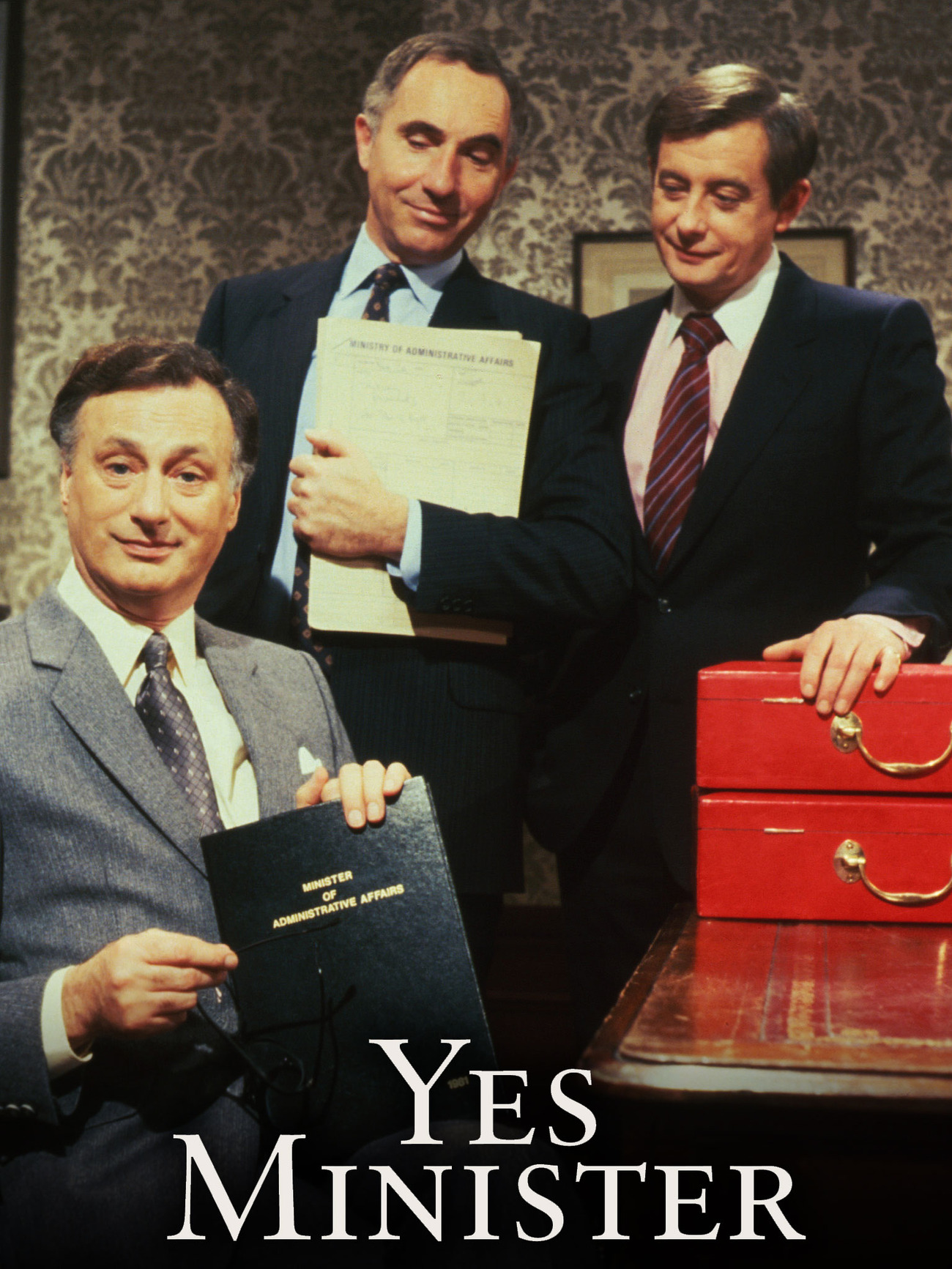 The cliché “they don’t make ’em like that anymore” can’t be more true about political satire than about the Yes, Minister (1980-84) and Yes, Prime Minister (1986-88) BBC TV series. When I first watched them on PBS, I didn’t have a clue about economics, and more particuarly about public choice theory — which Buchanan described as “politics without romance.” Now that I know the basic principles of economics and political economy, my appreciation of the series has deepened.
 Let’s start with a conjecture. The more rigid and government dominated a country’s education system is, the poorer the country; and conversely, the more flexible and accommodating the education system is, the more prosperous the country. India belongs to the first kind, and is remarkably poor; the US belongs to the second kind, and is remarkably prosperous.
 Among the infinite variety of things that people do, one of the most puzzling to me is the act of prayer. It’s some sort of a special communication. The message is addressed to some supernatural entity. If spoken, the message is transmitted magically to the realm where the entity resides — usually heaven. You don’t need the postal service, or the telephone, or any material medium. But prayer can be unspoken too: one just has to think in some particular way and once again magically it gets to that special being.
 Atanu Dey : Life is a Random Draw