Lockdowns — Part 3

Crime and Punishment — Fyodor Dostoevsky

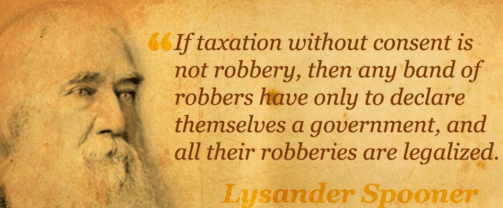
The Covid-19 pandemic resulting from the Wuhan virus has dramatically revealed state malfeasance amounting to criminality like nothing else has except for perhaps the world wars of the past century.

In the previous bits (Part 1 and Part 2), I made the moral argument against lockdowns and for freedom. In this final bit, I make the economics argument.

Governments across the world with some rare exceptions have imposed policies that are not only morally repugnant but have imposed enormous economic costs on billions of people. Especially for the extremely poor, those policies have had tragic consequences. They have probably killed (or will kill) millions more than the virus ever would have. Even in the rich populations, deaths of despair must have been devastating. Continue reading “Lockdowns — Part 3”

Enough

Joe Heller

True story, Word of Honor:
Joseph Heller, an important and funny writer
now dead,
and I were at a party given by a billionaire
on Shelter Island.

I said, “Joe, how does it make you feel
to know that our host only yesterday
may have made more money
than your novel ‘Catch-22’
has earned in its entire history?”
And Joe said, “I’ve got something he can never have.” Continue reading “Enough”

Waking Sleeping Giants

The US is the preeminent economic and military power in the world today. But the US began as a small nation of only 2.5 million people when it declared independence from the British in 1776. At that time, the US economy was 30% that of Britain. But that all changed. By 1920, America Had Become World’s Top Economic Power. Continue reading “Waking Sleeping Giants”

Untested Simplicity of the Villages

by Ram Dass

Is the vision of simple living provided by this village in the East the answer?  Is this an example of a primitive simplicity of the past or of an enlightened simplicity of the future?

Gradually I have to come to sense that this is not the kind of simplicity that the future holds.  For despite its ancient character, the simplicity of the village is still in its “infancy”.

Occasionally people show me their new babies and ask me if that peaceful innocence is not just like that of the Buddha.  Probably not, I tell them, for within that baby reside all the latent seeds of worldly desire, just waiting to sprout as the opportunity arises.  On the other hand, the expression on the face of the Buddha, who had seen through the impermanence and suffering associated with such desires, reflects the invulnerability of true freedom. Continue reading “Untested Simplicity of the Villages”

Lockdowns

The world has had to deal with the Wuhan virus of 2019 (aka Covid-19) for over a year and a half. Diverse policies have been tried to deal with it by various public and private entities. Of the lot, the worst is clearly the mandatory lockdowns — with varying degrees of severity — that most governments imposed on their populations.

Lockdowns are a terrible idea. Imposing them adds to the damage that the virus causes, directly and indirectly, and makes a pretty bad situation significantly worse.

There are two basic reasons for why lockdowns are bad. One is a moral/ethical argument, and the other is an economic argument. I believe the moral argument is sufficient by itself; the economic argument only strengthens the case against lockdowns — especially in poor countries. Continue reading “Lockdowns”

The Standard Model

“In 1967, Weinberg published a seminal paper laying out how two of the universe’s four fundamental forces — electromagnetism and the weak nuclear force — relate as part of a unified electroweak force. “A Model of Leptons,” at barely three pages, predicted properties of elementary particles that at that time had never before been observed (the W, Z and Higgs boson) and theorized that “neutral weak currents” dictated how elementary particles interact with one another. Later experiments, including the 2012 discovery of the Higgs boson at the Large Hadron Collider (LHC) in Switzerland, would bear out each of his predictions.”

That’s from the UT News obituary to Steven Weinberg (1933 – 2021), who passed away in Austin TX on July 23rd. A bit more from it: Continue reading “The Standard Model”

Breaking up Monopolies

In a comment to a recent post on monopolies, Viveka wrote, “I will cheer the day a Google or Amazon is broken up into a bunch companies. That day is not far off.”

As the old witticism goes, be careful what you wish for because you may get it. Don’t assume that the breaking up of very large corporations because they have market dominance is necessarily a  good thing. Large corporations are large for reasons that we may not appreciate — especially if we think like engineers. Engineering is a fine and necessary profession, and engineers have enriched the world in countless ways. But it has its limitations. Continue reading “Breaking up Monopolies”

Huxley, Freedom and Hinduism

“It is far better for a man to go wrong in freedom than to go right in chains.” That’s Thomas Henry Huxley (1825 – 1895), also known as “Darwin’s Bulldog” for his spirited advocacy of Darwin’s theory of evolution.

It’s fascinating to read about his life. With only two years of schooling, he left school at the age of 10 because his family was facing financial hardships. He is the greatest autodidact of the 19th century CE. His extraordinary achievements led him to be elected Fellow of the Royal Society, Fellow of the Royal Society of Edinburg, Fellow of the Linnean Society of London, and received many prestigious awards.

Fun fact: Huxley coined the English term “agnostic” in 1869. “It simply means that a man shall not say he knows or believes that which he has no scientific grounds for professing to know or believe.” The concept of agnosticism goes back to antiquity, however. The wiki says,

Sanjaya Belatthaputta, a 5th-century BCE Indian philosopher who expressed agnosticism about any afterlife; and Protagoras, a 5th-century BCE Greek philosopher who expressed agnosticism about the existence of “the gods.”

I think the greatest strength of Hinduism — and what sets it apart from the monotheistic religions — is that it admits skepticism and agnosticism. The “Creation Hymn” of the Rig Veda addresses the question of who or what created the universe: Continue reading “Huxley, Freedom and Hinduism”

Putting Money Where One’s Mouth is

In a comment addressed to Prabhudesai, Engr. Ravi wrote, “Food has already become the first limit that we have hit, so be careful about what you bet your money on.”

Advising care in placing bets is excellent advice which ought to be followed. Talk is cheap. Placing bets is not. So I suggest a bet.

I am willing to bet money that food will continue to become less scarce. I bet that in 10 years, a basket of food items which costs $1,000 today, will cost less than (inflation adjusted) $1,000. If it costs more, I will pay the difference to the person(s) on the other side of the bet; if it costs less, I am owed the difference from the person(s) on the other side. For example, if the basket costs $900, then I’m owed $100; if the basket costs $1200, then I pay $200.
Continue reading “Putting Money Where One’s Mouth is”

“Meditations” by Marcus Aurelius

We live in the best time in all history. Note that it is not the best possible time in all of history — only that it’s the best time ever but better times are yet to be. You could have lived, say, 200 years ago; then you would not have had access to all the wonderful ideas and things that humans have discovered, invented, learned about after that time.

Now is better than any previous moment in history because humanity’s understanding of the world increases monotonically. Humanity has been accumulating wisdom for thousands of years, and what’s even more marvelous is that we have instant access to all that wisdom, ancient and modern, provided we wish to learn. Buddhas have walked this earth before us, and no doubt there will be future buddhas even more enlightened than those that went before. Continue reading ““Meditations” by Marcus Aurelius”