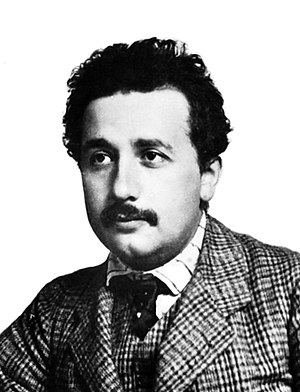
 When it came to science and theoretical physics, Einstein was no dummy. Indeed Einstein’s contribution to science is unparalleled. Many of the technological tools we routinely depend on would not exist without Einstein’s theories of relativity. Examples abound: cellular telecommunications, GPS, space travel.
Without doubt Einstein was a smart cookie. With reference to him, the year 1905 is called Annus Mirabilis (in English “miracle year”, in German Wunderjahr). That year, he published four papers in the Annalen der Physik scientific journal on the photoelectric effect, Brownian motion, Special relativity, and Mass-energy equivalence. They dramatically changed our understanding of space, time, mass and energy, thus building one of the pillars of modern physics (the other pillar being quantum mechanics built by Planck, Schrödinger, Heisenberg, Born, et al.) The Nobel Prize in Physics in 1921 was awarded to Albert Einstein “for his services to Theoretical Physics, and especially for his discovery of the law of the photoelectric effect.” (Fun fact: The 1921 Physics prize was actually awarded a year later in 1922.)
Einstein was clever. But when it comes to understanding how that great big enterprise we call society operates in terms of production, distribution, exchange and consumption, Einstein was evidently clueless. His basic instincts of compassion, generosity, and altruism combined with his ignorance of economics, political economy, and economic history led him to fundamentally flawed conclusions about capitalism and socialism. It appears that he perhaps read a bit of Marx — just enough to get the wrong ideas. The kind of ideas that instinctively appeal to bleeding-heart teenagers, but which with some maturity, are discarded with a “I can’t believe that I actually believed in that pile of horse manure. Was I stupid or what?” Continue reading “Einstein — The Physics Giant and the Economics Dwarf”

 Economists are uniquely qualified in their understanding of one particular aspect of human activity, and that activity is unique to humans. No other animal trades, or exchanges, among its kind. Adam Smith wrote that “the propensity to truck, barter and exchange one thing for another is common to all men, and to be found in no other race of animals.” And no other discipline focuses on trade as much as economics does. Indeed, the most parsimonious description of economics is that it is the systematic study of trade, and trade-offs.
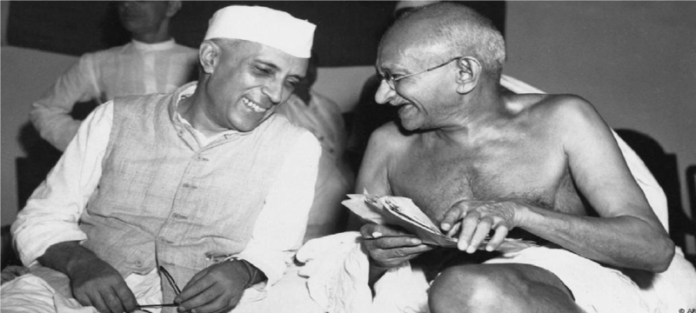 Mohandas K. Gandhi is not generally included in the category of world-class tyrants but properly understood, among tyrants he is in a class of his own. Tyrants are always megalomaniacs but in Gandhi’s case the megalomania was fortified with infantile solipsism.
 Modi
Modi Hagiography
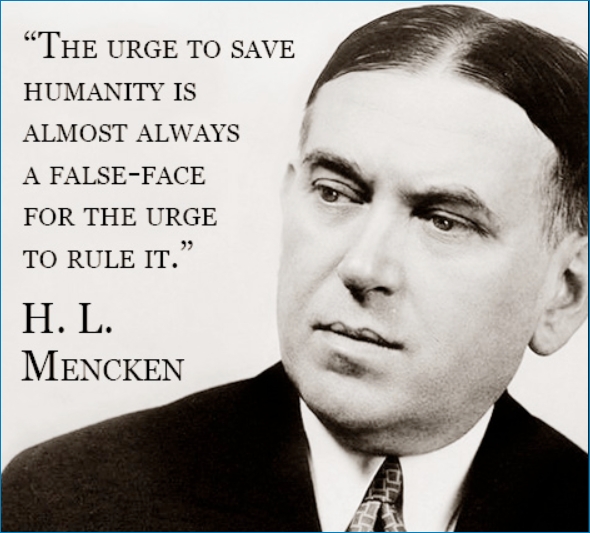 MK “Mahatma” Gandhi’s birthday is one of only three national holidays in India (the other two being Republic Day and Independence Day.)[1] Indians are taught that it was Gandhi’s non-violent non-cooperation movement that led to India’s gaining freedom from the British empire. There, in that one sentence, you get two blatant falsehoods for the price of one.
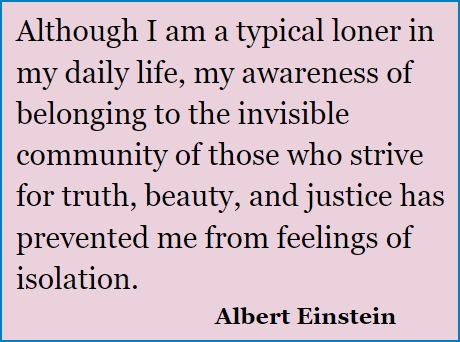 Einstein submitted his PhD thesis in 1905, the “miracle year”
 Like many an evening, today I raise a glass to the end of a disastrous social policy in the United States on this day in 1933. The wiki
 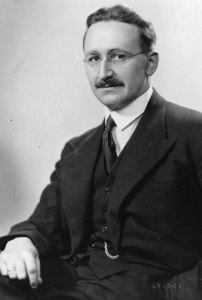 This is a Friedrich Hayek interview by Bernard Levin at the University of Freiburg which was broadcast in May 1980. Hayek was, in my professional opinion, one of the greatest economists of all times. We are wonderfully privileged to be able to watch videos of his brilliant exposition on the web. I am also impressed by Mr Levin; he does his job as the interviewer magnificently.
  Atanu Dey : Life is a Random Draw