
 Even stupid people can do smart things. Contrarywise, even smart people can do stupid things. Here’s a post hauled from the archives where I make that point. When Smart People Have Stupid Ideas.
What is Wealth?

“The serious fact is that the bulk of the really important things that economics has to teach are things that people would see for themselves if they were willing to see. And it is hard to believe in the utility of trying to teach what men refuse to learn or even seriously listen to.” — Frank H. Knight
Conflating the words money and wealth is an easy mistake to make because in most everyday parlance we use the two interchangeably — if you are wealthy, you have a lot of money, and if you have a lot of money, you are wealthy — without loss of comprehension.
But money is a measure of wealth, not wealth itself, just like kilogram is a measure of mass but is not itself mass. They are not the same. They have to be distinguished if we are to reason cogently about the nature and causes of wealth of people (and progress in our “inquiry into the nature and causes of the wealth of nations.”)
I have written a fair bit about wealth and money over the years. Time for a TL;DR version. Continue reading “What is Wealth?”
Inequality – Part 2
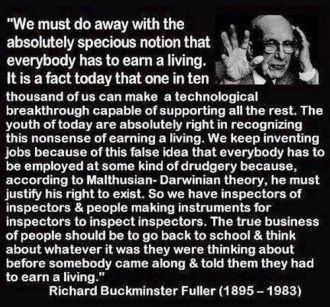 Prabhudesai, in a comment to the recent post on inequality, wrote that envy motivates the concern for inequality; otherwise, to demonstrate their commitment to equality, people would give away that portion of their wealth that exceeds the average wealth of the society (or the world at large, if they are really sincere.) I agree.
People who are exercised about what they consider to be an “unfair distribution” of wealth insist that the wealth of the super-rich should be confiscated and distributed “fairly” to all. Bezos, Musk and other multi-billionaires come in for special censure. Why, the cry goes out, should they have billions when there are starving millions? They have more than they could possibly consume while there are people who are starving. It’s immoral and sinful. The government must do something about that.
I disagree for various reasons. First, I present a consequentialist argument why the wealth of the super-rich should not be redistributed by government edict. As I am not a utilitarian, I reject this argument for a much stronger claim. Continue reading “Inequality – Part 2”
Inequality

In a comment to the post CORE – The Economy, Raghuram quoted from the book:
In November 2016, we asked students beginning economics at Humboldt University in Berlin, ‘What is the most pressing issue that economists today should address?’ Their replies are shown in the word cloud in Figure 19.12, in which the size of the word or phrase indicates the frequency with which that term was mentioned. Students in other universities around the world gave similar answers.
Inequality is, by far, the main problem that students think economics should address.
Click on the image above in case you wish to read the chapter on “Inequality” but it is not necessary for this post. Continue reading “Inequality”
Common Sense
 Born in England in 1737, Thomas Paine emigrated to the British American colonies in 1774. He anonymously published a pamphlet titled Common Sense in 1776, which inspired the American patriots to declare independence from Great Britain in the same year.
The wiki says, “Virtually every rebel read (or listened to a reading of) his 47-page pamphlet Common Sense, proportionally the all-time best-selling American title, which catalysed the rebellious demand for independence from Great Britain.”
Common Sense opens with the following paragraph. Continue reading “Common Sense”
How the World Works — Part Duh
 After the success of the How the World Works – Part Uh, I have been pressured to offer Part Duh of the same. So if you, dear reader, were so unlucky as to have missed the first part, despair not — Part Duh is finally here. Even if you did catch parts of the first offering, you are sure to get a lot more in this new series. But there’s a catch!
This time around you have to pay. This part, unlike the first part, is not free. Why not? you may ask. Because there’s no such thing as a free lunch. Why not? Ah, you’d learn why not if you attend this part of “How the World Works.”
Seriously, you’ll get it. And when you get it, you’d be delighted. And if you’re not delighted, it’d be entirely your fault. Guaranteed or your money back. Promise. So here are the details.
Dhanteras
 Dhanteras Greetings. For those who are not familiar with this northern Indian festival, here’s a bit from a 2019 post on Dhanteras.
“The first day of Diwali is called Dhanteras — the thirteenth lunar day of the month of Kartik. On this day, Lord Dhanwantari came out of the ocean with amrut — the nectar of immortality — for the Devas. This day marks the beginning of Diwali celebrations.”
Share lots of sweets with family and friends, and have a wonderful Diwali with fireworks and lights.
Here’s what I am listening to — Roopa Panesar on the sitar, accompanied by Upneet Singh on tabla, and Pirashanna Thevarajah on the mridamgan. Listen. Continue reading “Dhanteras”
Decline
 Thanks to the wonders of socialism and communism, China was either at par with or poorer than India for most of the 20th century CE. However, in 1978 China’s luck changed when Deng Xiaoping took over. Deng was a pragmatist, had the capacity to learn and do what needed to be done — make China great again.
In May 2014, when Modi came to power, I was absolutely delighted. India’s moment has come. Modi will do what Deng Xiaoping did for China.
But in about two months by July 2014, I realized that Modi was not Deng. In the years that followed, Modi showed his true colors: a power-crazed autocrat who was a cross between Nehru and Mao. He combined Nehru’s narcissistic self-obsession and general lack of vision, with Mao’s ruthless authoritarianism and disdain for people.
Modi was the amalgam of the worst that India and China had produced — Nehru and Mao.
It did not matter how duped and betrayed I felt after being an ardent supporter of his; what mattered was that India had missed a golden opportunity to lift hundreds of millions of people who are trapped in extreme poverty.
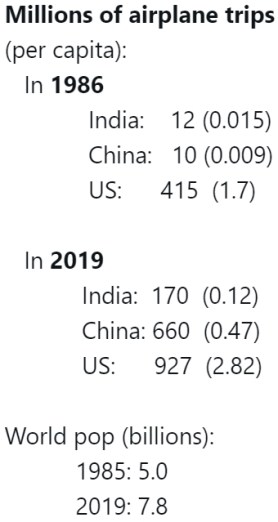
Back in May of this year, I wrote a bunch of tweets which was provoked by comparing the number of airline passenger-trips in India, China and US. (Click on image above to read the tweets.) I am reproducing them here, for the record. Continue reading “Decline”
Welsh Incident
 Richard Burton was Welsh. Clearly then there’s no one better than he to read Welsh Incident by Robert Graves (1895-1985). His baritone is perfect to convey the mood and the mystery.
Welsh Incident
Her Majesty’s Prison Belmarsh

“Her Majesty’s Government”, also known as the United Kingdom Government, is certainly not all evil but considered comprehensively across the centuries and around the world, it is as evil as governments get.
“Her Majesty’s Courts and Tribunals Service” administer civil and criminal justice through the courts of England and Wales (not Scotland and Northern Ireland). As part of that, Her Majesty runs prisons. UK prisons are not the worst in the world but it includes “Her Majesty’s Prison Belmarsh” which has the distinction of being “UK’s Guantanamo Bay”.
Julian Assange has been incarcerated in H M P Belmarsh since April 2019. His “crime”? Exposing the criminal behavior of those who run the military-industrial complexes like Messrs. Bush and Blair. Which explains why the British government is punishing him by throwing him into Belmarsh and the US wants him extradited to the US.
Belmarsh is for the worst of the worst. Around a third of the inmates are Islamic terrorists.[1] Continue reading “Her Majesty’s Prison Belmarsh”
 Atanu Dey : Life is a Random Draw