
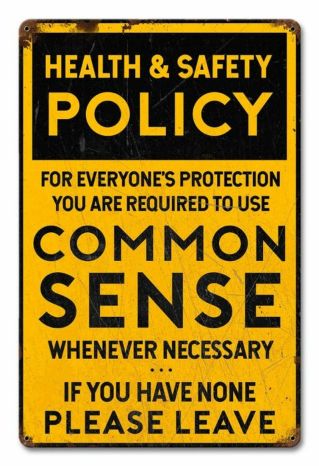
 Born in England in 1737, Thomas Paine emigrated to the British American colonies in 1774. He anonymously published a pamphlet titled Common Sense in 1776, which inspired the American patriots to declare independence from Great Britain in the same year.
The wiki says, “Virtually every rebel read (or listened to a reading of) his 47-page pamphlet Common Sense, proportionally the all-time best-selling American title, which catalysed the rebellious demand for independence from Great Britain.”
Common Sense opens with the following paragraph. Continue reading “Common Sense”



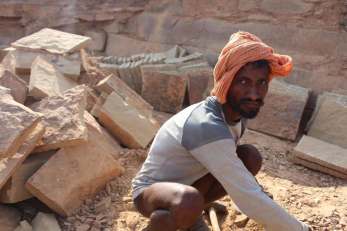 The notion that the individual owns himself or herself is the essential, axiomatic, necessary, defining condition of a civilized society. It’s axiomatic in the sense that it is a priori, self-evident, categorical, certain and beyond dispute. It’s apodictic — a necessary truth, an absolute certainty not requiring proof. It’s an assumption the truth of which if not assumed can never be established.
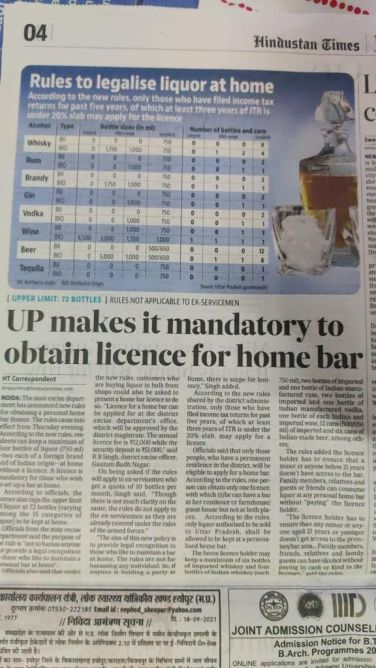 The news item reads, “UP makes it mandatory to obtain license for home bar.” It’s just one more small step on the road to serfdom.
 If you’ve been reading this blog for a while, you are prepared to understand why Elon Musk is a remarkably intelligent man.
 These are two remarkable facts about our modern world. One is that it is incredibly amazing, and the other is that we’re incredibly blasé about that amazingness. Our attitude is just boring ho-hum. It takes effort to step back and realize how astonishing our world is — even compared to only a couple of decades ago. I think it would do us good to pause once in a while and admire what humans have been able to achieve in a relatively short period.
 I think that the most succinct definition of freedom could be the right to say no to another. This was brought home to me in a recent family situation. Never mind the specifics of the situation, the general point is that if a person doesn’t have the freedom to say no, that person is not free. A person must have the freedom to say no if the concept of being free has to have any content.
 Atanu Dey : Life is a Random Draw