 The Stanford Encyclopedia of Philosophy, in its definition of democracy notes that it “refers very generally to a method of collective decision making characterized by a kind of equality among the participants at an essential stage of the decision-making process.” It goes on to detail four aspects of this definition, which I reproduce here for completeness:
“First, democracy concerns collective decision making, by which we mean decisions that are made for groups and are meant to be binding on all the members of the group. Second, we intend for this definition to cover many different kinds of groups and decision-making procedures that may be called democratic. So there can be democracy in families, voluntary organizations, economic firms, as well as states and transnational and global organizations. The definition is also consistent with different electoral systems, for example first-past-the-post voting and proportional representation. Third, the definition is not intended to carry any normative weight. It is compatible with this definition of democracy that it is not desirable to have democracy in some particular context. So the definition of democracy does not settle any normative questions. Fourth, the equality required by the definition of democracy may be more or less deep. It may be the mere formal equality of one-person one-vote in an election for representatives to a parliament where there is competition among candidates for the position.” Continue reading “Democracy – Part 2”
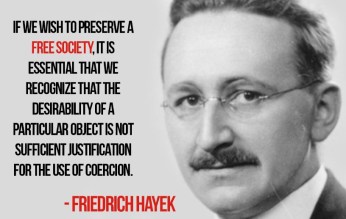 Friedrich August von Hayek was born 123 years ago on March 8th, 1899 in Vienna. His
  Happy Mother’s Day, all. May all beings be happy, may all beings be free of suffering, may all beings become enlightened.
 Democracy is a sacred word in India. As a concept, it is poorly understood (not just in India but across the world) but like people’s attitude towards their own religion, they uncritically subscribe to it without bothering to understand what it is, what it implies, what its premises are, whether or not those premises are true, whether it delivers what it promises, what its track record is, what the alternatives to it are, and whether or not they would be better off without it.
 Oscar Wilde in his play Lady Windermere’s Fan has Lord Darlington describe a cynic as “a man who knows the price of everything, and the value of nothing.”

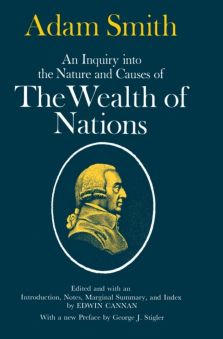 Adam Smith was a giant figure of the Scottish Enlightenment and his two major works — The Theory of Moral Sentiments (1759) and In Inquiry into the Nature and Causes of the Wealth of Nations (1776) — have advanced our understanding of what motivates us and how human society works.