
 Modi
Modi
On social media Prime Minister Modi made these remarks on the anniversary of Mohandas K. Gandhi’s birth. Roughly translated from Hindi, he wrote in part:
“Oct 2nd is a sacred day. On this day we have to remember two of Mother India’s sons: Mahatma Gandhi and Lal Bahadur Shastri. Revered Bapu’s thoughts and ideals are important today, even more than before. If we had understood and adopted the spirit of Mahatma Gandhi’s economic thoughts, if we had taken that path, then we would not have needed the Atmanirbhar Bharat Abhiyan today. Gandhiji’s economic ideas were informed by a detailed knowledge and understanding of India. Bapu’s life reminds us to make sure that every action of ours benefits the poorest of the poor.”
Politician
We have to admit that Gandhi’s understanding of Indians was second to none. It could not have been otherwise because successful politicians have to know their constituents. Gandhi was arguably the most successful Indian politician, which he could not have been if he had not accurately read the Indian mind. He wasn’t very intelligent, knowledgeable, widely read or broadly educated. But intelligence, knowledge and education are not requirements for being a successful politician; in fact they may be serious handicaps. What is required to succeed in politics is shrewdness, cunning, self-assurance, guile, the ability to project virtue, talk the big talk, pander, scheme, conceal hypocrisy, charm the public, conceal the truth, fake it, divert attention and other such talents. Continue reading “Gandhi – The Economics Retard”

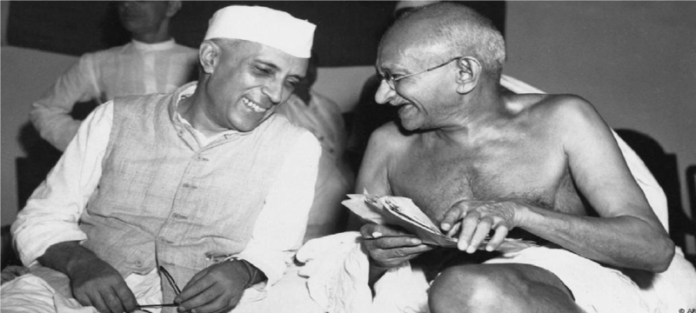 Mohandas K. Gandhi is not generally included in the category of world-class tyrants but properly understood, among tyrants he is in a class of his own. Tyrants are always megalomaniacs but in Gandhi’s case the megalomania was fortified with infantile solipsism.
 Hagiography
 MK “Mahatma” Gandhi’s birthday is one of only three national holidays in India (the other two being Republic Day and Independence Day.)[1] Indians are taught that it was Gandhi’s non-violent non-cooperation movement that led to India’s gaining freedom from the British empire. There, in that one sentence, you get two blatant falsehoods for the price of one.
 Atanu Dey : Life is a Random Draw