
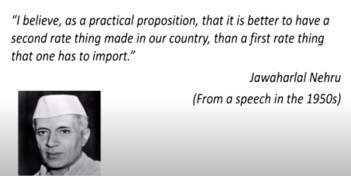
 The claim in the previous part of this essay was that one of the most important policies changes that India needs is to liberate the education sector from political and bureaucratic control, and that the free market must be allowed to operate in the educational sector.
Why do I stress education? It’s important to me because I have benefited enormously from being educated. It has enabled me to make a net positive contribution to the world — which is reflected in the fact that people voluntarily pay me in exchange for my services.
Education enables a person to do well and achieve his potential. An uneducated person is handicapped. And that handicap is a tragedy if it can be easily avoided. Aside from that pragmatic and utilitarian reason, it increases a person’s capacity to enjoy and appreciate the world around him. Continue reading “This Policy, Alone – Part 2”
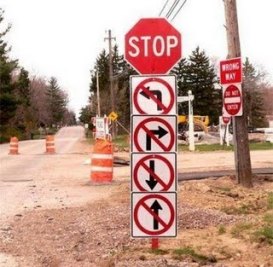 And now for the big reveal that is the answer to the post “
 I’ve been reading the archives of this blog the last couple of weeks. The goal is to extract and aggregate some useful bits to make some ideas accessible to those who don’t have the time to read a random collection of irregularly posted articles.
  One time I was asked to explain how Israel, despite being a socialist country, was successful in light of the fact that I keep claiming that socialism is a recipe for disaster. My response was this.
 The question is this. What specific policy change would meet the following criteria:
 Here’s a graduation speech that won’t tax your time and, without taxing your brain, will remind you of what is worth remembering. In 2007,
 Look here, now, I don’t have all day to sit around writing stuff on this blog, ok. 😉 So here’s what I’m going to do. Haul stuff out of the archive. Good stuff, mind you. Check out
  Atanu Dey : Life is a Random Draw