In school I learned the basics of reading, writing and arithmetic reasonably well. That may be partly due to competent teachers, a stable family and school environment, and my being somewhat diligent. However, I am convinced that I would have learned a whole lot more if I had had access to the enormous number of excellent teachers and the virtually infinite amount of content on every conceivable subject we have available today: not in person but over the internet.
Though I am not very good at it, I like mathematics a lot. Over the years, I was required to learn some bits. In my undergraduate engineering classes, I learned the calculus and some linear algebra but nothing to write home about. Then while studying computer science, I learned an entirely different area of mathematics: discrete maths, particularly combinatorics. Then for my post-graduate work in economics, I got to learn a lot more of the calculus, and some statistics (because of econometrics, a subject that I hate with uncharacteristic passion) and probability theory. Continue reading “This Policy, Alone – Part 7”
If you need any more evidence that people in government are generally incompetent and cause immense harm due to their ignorance and stupidity, not to mention for the moment their obvious cupidity and greed, there’s no greater example of that incompetence than their handling of the Chinese virus, aka Covid-19, pandemic.
You are probably as sick of the relentless coverage of the pandemic as I am but please humor me for a bit. I beseech you to take a good listen to what Tom Woods had to say recently on the topic. I reiterate that I am aware that you have probably overdosed on the topic but for heaven’s sake, do this if you have any confidence in my judgement. Continue reading “The Covid Dystopia”
The cliché “they don’t make ’em like that anymore” can’t be more true about political satire than about the Yes, Minister (1980-84) and Yes, Prime Minister (1986-88) BBC TV series. When I first watched them on PBS, I didn’t have a clue about economics, and more particuarly about public choice theory — which Buchanan described as “politics without romance.” Now that I know the basic principles of economics and political economy, my appreciation of the series has deepened.
The characters are priceless, the writing flawless, the casting brilliant. The principals are Jim Hacker, the minister and later the prime minister, played by Paul Eddington; Hacker’s permanent secretary, Sir Humphrey, played by Sir Nigel Hawthorne; and Sir Humphrey’s principal private secretary, Bernard, played by Derek Fowlds. Here’s a scene that tells you more about what governments actually do, quite contrary to popular romantic notions about governments.
Sir Humphrey is the consummate cynic. He doesn’t question the ends — he just gets on with getting things done.
“Bernard, I have served eleven governments in the past thirty years. If I had believed in all their policies, I would have been passionately committed to keeping out of the Common Market, and passionately committed to going into it. I would have been utterly convinced of the rightness of nationalising steel. And of denationalising it and renationalising it. On capital punishment, I’d have been a fervent retentionist and an ardent abolitionist. I would’ve been a Keynesian and a Friedmanite, a grammar school preserver and destroyer, a nationalisation freak and a privatisation maniac; but above all, I would have been a stark, staring, raving schizophrenic.”
Sometimes I think that if every politician and bureaucrat were to watch the whole series, perhaps governance would not be so pathetic. They should make it required viewing in the Indian Administrative Services, at the very least. The babus may learn something. But then maybe they won’t learn anything. Still, we non-babus get a better understanding of how babu-dom works. Thank goodness.
PS: I forgot to point out to a brilliant pun in the conversation.
Humphrey: The sale of arms abroad is one of those areas of government that we do not examine too closely. Hacker: Well I have to, now that I know. Humphrey: You could say you don’t know. Hacker: You’re suggesting I should lie? Humphrey: Oh, not you, minister. Hacker: Who should lie? Humphrey: Sleeping dogs.
Let’s start with a conjecture. The more rigid and government dominated a country’s education system is, the poorer the country; and conversely, the more flexible and accommodating the education system is, the more prosperous the country. India belongs to the first kind, and is remarkably poor; the US belongs to the second kind, and is remarkably prosperous.
It’s just a conjecture, not an established fact. But something to think about.
Unchanging
If Adam Smith (1723 – 1790), the father of the modern discipline called economics, were to find himself in the 21st century CE, he’d probably not recognize anything from his time — except the educational system. Everything has been unrecognizably transformed except schooling. Like in his time, it’s essentially the same system in which students are age-segregated and instructed in an uniform way, with teachers transferring information to a group of generally unmotivated young people. Continue reading “This Policy Alone – Part 6”
Among the infinite variety of things that people do, one of the most puzzling to me is the act of prayer. It’s some sort of a special communication. The message is addressed to some supernatural entity. If spoken, the message is transmitted magically to the realm where the entity resides — usually heaven. You don’t need the postal service, or the telephone, or any material medium. But prayer can be unspoken too: one just has to think in some particular way and once again magically it gets to that special being.
This special being is, among the monotheists, the One True GodTM. Hindus, who don’t go for the monotheist nonsense and believe in a vast multitude of gods (all of whom are radically different from the One True GodTM), usually direct their special communications to specific gods depending on the situation. For example, my favorite god Ganesh — the one with the crooked trunk, immense body, and the brilliance of a billion suns, the remover of obstacles — is the one to address if you want to succeed in your ventures. Continue reading “A Call to Prayer”
Mohandas K. Gandhi is not generally included in the category of world-class tyrants but properly understood, among tyrants he is in a class of his own. Tyrants are always megalomaniacs but in Gandhi’s case the megalomania was fortified with infantile solipsism.
Only he mattered, and what mattered to him was that everyone did exactly as he dictated. And the instrument he used to compel obedience? The threat of violence. And why should people do what he dictated? Because he wanted people to be good. And what does “good” mean? Good was whatever Gandhi wanted. Continue reading “Gandhi — The Megalomaniac”
On social media Prime Minister Modi made these remarks on the anniversary of Mohandas K. Gandhi’s birth. Roughly translated from Hindi, he wrote in part:
“Oct 2nd is a sacred day. On this day we have to remember two of Mother India’s sons: Mahatma Gandhi and Lal Bahadur Shastri. Revered Bapu’s thoughts and ideals are important today, even more than before. If we had understood and adopted the spirit of Mahatma Gandhi’s economic thoughts, if we had taken that path, then we would not have needed the Atmanirbhar Bharat Abhiyan today. Gandhiji’s economic ideas were informed by a detailed knowledge and understanding of India. Bapu’s life reminds us to make sure that every action of ours benefits the poorest of the poor.”
Politician
We have to admit that Gandhi’s understanding of Indians was second to none. It could not have been otherwise because successful politicians have to know their constituents. Gandhi was arguably the most successful Indian politician, which he could not have been if he had not accurately read the Indian mind. He wasn’t very intelligent, knowledgeable, widely read or broadly educated. But intelligence, knowledge and education are not requirements for being a successful politician; in fact they may be serious handicaps. What is required to succeed in politics is shrewdness, cunning, self-assurance, guile, the ability to project virtue, talk the big talk, pander, scheme, conceal hypocrisy, charm the public, conceal the truth, fake it, divert attention and other such talents.Continue reading “Gandhi – The Economics Retard”
When I consider Gandhi the man as I know of him from readily available published sources, I am led to the conviction that he must have been a tortured soul. As a kind-hearted human, I am moved more to pity mixed with revulsion at who he was than I am to condemnation and hatred of the man. But at the same time, I cannot excuse neither his actions nor ignore their terrible consequences. Whether he intended the horrors he perpetrated on a vast scale or not, what he did eventually resulted in immense horrors. I am convinced that he is the most evil man in human history, bar none.
I have no training in abnormal psychology. The only training I claim is in economics, a much popularly misunderstood discipline (a state of affairs the blame for which rests on economists alone.) The disclaimer is that it is quite possible that I don’t know what I am talking about here. But I leave it to you, gentle reader, to decide that. This is a blog post, not a paper submitted to a peer reviewed scientific journal. As we say in the US, you gets what you pays for.Continue reading “Gandhi – The Sexual Pervert”

 In school I learned the basics of reading, writing and arithmetic reasonably well. That may be partly due to competent teachers, a stable family and school environment, and my being somewhat diligent. However, I am convinced that I would have learned a whole lot more if I had had access to the enormous number of excellent teachers and the virtually infinite amount of content on every conceivable subject we have available today: not in person but over the internet.
 If you need any more evidence that people in government are generally incompetent and cause immense harm due to their ignorance and stupidity, not to mention for the moment their obvious cupidity and greed, there’s no greater example of that incompetence than their handling of the Chinese virus, aka Covid-19, pandemic.
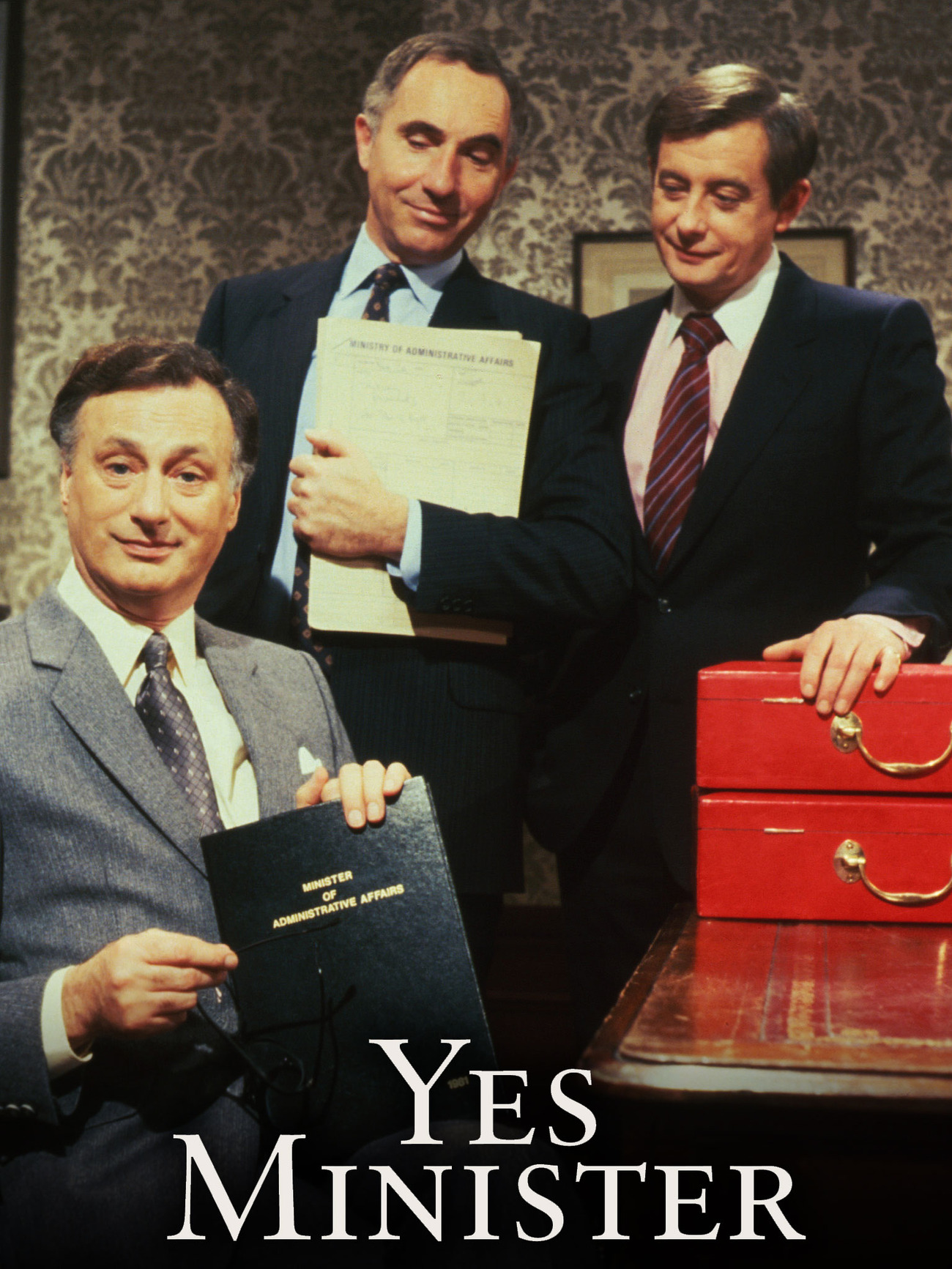 The cliché “they don’t make ’em like that anymore” can’t be more true about political satire than about the Yes, Minister (1980-84) and Yes, Prime Minister (1986-88) BBC TV series. When I first watched them on PBS, I didn’t have a clue about economics, and more particuarly about public choice theory — which Buchanan described as “politics without romance.” Now that I know the basic principles of economics and political economy, my appreciation of the series has deepened.
 Let’s start with a conjecture. The more rigid and government dominated a country’s education system is, the poorer the country; and conversely, the more flexible and accommodating the education system is, the more prosperous the country. India belongs to the first kind, and is remarkably poor; the US belongs to the second kind, and is remarkably prosperous.
 Among the infinite variety of things that people do, one of the most puzzling to me is the act of prayer. It’s some sort of a special communication. The message is addressed to some supernatural entity. If spoken, the message is transmitted magically to the realm where the entity resides — usually heaven. You don’t need the postal service, or the telephone, or any material medium. But prayer can be unspoken too: one just has to think in some particular way and once again magically it gets to that special being.
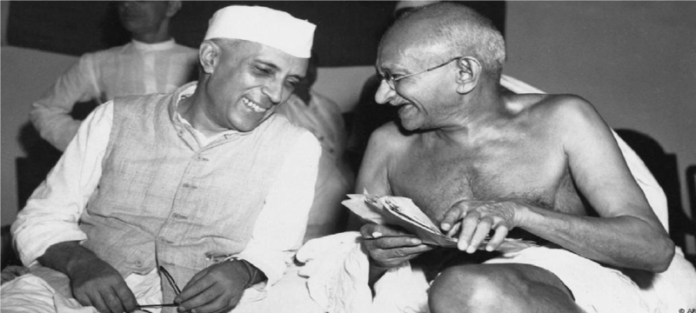 Mohandas K. Gandhi is not generally included in the category of world-class tyrants but properly understood, among tyrants he is in a class of his own. Tyrants are always megalomaniacs but in Gandhi’s case the megalomania was fortified with infantile solipsism.
 Modi
Modi Hagiography
 Atanu Dey : Life is a Random Draw