
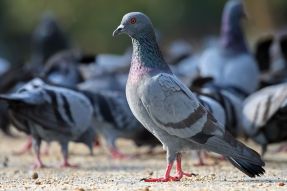
 I am always struck by the variations in human capacities. We humans are strikingly unequally endowed in physical and mental capabilities. Non-human animals of a particular species are generally very similar. For instance, individual members of the species common pigeon are quite indistinguishable; if you’ve seen one, you’ve seen them all. The pigeons from Germany are not that different from the ones in India. Can you tell which one is a German pigeon and which one Indian?
But we humans are different. The range of human physiology is vast even though all humans belong to the same homo sapiens species. People from different regions of the world look different and we easily distinguish between Germans and Indians. Not just across regions, individuals vary within regions too. That is not an earth shattering fact but it is worth noting.
I believe that the range of mental variations is much wider than physical variations among humans. We are seriously unequally endowed when it comes to brains. Most of us are sort of average but among us there are outliers who are a few sigmas above the mean. The outliers also are varied. There are geniuses in chess, and in music, and mathematics, and physics, … the list goes on indefinitely. Continue reading “Wisdom, Genius, Knowledge and Intelligence”
 Today, November 14th in India, is Diwali, or Deepaval. Diwali is a pretty big deal all across India and even outside India. Here’s what the all-knowing wiki says about this Indian festival (edted):
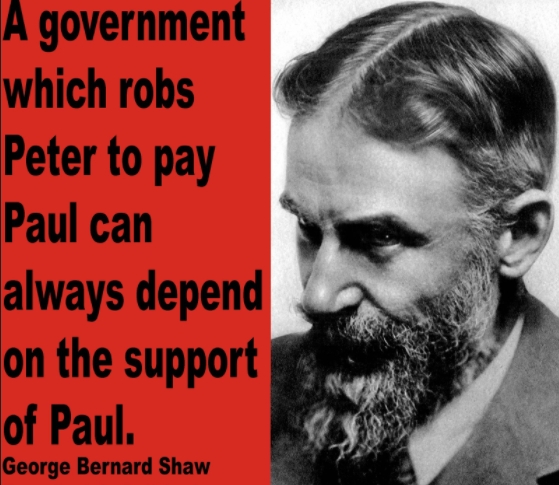 In an essay titled “Sham Battle” published in October 1936 in the Baltimore Evening Sun, H. L. Mencken enunciated a truth that is one of the core axioms of public choice theory. That axiom is the homely truth that politicians are people just like the rest of us. Homely truths, as Mark Twain recognized, are unpalatable. But they are true nonetheless.
 To me it appears to be true that servitude of the masses have to be largely voluntary because the serfs always outnumber the masters. Two quotes on servitude follow but first a bonus quote from Ayn Rand.
 There are a couple of things I find remarkable about US elections. First, the date of practically all elections is fixed and therefore predictable. Every year, all elections at all levels of government — city, county, state and federal — are held on the Tuesday following the first Monday of November. If the first Monday of November falls on the 1st, then election is on Nov 2nd — the earliest possible date; and the lastest possible date will be Nov 8th. That happens every year, and every four years, it is a presidential election year. That too is totally predictable.
 Today it’s Sharad Purnima, a Hindu tradition. It is a harvest festival that is celebrated on the full moon day of the lunar month of Ashvin. It’s also called Kojagiri Purnima. It’s the birthday of Devi Lakshmi, and she is worshipped on this day. Also worshipped are Indra, and Shiva and Parvati. Lots of worshipping going on among Hindus.
 Economists are uniquely qualified in their understanding of one particular aspect of human activity, and that activity is unique to humans. No other animal trades, or exchanges, among its kind. Adam Smith wrote that “the propensity to truck, barter and exchange one thing for another is common to all men, and to be found in no other race of animals.” And no other discipline focuses on trade as much as economics does. Indeed, the most parsimonious description of economics is that it is the systematic study of trade, and trade-offs.
 Atanu Dey : Life is a Random Draw