
 About quotations, the German-born American actress Marlene Dietrich said, “I love them, because it is a joy to find thoughts one might have, beautifully expressed with much authority by someone recognizedly wiser than oneself.”
I agree with her. I love quotations and collect them assiduously. They are valuable because they encapsulate ideas and thoughts that I have had but expressed better than I ever can.
Since being an economist is my vocation as well as my avocation, I like to keep bits of writings of real economists. Here are a few that I hope you would like. If you find any of them puzzling, or if they lead you to questions, I’d be happy to expand on them. Feel free to ask me anything. Continue reading “Economists’ Quotes”
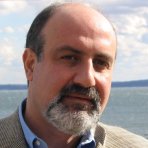 Nassim Nicholas Taleb is an awesomely successful investor, public intellectual and author of many best sellers. The
 I confess that I have strong likes and dislikes in almost everything — concrete or abstract. That goes for people as well. Of course, I have my economist heroes — Hayek, Buchanan, Friedman, et al — and anti-heroes (who shall remain unnamed.) Among politicians, my greatest hero was Lee Kuan Yew and the greatest villain
 The
The  “The technologies which have had the most profound effects on human life are usually simple. A good example of a simple technology with profound historical consequences is hay. Nobody knows who invented hay, the idea of cutting grass in the autumn and storing it in large enough quantities to keep horses and cows alive through the winter. All we know is that the technology of hay was unknown to the Roman Empire but was known to every village of medieval Europe. Like many other crucially important technologies, hay emerged anonymously during the so-called Dark Ages. According to the Hay Theory of History, the invention of hay was the decisive event which moved the center of gravity of urban civilization from the Mediterranean basin to Northern and Western Europe. The Roman Empire did not need hay because in a Mediterranean climate the grass grows well enough in winter for animals to graze. North of the Alps, great cities dependent on horses and oxen for motive power could not exist without hay. So it was hay that allowed populations to grow and civilizations to flourish among the forests of Northern Europe. Hay moved the greatness of Rome to Paris and London, and later to Berlin and Moscow and New York.” ― Freeman Dyson, Infinite in All Directions
  In 1993, at the grand opening of the Cato Institute’s headquarters in Washington, D.C., Dr Milton Friedman gave a talk. It is worth listening to even after 28 years. He was introduced as “the Nobel Prize winner, economic trailblazer, author, scholar, statesman, champion of political freedom and economic liberty, Dr. Milton Friedman.”
 I have the most profound respect for

