

AI agents are the coolest innovation of our modern world. Every time you turn around, one more appears. It’s becoming hard to keep up with the advances. I am amazed. So should you be. Just for fun, I gave grok a simple prompt: “Summarize Atanu Dey’s views on Gandhi.”
Here’s the response. Begin quote:
Atanu Dey, an economist and classical liberal, holds highly critical and negative views on Mahatma Gandhi (whom he often refers to as Mohandas K. Gandhi to reject the “Mahatma” title as inaccurate and undeserved).
Based on his blog posts, X (formerly Twitter) statements, and writings, Dey portrays Gandhi as one of the most harmful figures in history, responsible for perpetuating India’s poverty, misery, and underdevelopment. He dismisses Gandhi’s deification as a myth propagated for political control and argues that Gandhi’s ideas and actions were delusional, manipulative, and evil. Below is a structured summary of Dey’s key opinions across themes, drawn from his own content. Continue reading “Atanu Dey on Gandhi”
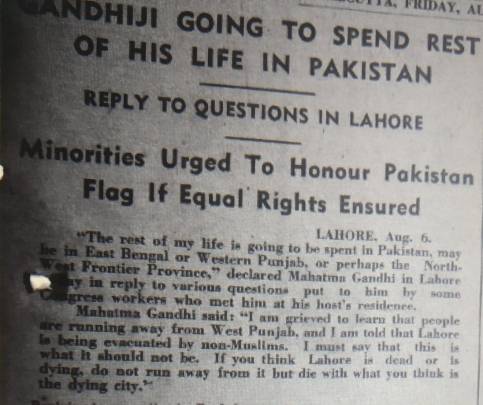 Gandhi matters enormously and he is rightly considered the “Father of the Nation.” That of course means that Gandhi is to a very large degree responsible for what India became (or failed to become) after India’s independence from the British raj.
 About quotations, the German-born American actress Marlene Dietrich said, “I love them, because it is a joy to find thoughts one might have, beautifully expressed with much authority by someone recognizedly wiser than oneself.”
 I confess that I have strong likes and dislikes in almost everything — concrete or abstract. That goes for people as well. Of course, I have my economist heroes — Hayek, Buchanan, Friedman, et al — and anti-heroes (who shall remain unnamed.) Among politicians, my greatest hero was Lee Kuan Yew and the greatest villain
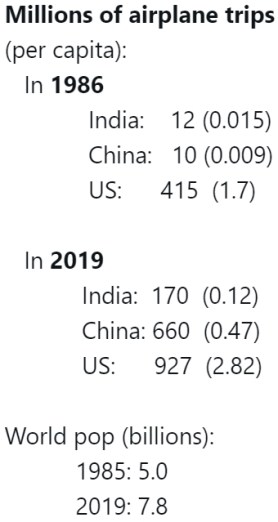
 I took a Vistara flight from Mumbai to Bangalore a week ago Sunday. In preparation for the flight, I checked out their website and came across their
  Here’s the last bit from Hayek’s Dec 11
  Economists are uniquely qualified in their understanding of one particular aspect of human activity, and that activity is unique to humans. No other animal trades, or exchanges, among its kind. Adam Smith wrote that “the propensity to truck, barter and exchange one thing for another is common to all men, and to be found in no other race of animals.” And no other discipline focuses on trade as much as economics does. Indeed, the most parsimonious description of economics is that it is the systematic study of trade, and trade-offs.
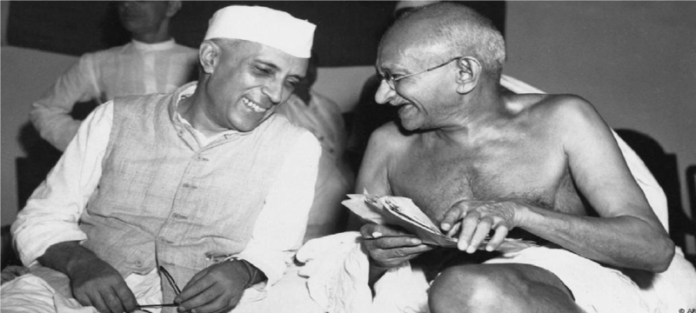 Mohandas K. Gandhi is not generally included in the category of world-class tyrants but properly understood, among tyrants he is in a class of his own. Tyrants are always megalomaniacs but in Gandhi’s case the megalomania was fortified with infantile solipsism.
 Atanu Dey : Life is a Random Draw