
 If by capitalism one means “free market exchanges and production through the use of privately owned capital”, then indeed capitalism destroys jobs — those jobs that are made redundant by increasing the productivity of labor.
Imagine an economy which only produces food, and the only input to food is labor. Further imagine that the productivity of labor is such that on average, one persons’s labor produces only one’s person’s demand for food. In that economy, all the jobs will be in food production.
Now imagine someone invents a machine (that’s capital — a produced means of production) that doubles the productivity of labor. Let’s call it the Great Invention. Now only half the workers are required to produce food for everybody. That’s destroyed half the existing jobs in our economy,
After the Great Invention, half the labor of the entire economy can now make clothes. Clothes were not available to anyone before the Great Invention. Now the clothes makers can trade some of their clothes for food. There are jobs for people making clothes, and on average the consumption bundles includes both food and clothes.
More great inventions follow that make both food and clothes production more efficient. Further loss of jobs from food and clothes production. But now some labor can be devoted to making shelters. Fewer jobs in food and clothes production but more jobs in shelter construction. You get the picture.
The main point is that it is not jobs that we are primarily interested in. What matters is production. And production matters because we are interested in consumption. Were the world so that everything we need fell like manna from the heavens. In that world, we wouldn’t need to work at jobs. We’d spend our time like the lotus eaters of Greek mythology.
The Industrial Revolution released the power of human ingenuity and created wealth (stuff that we value) unimaginable to our ancestors. Untold number of old jobs were lost, and in exchange we gained leisure, and all manner of stuff what we enjoy — from smartphones to air travel to medical services and comfortable homes. That’s capitalism working its magic.
Here’s how rich we have become:
That per capita GDP growth becomes all the more astonishing when you consider that the world population has exploded around 20 times what it was in the 14th century CE.
That, ladies and gentlemen, friends and colleagues, boys and girls, is the amazing truth about the world we live in. Three cheers for capitalism.
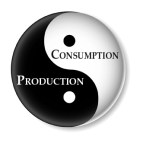 To understand the relationship between producing, consuming, saving and investment, it is useful to start with a simple story.
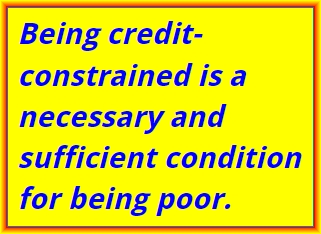 For anyone concerned about the poor and poverty, the first task is to clearly define the words “poor” and “poverty.” Wealth and income are reasonable measures that usually serve in defining a poor person: one who has less than some defined minimum of wealth and/or income.
 You can bet on this fact: that occasionally there will be natural disasters like floods, fires, and earthquakes. You can also bet on a follow-on fact: that in those places, prices of essential goods and services will go up. And finally you can bet your life on this: that popular accusations of price gouging by greedy corporations and windfall profits will motivate politicians and bureaucrats to impose price controls.
 When Nobel laureate physicist Ernest Rutherford (1871 – 1937) claimed that “Physics is the only real science. The rest are just stamp collecting” he was perhaps displaying the arrogance that comes with the territory of knowing certain fundamental truths that are denied to non-physicists.
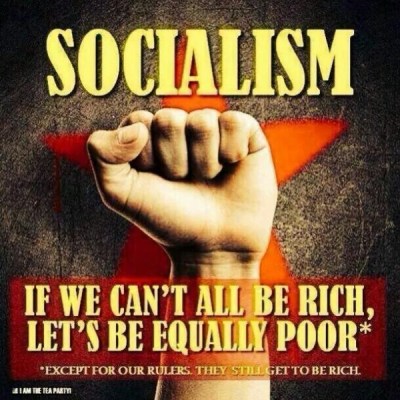 Robert Heilbroner (1919 – 2005) defined socialism as “a centrally planned economy in which the government controls all means of production.”
 “At the heart of economics is a scientific mystery: How is it that the pricing system accomplishes the world’s work without anyone being in charge? Like language, no one invented it. None of us could have invented it, and its operation depends in no way on anyone’s comprehension or understanding of it. … The pricing system–How is order produced from freedom of choice?–is a scientific mystery as deep, fundamental and inspiring as that of the expanding universe or the forces that bind matter.”
 Death and Taxes
