
This video explains a great deal about how a well-functioning economy works.
Author: Atanu Dey
Economist.
Planes
I like planes. My desktop background is invariably the picture of a plane. My favorite commercial jetliner is the Boeing 747.

This Policy Alone – Part 6
 Let’s start with a conjecture. The more rigid and government dominated a country’s education system is, the poorer the country; and conversely, the more flexible and accommodating the education system is, the more prosperous the country. India belongs to the first kind, and is remarkably poor; the US belongs to the second kind, and is remarkably prosperous.
It’s just a conjecture, not an established fact. But something to think about.
Unchanging
If Adam Smith (1723 – 1790), the father of the modern discipline called economics, were to find himself in the 21st century CE, he’d probably not recognize anything from his time — except the educational system. Everything has been unrecognizably transformed except schooling. Like in his time, it’s essentially the same system in which students are age-segregated and instructed in an uniform way, with teachers transferring information to a group of generally unmotivated young people. Continue reading “This Policy Alone – Part 6”
A Call to Prayer
 Among the infinite variety of things that people do, one of the most puzzling to me is the act of prayer. It’s some sort of a special communication. The message is addressed to some supernatural entity. If spoken, the message is transmitted magically to the realm where the entity resides — usually heaven. You don’t need the postal service, or the telephone, or any material medium. But prayer can be unspoken too: one just has to think in some particular way and once again magically it gets to that special being.
This special being is, among the monotheists, the One True GodTM. Hindus, who don’t go for the monotheist nonsense and believe in a vast multitude of gods (all of whom are radically different from the One True GodTM), usually direct their special communications to specific gods depending on the situation. For example, my favorite god Ganesh — the one with the crooked trunk, immense body, and the brilliance of a billion suns, the remover of obstacles — is the one to address if you want to succeed in your ventures. Continue reading “A Call to Prayer”
Gandhi — The Megalomaniac
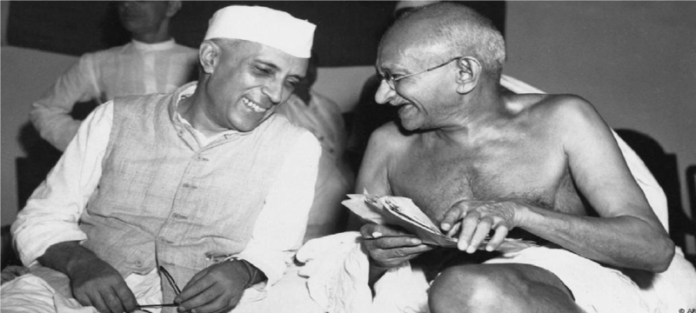 Mohandas K. Gandhi is not generally included in the category of world-class tyrants but properly understood, among tyrants he is in a class of his own. Tyrants are always megalomaniacs but in Gandhi’s case the megalomania was fortified with infantile solipsism.
Only he mattered, and what mattered to him was that everyone did exactly as he dictated. And the instrument he used to compel obedience? The threat of violence. And why should people do what he dictated? Because he wanted people to be good. And what does “good” mean? Good was whatever Gandhi wanted. Continue reading “Gandhi — The Megalomaniac”
Gandhi – The Economics Retard

 Modi
Modi
On social media Prime Minister Modi made these remarks on the anniversary of Mohandas K. Gandhi’s birth. Roughly translated from Hindi, he wrote in part:
“Oct 2nd is a sacred day. On this day we have to remember two of Mother India’s sons: Mahatma Gandhi and Lal Bahadur Shastri. Revered Bapu’s thoughts and ideals are important today, even more than before. If we had understood and adopted the spirit of Mahatma Gandhi’s economic thoughts, if we had taken that path, then we would not have needed the Atmanirbhar Bharat Abhiyan today. Gandhiji’s economic ideas were informed by a detailed knowledge and understanding of India. Bapu’s life reminds us to make sure that every action of ours benefits the poorest of the poor.”
Politician
We have to admit that Gandhi’s understanding of Indians was second to none. It could not have been otherwise because successful politicians have to know their constituents. Gandhi was arguably the most successful Indian politician, which he could not have been if he had not accurately read the Indian mind. He wasn’t very intelligent, knowledgeable, widely read or broadly educated. But intelligence, knowledge and education are not requirements for being a successful politician; in fact they may be serious handicaps. What is required to succeed in politics is shrewdness, cunning, self-assurance, guile, the ability to project virtue, talk the big talk, pander, scheme, conceal hypocrisy, charm the public, conceal the truth, fake it, divert attention and other such talents. Continue reading “Gandhi – The Economics Retard”
Gandhi – The Sexual Pervert
 Hagiography
When I consider Gandhi the man as I know of him from readily available published sources, I am led to the conviction that he must have been a tortured soul. As a kind-hearted human, I am moved more to pity mixed with revulsion at who he was than I am to condemnation and hatred of the man. But at the same time, I cannot excuse neither his actions nor ignore their terrible consequences. Whether he intended the horrors he perpetrated on a vast scale or not, what he did eventually resulted in immense horrors. I am convinced that he is the most evil man in human history, bar none.
I have no training in abnormal psychology. The only training I claim is in economics, a much popularly misunderstood discipline (a state of affairs the blame for which rests on economists alone.) The disclaimer is that it is quite possible that I don’t know what I am talking about here. But I leave it to you, gentle reader, to decide that. This is a blog post, not a paper submitted to a peer reviewed scientific journal. As we say in the US, you gets what you pays for. Continue reading “Gandhi – The Sexual Pervert”
Mohandas K. Gandhi – The Saint of India
Gandhi’s role in India’s independence
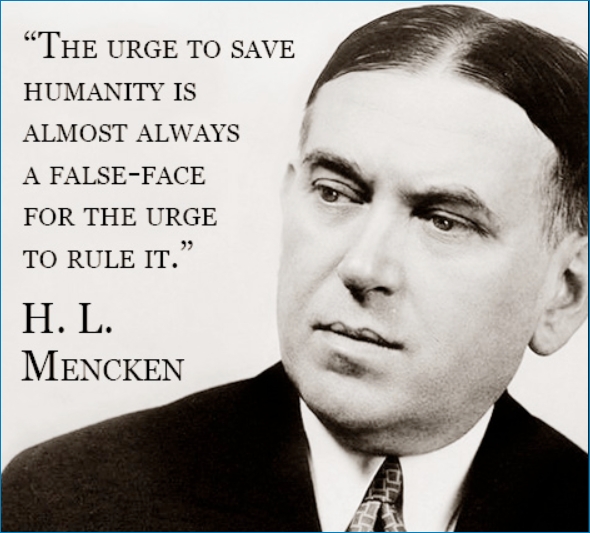 MK “Mahatma” Gandhi’s birthday is one of only three national holidays in India (the other two being Republic Day and Independence Day.)[1] Indians are taught that it was Gandhi’s non-violent non-cooperation movement that led to India’s gaining freedom from the British empire. There, in that one sentence, you get two blatant falsehoods for the price of one.
First, the British gave up their Indian colony not because of Gandhi but because it was no longer profitable to hold on to India, and on top of that colonialism was losing its appeal among the European powers following the Second World War. Clement Atlee, in response to a question about the role of Gandhi in India’s independence, replied, “Mi-ni-mal.” It is likely that Subash Bose was the real instrument of India’s independence from the British.[2] Continue reading “Mohandas K. Gandhi – The Saint of India”
AMA — October Edition
So what’s on your mind? Here are a few random pictures for your entertainment. The relative frequency of English words used:

Eta Carinae

The universe is amazing. The more you learn about it, the more you realize how absolutely, unbelieveably amazing it is. A related amazing thing is that these days you can learn about the universe from the comfort of your living room or study.
This may seem unrelated to what has been a major focus of this blog recently but actually it is related. I will point out the connection later. For now, let’s talk about Eta Carinae, which xkcd notes (click on the image above) is a luminous blue hypergiant with anomalous FeII emission spectra. Continue reading “Eta Carinae”
 Atanu Dey : Life is a Random Draw