The number of cases of Covid-19 shot up rapidly and is now decreasing fast. Among my friends and acquaintances, many got the virus. Fortunately no one got seriously sick.
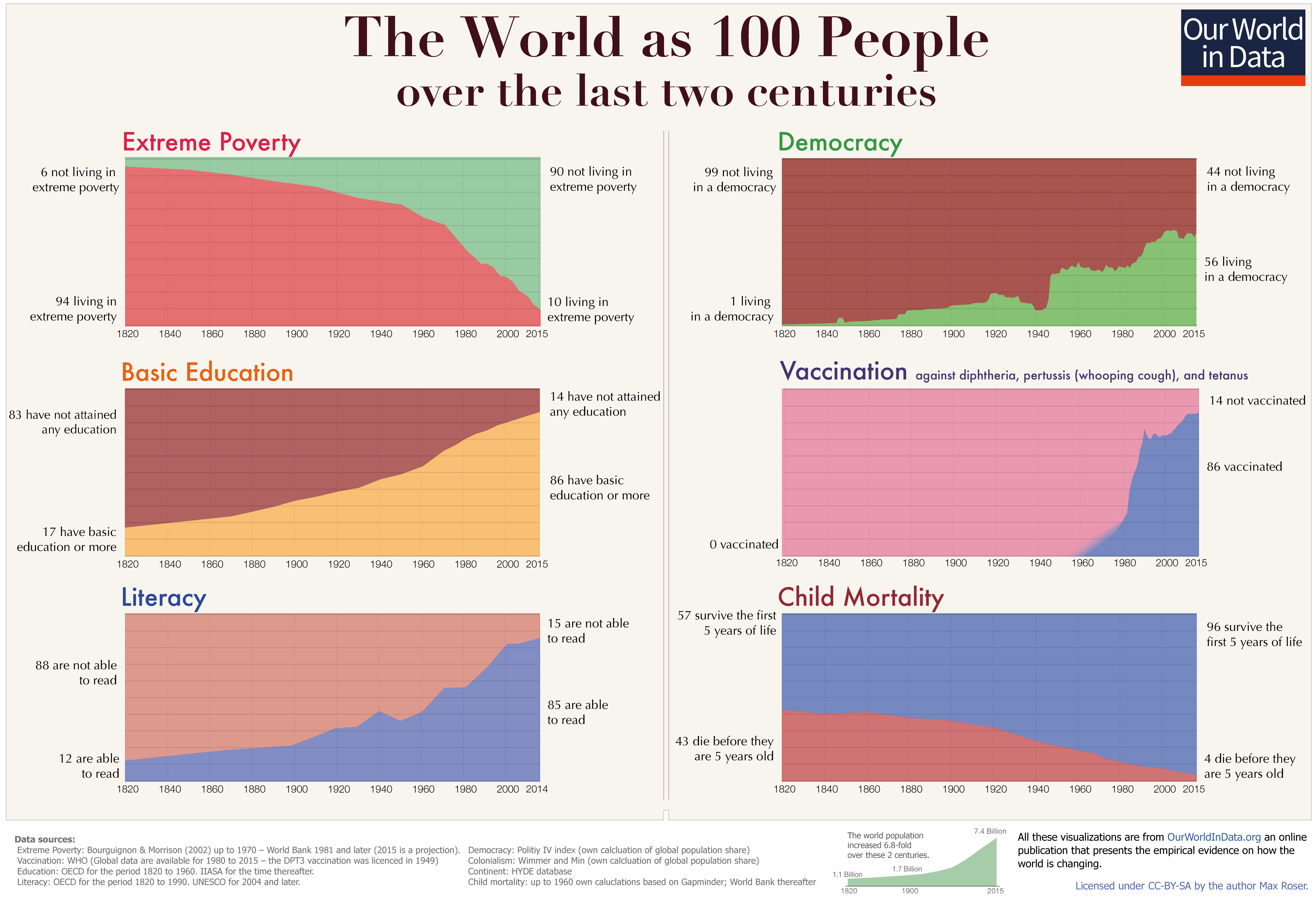
With a bit of luck, perhaps this will be the end of the pandemic. Here are three charts showing number of confirmed cases per million from Our World in Data. Note that confirmed cases are lower than the true number of infections due to limited testing. Continue reading “Covid-19 Data”
Today’s minimum is 11 degrees Celsius below zero, maximum 3 degrees below zero. It’s sunny. We had a bit of snow the past week. But nothing like this — in Nebraska. New Brunswick, Canada.
From the notes to the video:
Canadian National Railway locomotive 2304 (ES44DC) plows through huge snow drifts and gives me a big ass snow shower as it leads the daily CN manifest train 406 West (Moncton, NB to Saint John, NB) at Salisbury, New Brunswick.
“You’re T. S. Eliot,” said a taxi driver as he stepped into his cab. Eliot asked him how he knew. “I have an eye for celebrities,” he replied. “Only the other evening I picked up Bertrand Russell, and I said to him, ‘Well, Lord Russell, what’s it all about?’ And, do you know, he couldn’t tell me.”
“There will be, in the next generation or so, a pharmacological method of making people love their servitude, and producing dictatorship without tears, so to speak, producing a kind of painless concentration camp for entire societies, so that people will in fact have their liberties taken away from them, but will rather enjoy it, because they will be distracted from any desire to rebel by propaganda or brainwashing, or brainwashing enhanced by pharmacological methods. And this seems to be the final revolution” Continue reading “Aldous Huxley on Servitude”
The Second Amendment to the US Constitution ratified on December 15, 1791, along with nine other articles of the Bill of Rights.
I am a 2nd Amendment fundamentalist. The right to life and liberty is not something that one has because of the benevolence of one’s potential aggressors but because one has the power to resist aggression and tyranny. The greatest danger to one’s right to life and liberty is from the state because the state has a legal monopoly on the initiation of force, which it frequently exercises without any moral or ethical justification.
The primary reason for having arms to protect oneself is not because it deters the garden variety burglar (although that is a definite benefit) but because it puts the state on guard that it better behave or else. Continue reading “Opposing Gun Control”
In the past, conquering Islam has broken many temples and erected mosques over the ruined temples. What should be our ideal stance in modern India? Shall we remove all those mosques and resurrect the temples? Or shall we let the mosques stand because the original criminals (breaking those temples) are all dead? I am not comfortable punishing descendants for their ancestor’s crimes. Instead of breaking and building mosques/temples, shall we remember and remind future Hindu generations of the atrocities committed by some violent rulers in the name of Islam? That will enable the future generation to be on their guard without committing new crimes (like the forceful demolition of Babri Masjid).
Let’s begin with an issue that is not as emotion-laden for Indians as the destruction of thousands of Hindu temples that accompanied the Islamic invasion of India, beginning with Muhammad Bin Qasim’s invasion of Sindh in 712 CE. Let’s begin with the loot by European colonial powers in the more recent past. Colonialism and looting go hand in hand. The British, as the most successful colonizers, are understandably the most successful looters. The British museum is the world’s largest receiver of stolen goods.
Do you believe in the principle of karma, as a theory of a chain of cause and effect in human life? Or do you believe in the cycle of rebirths and karma, until one attains moksha?
I am asking since your blog is titled “Life is a Random Draw”, but the tagline says “It’s all Karma”. They are kind of like the opposite of each other, aren’t they?
“The technologies which have had the most profound effects on human life are usually simple. A good example of a simple technology with profound historical consequences is hay. Nobody knows who invented hay, the idea of cutting grass in the autumn and storing it in large enough quantities to keep horses and cows alive through the winter. All we know is that the technology of hay was unknown to the Roman Empire but was known to every village of medieval Europe. Like many other crucially important technologies, hay emerged anonymously during the so-called Dark Ages. According to the Hay Theory of History, the invention of hay was the decisive event which moved the center of gravity of urban civilization from the Mediterranean basin to Northern and Western Europe. The Roman Empire did not need hay because in a Mediterranean climate the grass grows well enough in winter for animals to graze. North of the Alps, great cities dependent on horses and oxen for motive power could not exist without hay. So it was hay that allowed populations to grow and civilizations to flourish among the forests of Northern Europe. Hay moved the greatness of Rome to Paris and London, and later to Berlin and Moscow and New York.” ― Freeman Dyson, Infinite in All Directions
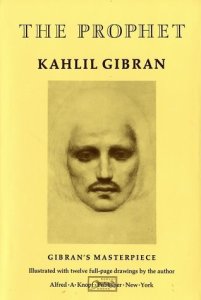
Decades ago, I came across Kahlil Gibran’s book “The Prophet” and later an audio version of the book read by the Irish actor Richard Harris (1930 – 2002.) I read the book and listened to the recording so many times that I can recite the whole book from memory.
It is poetry in prose. It resonates deeply with my soul (whatever that is.) The background music elevate the words. I still listen to Harris’s recording whenever the mood strikes me, which is often. Here is the first chapter.
Below the fold, I have the text of the first chapter. (Project Gutenberg has the whole book.) I recommend reading it while listening to Harris’s recitation of the book. Listen.
An interest in science could lead one to ask “where did science originate” if one is into that sort of inquiry. Frankly, I don’t particularly give a damn about the question. I’d rather understand what is science. Precisely defining any abstract concept in a way that will be universally accepted is hard. However some definition must be advanced so that the discussion does not degenerate into semantic confusion.
Last year in March, Keshav Bedi in an email pointed me to a pamphlet, “Is Science Western in Origin?” by C.K. Raju, published in 2009. [Click on the image above for the pdf of the piece.]


 “There will be, in the next generation or so, a pharmacological method of making people love their servitude, and producing dictatorship without tears, so to speak, producing a kind of painless concentration camp for entire societies, so that people will in fact have their liberties taken away from them, but will rather enjoy it, because they will be distracted from any desire to rebel by propaganda or brainwashing, or brainwashing enhanced by pharmacological methods. And this seems to be the final revolution”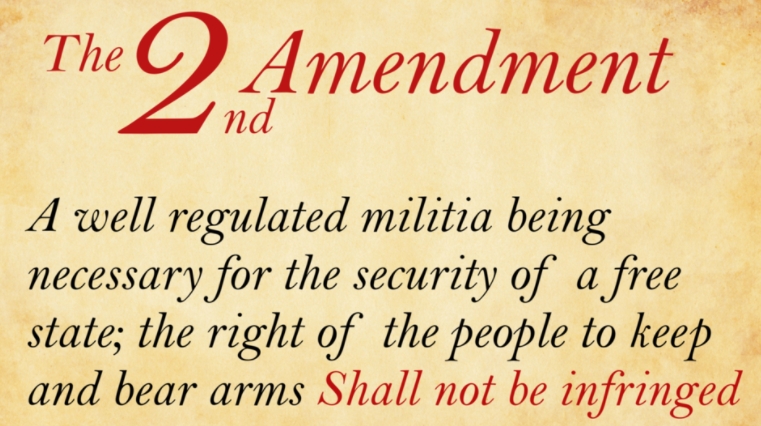


 “The technologies which have had the most profound effects on human life are usually simple. A good example of a simple technology with profound historical consequences is hay. Nobody knows who invented hay, the idea of cutting grass in the autumn and storing it in large enough quantities to keep horses and cows alive through the winter. All we know is that the technology of hay was unknown to the Roman Empire but was known to every village of medieval Europe. Like many other crucially important technologies, hay emerged anonymously during the so-called Dark Ages. According to the Hay Theory of History, the invention of hay was the decisive event which moved the center of gravity of urban civilization from the Mediterranean basin to Northern and Western Europe. The Roman Empire did not need hay because in a Mediterranean climate the grass grows well enough in winter for animals to graze. North of the Alps, great cities dependent on horses and oxen for motive power could not exist without hay. So it was hay that allowed populations to grow and civilizations to flourish among the forests of Northern Europe. Hay moved the greatness of Rome to Paris and London, and later to Berlin and Moscow and New York.” ― Freeman Dyson, Infinite in All Directions
  Decades ago, I came across Kahlil Gibran’s book “The Prophet” and later an audio version of the book read by the Irish actor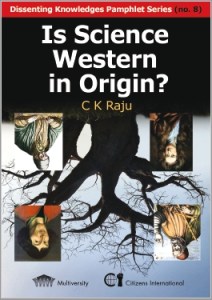
 Atanu Dey : Life is a Random Draw