Thanksgiving is my favorite American holiday. It evolved from a 17th-century colonial harvest feast and days of prayer into a standardized federal holiday established during the Civil War. I will go into the history in a bit. For now, I’ll explain why I love Thanksgiving.
The first and foremost reason is that giving thanks resonates with my life’s guiding principle of being grateful for all the good things in life I receive undeserved. I am sure that I probably did nothing to deserve most of them, unless of course because of karma. Karma means the consequences of one’s actions, not fate.
Be that as it may, I have developed a habit of pausing every day for a few minutes to be mindful of the good and give thanks. It’s a form of meditation that I do whenever. For example, I could be enjoying a nice drive, or a good meal, or listening to music. I pause to remind myself, “this is good, isn’t it?” and give thanks.
I am in San Jose, CA. I got here last Wednesday. I landed at 3:25 PM after a wonderful flight from Bangalore to the San Francisco Bay area via London on British Airways. I like that the two BA flight segments are nearly equal: about 11 hours 30 minutes each. The first segment was on a Boeing 787 Dreamliner. A lovely plane. The best part was that the LHR to SFO was on an Airbus A380, my second-most favorite plane after my favorite, the Boeing 747.
Heathrow is definitely my least-favorite airport. But I did catch a long, hot shower and had a bit of food at the severely crowded lounge. It was breakfast time in London.
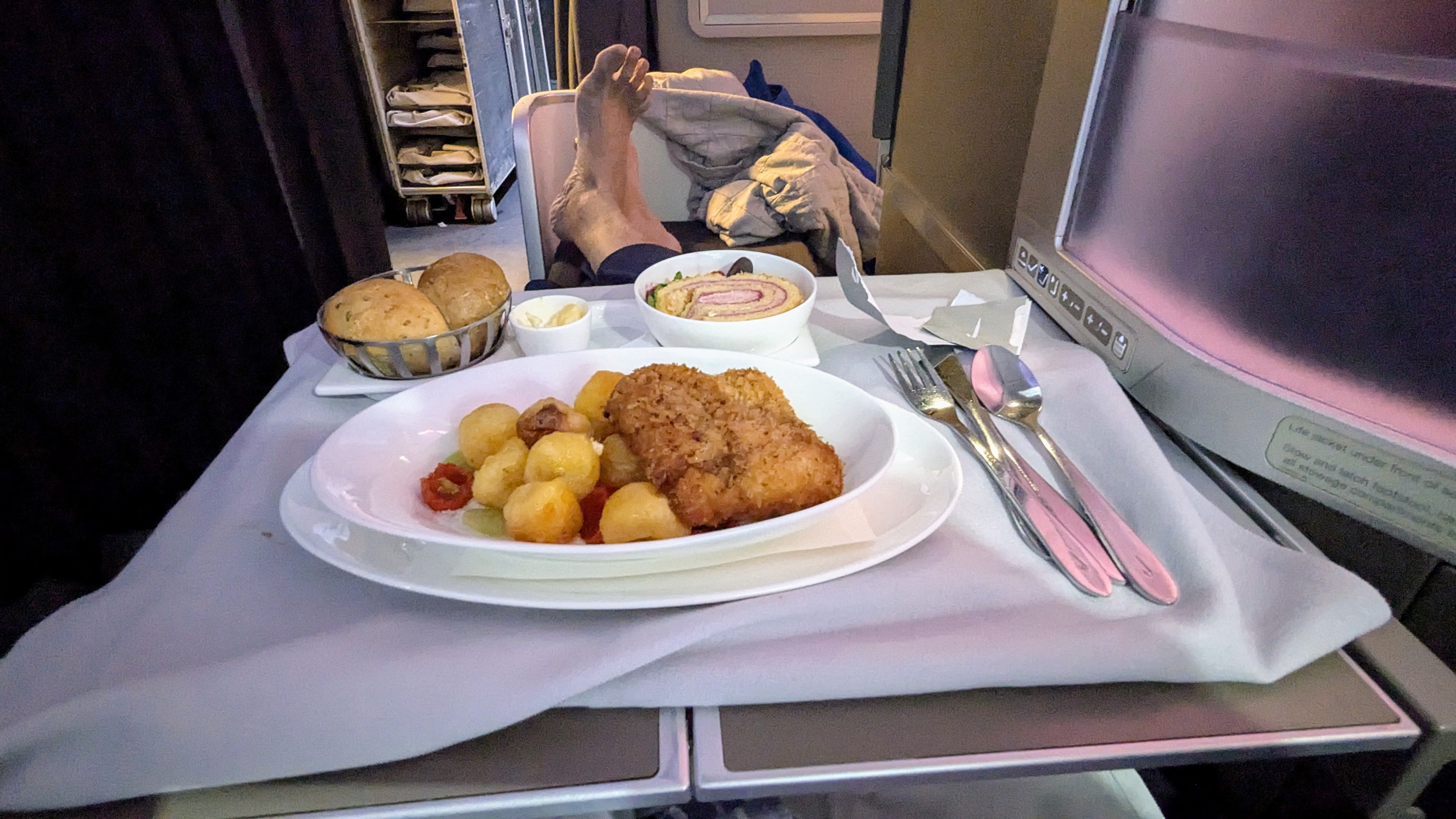
The food and service on BA were better than I was anticipating. They served drinks and dinner shortly after leaving London. As usual, I had some whiskey before dinner, and with dinner I had a couple of glasses of cabernet sauvignon. I do not drink white wine. After dinner I got about six hours of sleep.
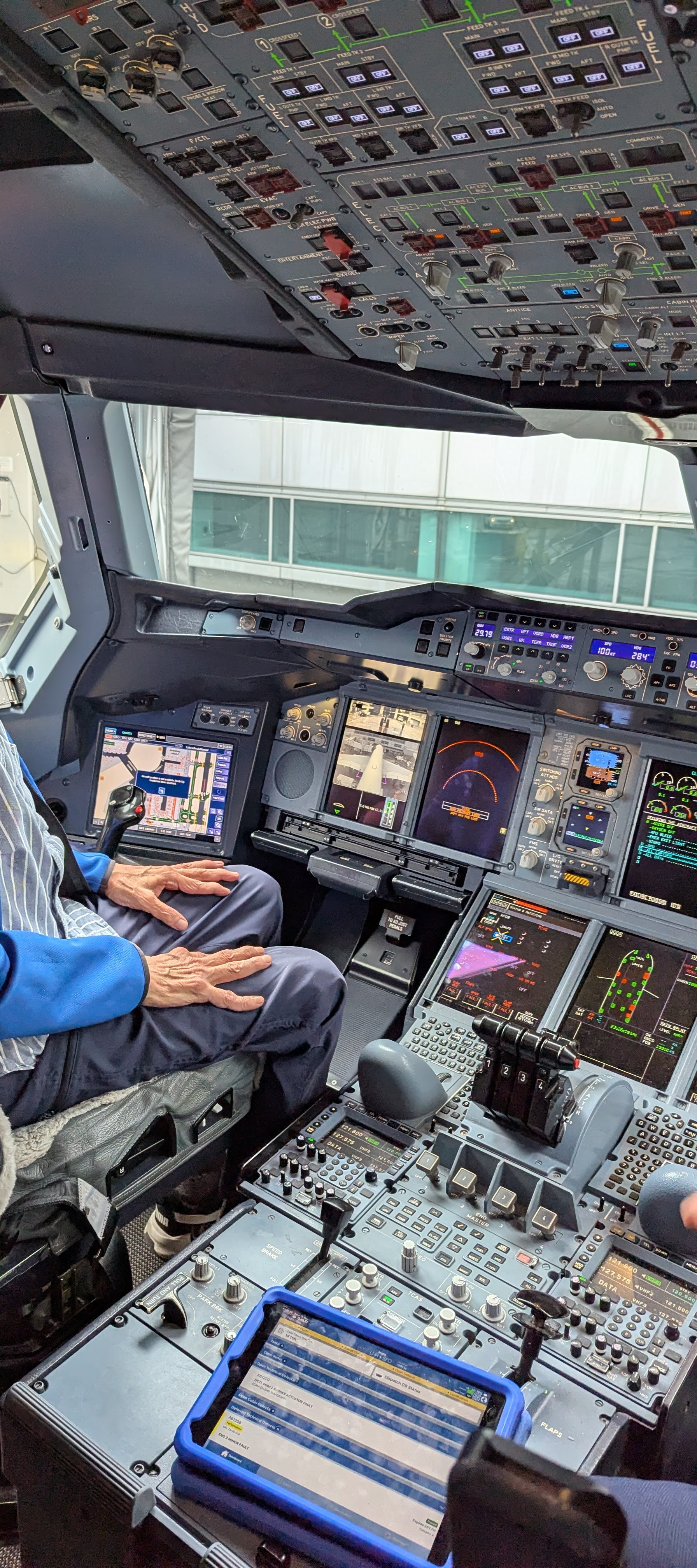 Upon arrival at SFO, I had a delightful visit to the flight deck. The cabin crew had arranged with the flight crew for me to visit them. Before deboarding, I took the stairs to the upper floor where the flight deck is. The flight crew were expecting me. After introductions, they asked me to sit on the left seat — which is the seat that the captain uses, while the right hand seat is for the co-pilot aka the first officer.
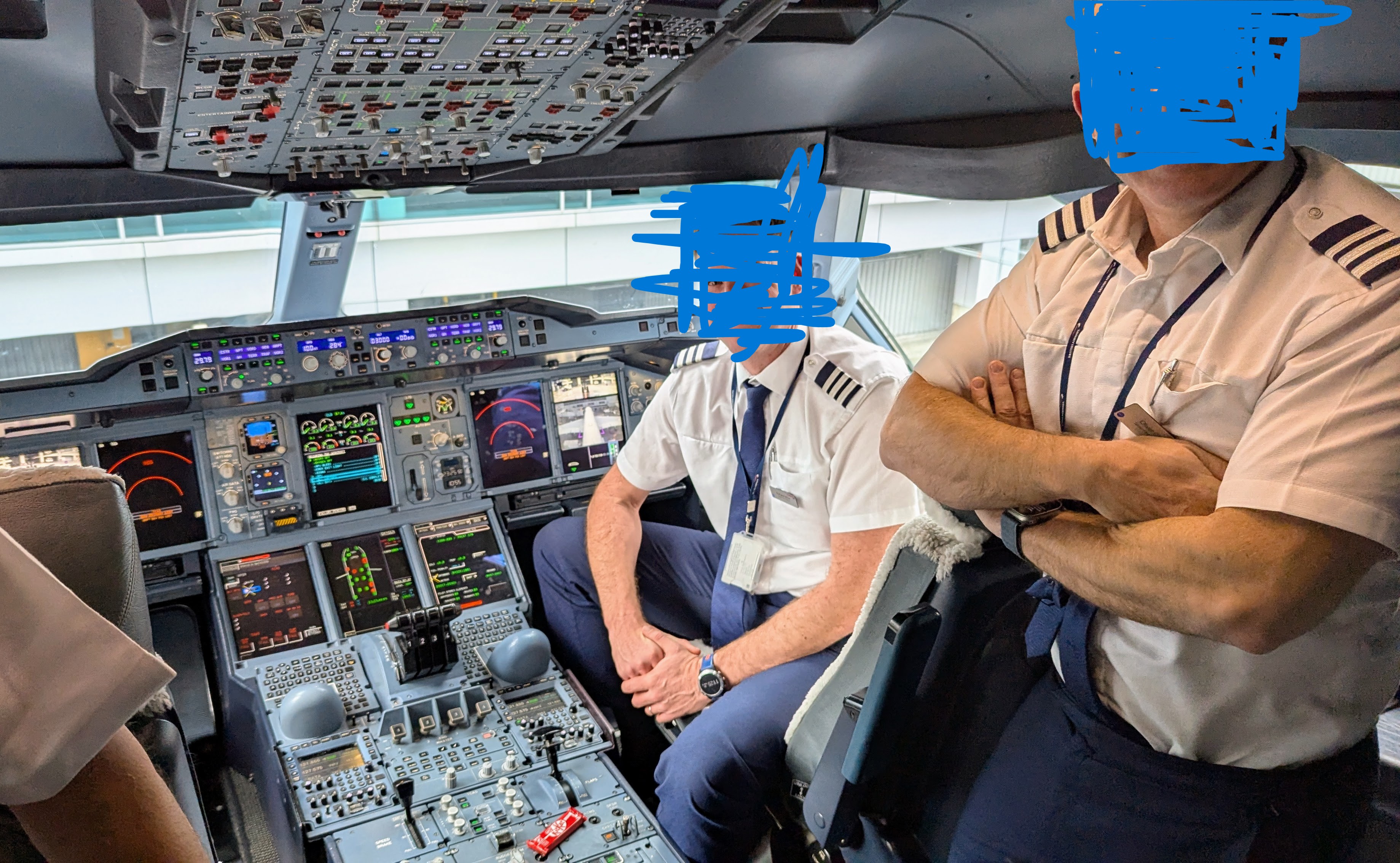
Unlike in Boeing planes which have yokes, Airbus planes have sidesticks. I am not a fan of sidesticks. I much prefer old-fashioned yokes.
Then the next surprise. I walked up to immigration with passport and boarding card in hand. There was no line and no one at the counters either. A supervisor walking around the floor told me to look at a scanner. It took about three seconds, then it flashed green and the barrier opened to let me through.
I need not have bothered with the passport and boarding card. I must say that I like the old-fashioned entry stamp on my passport. Sure, the US govt has a record of my comings and goings but I too would like some official proof.
I collected my checked-in bags and was at the curb at 4 PM. My friend, AP, drove up in a bit and then we spent the next four hours driving from SFO to San Jose. Normally it should take about an hour but that day, the SF Bay area had a good deal of flooding due to rain and the freeways were jammed.
My Thanksgiving
Alright, now that that part of “what I had for breakfast” kind of writing is done, let me get on to the important bit about what I am thankful for. I am thankful for who I am. By the grace of the universe, I am thankful that I was born in India. I am thankful that my adopted country is the US.
Being born in India meant that I was born a Hindu. That’s consequential. Next, I am thankful that I am a fairly average person but with an above-average intelligence. Then I am naturally curious. I don’t have a mean bone in my body. I am thankful that I am naturally compassionate and kind.
I don’t have a job or a family. But I have friends who are my family. Particularly, I note AP and KM. I am homeless but I am welcome in the homes of my friends. I am thankful for that.
I am thankful that I have the opportunity to learn economics. I came to the discipline late in life. Better late than never.
I am thankful that I have the freedom to live in the two countries that I love: India and the US. India gave the world wisdom, and the US gave the world wealth. Wisdom and wealth are equally important.
What else? I am grateful that I live in a world where I have the opportunity to meet kindred spirits virtually. For example, an economist and virtual friend, Dr PL.
I am grateful that I can meet all my needs comfortably, and all my wants are easily within my means. There’s nothing that I want but that I cannot afford.
All the above and more — that’s what I give thanks for on this Thanksgiving Day.
So now let’s do a brief history of Thanksgiving.
The tradition began after a brutal winter killed half of the settlers who had arrived on the Mayflower in the 17th century at Plymouth (in modern-day Massachusetts.) The surviving English colonists learned to cultivate corn, beans, and squash with the help of native Americans.
In the fall of 1621, Governor William Bradford organized a three-day harvest celebration attended by roughly 50 colonists and 90 Wampanoag men, who contributed five deer to the feast alongside wildfowl and seafood.
That was the first thanksgiving. Time went by. Then in 1789, President George Washington issued the first national Thanksgiving proclamation as a day of public thanksgiving and prayer.
Subsequent presidents—including John Adams and James Madison—issued occasional proclamations, though Thomas Jefferson declined to do so, viewing it as a breach of the separation of church and state. Thanksgiving at that time had religious overtones.
At the height of the Civil War in 1863, President Abraham Lincoln issued a proclamation establishing Thanksgiving as a regular annual national holiday. Congress passed a joint resolution in 1941 fixing the holiday permanently on the fourth Thursday of November.
Now for a bit of economics. The lesson from the experience of the first settlers was that collectivism (like socialism and communism) is a recipe for disaster.
Jamestown (1607–1614) and Plymouth Colony (1620–1623) initially operated under communal farming systems where land was worked in common and output was pooled into a shared storehouse.
They did not begin as a socialist experiment. Their communal structures were imposed by the joint-stock companies in London that financed the voyages. Under their contracts, settlers were essentially indentured employees for a fixed term of seven years, with all land, labor, and produce held in a common stock to pay back investors.
Human nature explains that communal arrangements led to severe food shortages. Young, single, and able-bodied men resented working hard to feed other men’s wives and children without extra compensation.
Facing near-starvation in the spring of 1623, Governor Bradford abandoned the common-field system and assigned each family a specific parcel of land for its own use and output rose sharply once land was allotted to individual households. Lesson: private property and free enterprise works.
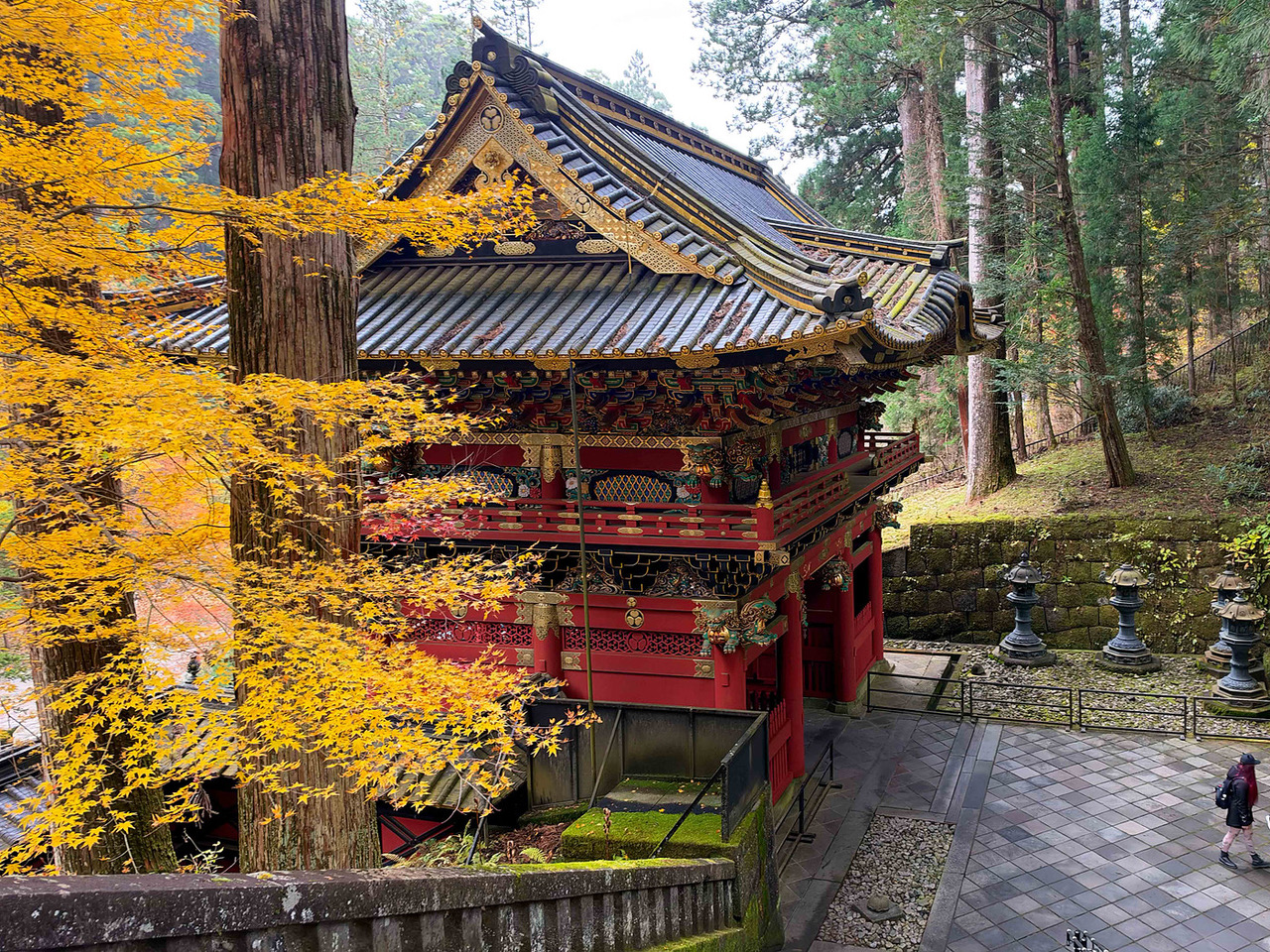
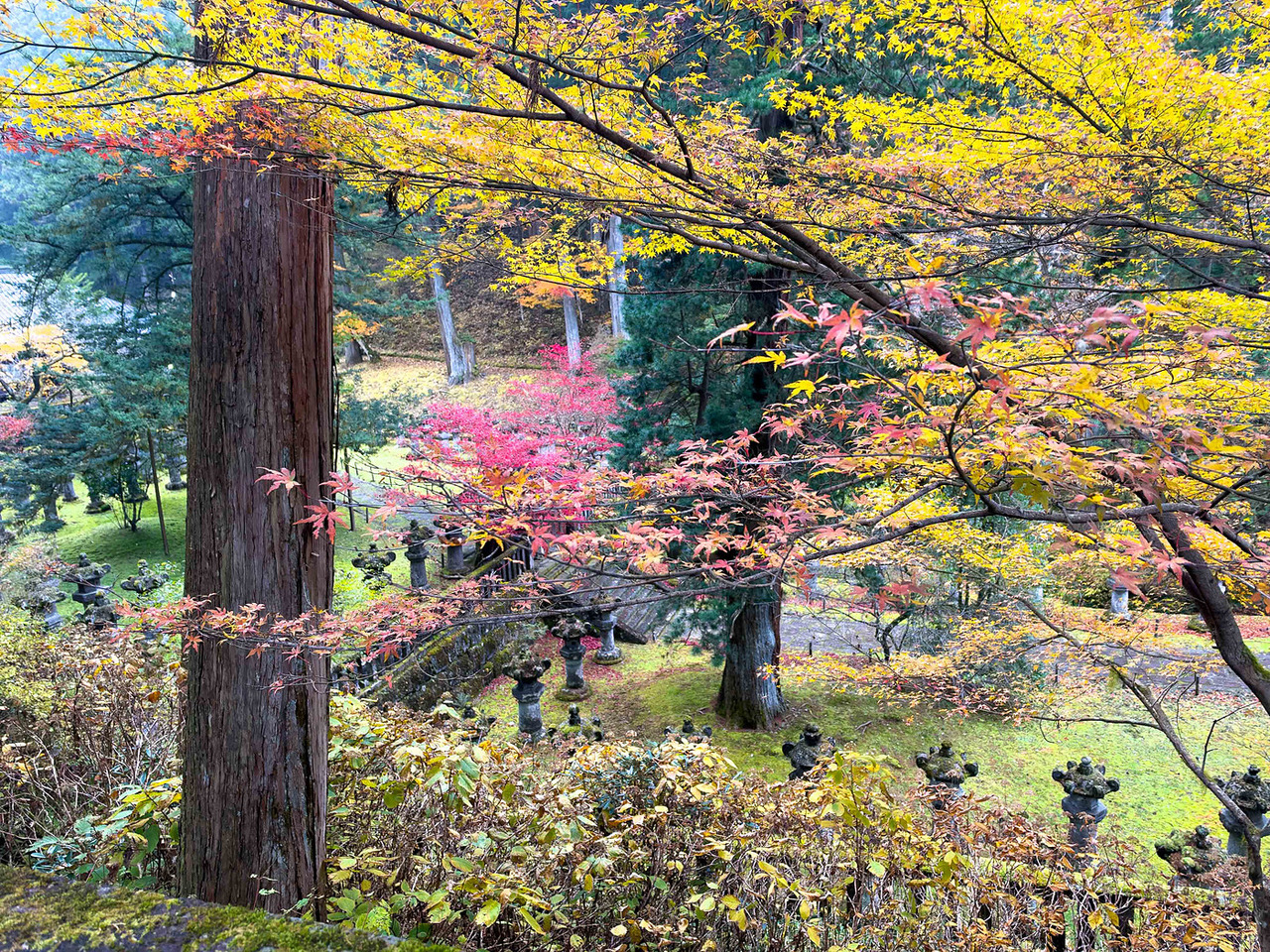
My friend Prasad S has been galivanting around the UNESCO world heritage site – the Nikko temple complex in Japan. The picture at the top of this post is from there. Here’s another. Click to embiggen.
Time for some music. How about Mongolian throat singing?
Mongolian are not the only who have throat signing. Altaic mountain throat singing is also found indigenous cultures of the Russian far east.
That’s it for now. Happy Thanksgiving.


