
“Give me six hours to chop down a tree and I will spend the first four sharpening the axe,” said Abe Lincoln. It’s astonishing how much practical wisdom is packaged into that simple declaration.
Time spent in sharpening the tool is time well-spent; so is time spent in thinking through a problem and thoroughly understanding the problem before rushing off to solve it.
In most cases, since there is almost nothing new under the sun, there are already known solutions to many problems. So the most efficient method to solve a problem is to find out if someone else has already figured out the answer.
The problem of economic development is multifaceted and complex, taken as a whole. But the problem can be effectively partitioned into simpler, more tractable subproblems. Then search for the solutions to those subproblems. You might find already existing solutions, and if not, you solve it for the first time.
[This was originally posted in January 2006. It has been edited for clarity.]
There are important lessons in Singapore’s development experience. To learn from the person who engineered Singapore’s transformation from a backward poor city-state to a vibrant developed economy is encouraging. It demonstrates that transformation is indeed possible and convinces me that powerful individuals are the only agents of deep transformation—both for good as well as ill—of society.
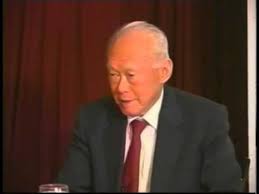
I read Lee Kuan Yew’s address to the 37th Jawaharlal Memorial Lecture on 21st Nov 2005 in New Delhi carefully. His wide-ranging analysis of India’s economy was incisively accurate. I annotated his speech in previous pieces (parts one, two, and three.) This one is the summary of what I gathered from his talk.
In a sense, I did not find anything that he said even remotely surprising. I had independently arrived at pretty much the same conclusions.
Why don’t the leaders of India see what LKY could so easily see? Are they merely incapable of clear thought, or is it that they think but are prevented from acting due to circumstances, or is it a combination of both? Surely, if the Indian leaders are not competent thinkers, they would at least have the intelligence to hire intelligent advisors to figure out the problems. So what is the problem?
I think the answer lies in what we call the objective function. Individuals have a certain goal which can be stated as the maximization of a function given a set of constraints. For instance, someone’s objective function could be maximizing the amount of money given the constraints of time and effort; for another it could be to maximize leisure given the constraint of a reasonable income and time; for another, it could be to do social work subject to leisure, time and money constraints.
LKY’s objective function, I believe, was to rapidly develop Singapore. He was not looking to win elections, or to maximize his personal wealth, or to be a mahatma, etc. Since he is a man of amazing practical genius, he figured out the sequence of interventions and implemented them. Under his autocratic rule, he did what India’s autocrats have been either unwilling or unable to do.
India’s autocrats had different objective functions. I suspect that to a first approximation, their objective function has been not the progress of the country but to maximize personal wealth through corruption, nepotism and bribery. Then there was the matter of elections every so often and funding that costly farce required even more corruption.
Different objective functions lead to different understandings, and therefore to different actions, and eventually to different outcomes.
My objective function is to understand the problem of India’s economic growth and development. I am not trying to win elections and therefore I don’t have to pander to any voting block with hare-brained schemes that ultimately harm everyone concerned.
I am not an IAS babu trying to fatten my numbered Swiss bank account. Therefore, I don’t have to push asinine license-control-quota-permit industrial policies. I am not wedded to any ideology such as monotheism or communism. I am free to advocate the use of any idea as long as it makes sense.
The reason I arrive at similar conclusions as does LKY is that our objective functions are similar, we are sufficiently intelligent, have the desire and capacity to learn from others, and we have thought sufficiently long about the problem. I am sure that LKY has spent a lot of time polishing the ax before starting to chop that tree.
There are differences, of course, between a LKY and me. For instance, I am as lazy as they come and he is a hard-working achiever. But the most significant is this: he is a dispassionate observer of India’s development while I am not. I sincerely care about what happens to India personally; LKY cares to the extent that India’s economic performance has a bearing on Singapore’s welfare, but he does not have a personal stake in India’s successes or failures.
Dispassionate observers must be trusted more than those who have a stake in the game. If LKY’s advice to India is simply ignored, he wouldn’t lose sleep over it. Which is why what he says should be taken very seriously by Indian policymakers. He has no reasons to sugar-coat his analysis or recommend wrong policies. Not his monkeys, not his circus.
I would trust LKY more than I would trust someone like Dr Manmohan Singh when it comes to assessments of India’s strengths, weaknesses, prospects and possibilities. Singh has a boss and various constituencies that he has to please; LKY has to please no one.
The same holds for me: I don’t have to please anyone. I don’t have to please an editor and if the reader does not like what I scribble, he’s free to navigate to some other page.
With that preamble, let me try to summarize what LKY said.
1. India has missed the bus too many times and this time around, it should look sharp and get on the bus.
India could not jump on the bus because it was handicapped. Economic growth was never the main objective. The economy was shackled with socialist ideas.
Why was the economy chained in the first place? Because the holy cows that Indians worship (Gandhi, Nehru) were in fact asses. The asses ruled and the people continued to bow and scrape.
2. Production precedes distribution. If you don’t produce, even after equitable distribution, you would still be dirt poor.
LKY put it thus: Before distributing a pie, I had to first bake it.
Simple, isn’t it? But this simple truth eludes the communists and socialists. They have not figured out that poverty is simply a lack of “stuff.” If you don’t have stuff, you are poor. Producing sufficient amounts of stuff is a necessary condition.
When production is insufficient, then the powerful get hold of the limited stuff, and the majority of the people have to eat dirt. A few very rich people lord it over hordes of abjectly poor people.
Therefore, make the production of stuff the first priority.
3. Manufacturing has to be the base upon which India’s growth must be based.
Which means that all this talk about a service economy is a lot of stuff and nonsense. India is a large economy (in terms of population numbers) and like any other large economy, it has to be largely self-sufficient in that what it consumes.
Small economies can specialize and import the other stuff they need, but India cannot. India has to grow its own food (and therefore must have a large agricultural sector), must manufacture its own stuff (and therefore have a large manufacturing sector), and provide its own services. “Large” here means production capacity, not necessarily employment capacity.
Employment is merely a means, not the end. The end is production. If you produce enough stuff, you can give stuff away to “unemployed” people. On the other hand, if the obsession is with employment, and if this employed population produces zilch, then all can be employed and yet all will be dirt poor.
4. To produce stuff, you have to have infrastructure. Build infrastructure first.
You cannot produce much with your bare hands. So you need factories, You need power to run those factories. You have to have roads and ports and airports to bring inputs to the factory and take the output out. Invest in infrastructure.
And you don’t need to bring out the excuse that the government does not have the capacity to fund the infrastructure. The private sector at home and abroad is more than eager to build them, provided the asinine policies blocking this investment were discarded.
5. Learn from your mistakes.
Of course, to do so, one has to admit that one has made mistakes. Flatly denying that would not accomplish much. China learnt from its mistakes and changed course.
I have my doubts whether we can learn from our mistakes because it is not politically correct to point out that mistakes were made. Goring of holy cows is not taken very lightly by the worshippers of holy cows.
Thank you, Mr Lee Kuan Yew, for speaking to the Indian leaders. I am not sure that you have not wasted your time.


One thought on “From the Archive: Lee Kuan Yew on India – Part 4”