
Tonight is Maha Shivratri. Shiva as “Nataraja” — the Lord of the Dance — dances the Tandava, the dance of creation and destruction. It is the most powerful metaphor of how the universe operates. Listen to this Shiv Tandava Stotram. Continue reading “Maha Shivratri”
Month: March 2021

Dr Jacob Bronowski
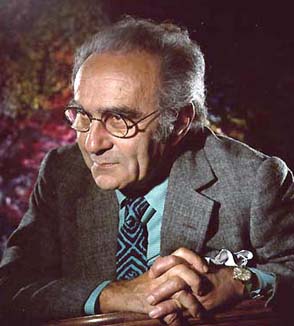 There are a great many people I admire immensely. Some for their erudition, some for their immense contribution to the human condition, some for their enormous contribution to our understanding of the human condition, and some for their extraordinary ability to explain the great ideas of this world we live in. Thanks to the wonders of modern technologies, we are fortunate to be able to make their acquaintance even though some of them are no longer with us.
Dr Jacob Bronowski (1908 – 1974) was a great soul, a mahatma in the true meaning of the word. Here’s Michael Parkinson of the BBC interviewing Dr Bronowski in 1972. Watch, or listen, to this and you’ll know why I admire him. Continue reading “Dr Jacob Bronowski”
The Change
 My interest spans a wide range: music, philosophy, science (primarily physics and cosmology), technology, history, mathematics, poetry, literature, the visual arts, culture and religion. Within each of those topics, I have broad interests. For instance, I really like a wide variety of music. There’s Western classical on one end and there’s Hindustani classical on the other. In between there’s world music, modern composers like Philip Glass, trance, rock, pop, Hindi movie songs (only the old ones before the 1990ies), etc.
My main professional interest is economics. I continue to learn the fundamentals of economics. I have very little interest in economies although the basic question that motivated my study related to the Indian economy and what was the major barrier to its development. Now I believe I know why India is poor. So I no longer have to think about that. Now I just focus on continuing to learn the fundamental principles of economics — and to help others learn what I consider to be important principles so they can work out for themselves the answer to questions they may have about economics and economies that interest them. Continue reading “The Change”
How to Think about Climate Change
Last week I posted a poll about climate change. Around 40 people voted. Here are the results as of right now:

Given such a low number of respondents, very little can be concluded about how concerned people are about climate change and what they expect the government to do. But it is still a bit worrisome that half a dozen people responded that they are “seriously concerned” and that they want the government to take dramatic action.
The problem I think that a Swedish teenager who is given to hysterical harangues gets more media attention — and therefore influences public opinion more heavily — than the reasoned, data-driven, sober writings and presentations of experts who have spent decades more time studying climate change than the teenager has been alive. Continue reading “How to Think about Climate Change”
Time to Say Goodbye
 “All things must pass. All things must pass away.”
That’s what George Harrison sang all those many years ago. I agree. All things do, and must, pass away.
I started my first blog in 1998 or thereabouts when I was a grad student at UC Berkeley. It was called “Life is a Random Draw.” That blog has since been deleted.
That’s understandable since the internet is ephemeral. Impermanence and change are the defining characteristics of the internet as much as it of the universe, as the Buddha realized about 2,700 years ago. Continue reading “Time to Say Goodbye”
Climate Change Poll

Comrade Nehru and Comrade Stalin
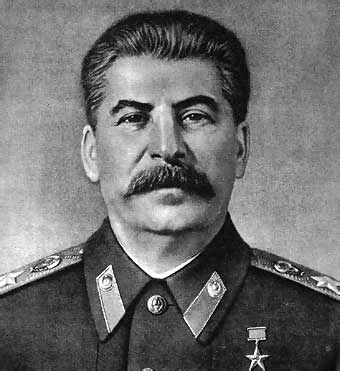 The remarkable thing about the most successful mass murderers of the world is that they are great leaders. Great leaders are great persuaders.
You’d have to get up pretty early in the morning and work very hard all day if you aimed to kill a few million single-handedly by the end of the day. No, that won’t work. You have to persuade a whole lot of other people to do the slaughtering for you. Meaning a lot of people have to think you are a pretty neat guy and they are lucky that they get to do the great work you command them to do. Mass murderers have to be dictators because otherwise you can’t murder that many.
Lenin, as Stephen Kotkin says, is the gold standard in brutal dictators. Here’s Kotkin in conversation with Peter Robinson. A brilliant video.
Stalin killed an estimated 20 million people in the USSR, according to historian Robert Conquest. I like this limerick by him: Continue reading “Comrade Nehru and Comrade Stalin”
 Atanu Dey : Life is a Random Draw