
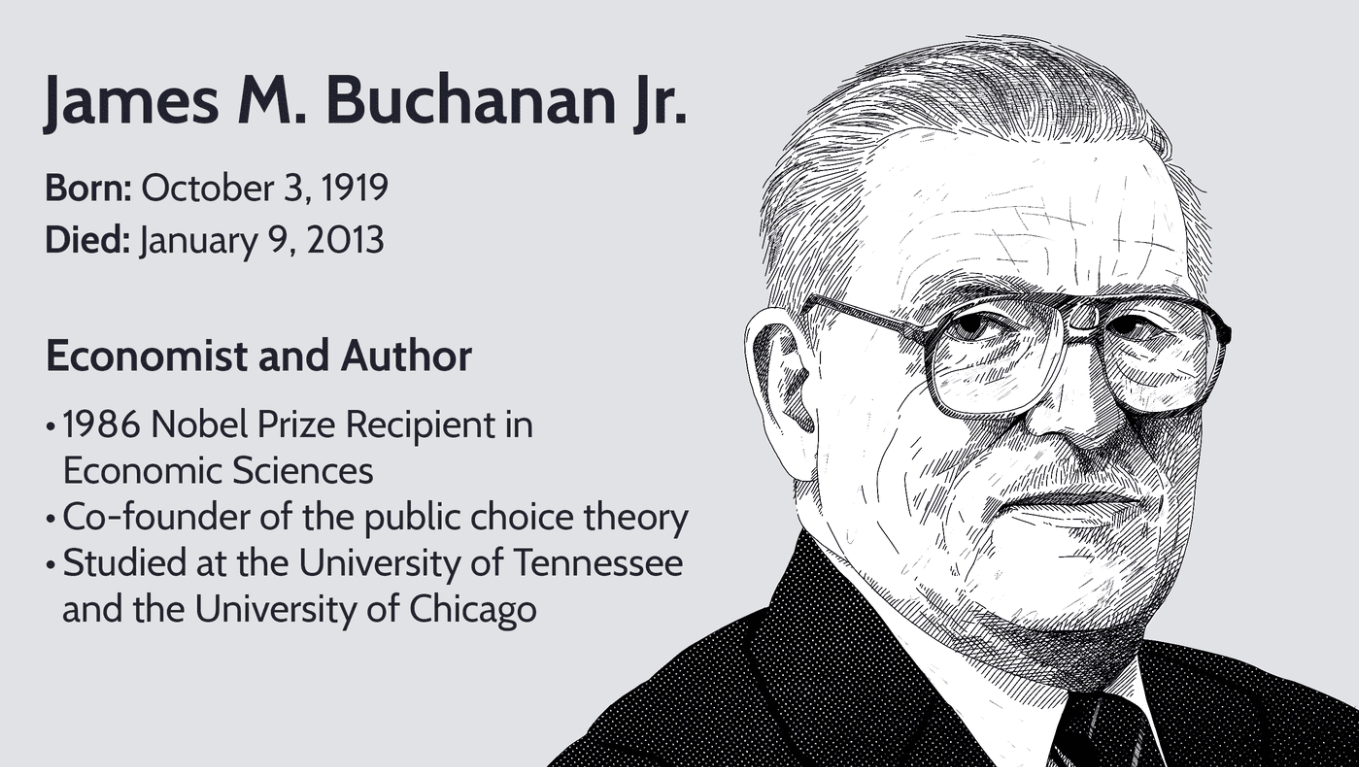
 Among the many economists I have deep respect and reverence for are the classical economists like Adam Smith, David Hume, David Ricardo, and John Stuart Mill. Among the neoclassicals are William Stanley Jevons, Leon Walras, Carl Menger, Alfred Marshall, Vilfredo Pareto, Francis Edgeworth, and Lionel Robbins.
Jevons, Walras, and Menger were the founding figures of the marginalist revolution that established neoclassical economics, with Jevons and Walras independently developing the theory of marginal utility in the 1870s.
Alfred Marshall synthesized classical and neoclassical ideas in his influential textbook Principles of Economics. Pareto, a successor to Walras in Lausanne, Switzerland advanced the field, especially in general equilibrium theory. Edgeworth developed a mathematical economic theory based on utility maximization, and later economists like John Hicks and George Stigler helped broaden the scope of neoclassical thought. Continue reading “The Political Economy of James Buchanan”


