If in answer to the question “who owns you?” a person replies “I own myself” then we are dealing with a free person and not a slave. But where does this self-ownership arise out of? It’s a natural right. What’s a natural right? It’s a right that follows from being human; it’s not a right that is granted by anyone.
And from that natural right of self-ownership follow other rights. Those rights are negative rights. What are negative rights? They are rights that do not impose obligations on others to do something; only that others refrain from forcing one to do something. In contrast to that, positive rights impose an obligation on others.
An example of a negative right is a person’s right to life and liberty. That does not impose any obligations on others; only that others refrain from taking the life and freedom of the person. An example of a positive right is the “right to education” that the government of India has enacted. That imposes an obligation on taxpayers to fund the education of others.
To the extent that people of a society have positive rights, to that extent the society is not composed of free people; they don’t fully own themselves. If you are forced to work against your will for the benefit of others, you are a slave.
A state that protects the negative rights of citizens and does not grant positive rights is Robert Nozick’s minimal state. A minimal state is a protective state — one that only protects citizens. It does not produce other goods or services, does not interfere in the economy, does not redistribute income or wealth to achieve social justice goals, etc.
In his book Anarchy, State and Utopia (1974), Nozick writes:
Our main conclusions about the state are that a minimal state, limited to the narrow functions of protection against force, theft, fraud, enforcement of contracts, and so on, is justified; that any more extensive state will violate persons’ rights not to be forced to do certain things, and is unjustified; and that the minimal state is inspiring as well as right. Two noteworthy implications are that the state may not use its coercive apparatus for the purpose of getting some citizens to aid others, or in order to prohibit activities to people for their own good or protection.
Along the minimal state-maximal state continuum, India falls close to the maximal state end of the spectrum. That fundamentally means that Indians are not free. They are slaves of the state. Slaves are never very productive. Lack of freedom and lack of prosperity are twins: if you have the former, you necessarily have the latter.
Do Indians own themselves? Not really. There are laws that make Indian citizens wards of the state, and to that degree, slaves of the state. The Indian state provides all sorts of “free” goodies to its needy citizens, in exchange for which it enslaves them. That enslavement leads to more neediness, which the state then addresses by a little more enslavement. It’s a vicious circle of dependence and poverty.
I think here it would be appropriate to address a question from a comment to a previous post:
Question: There are consenting adults who want to commit suicide. Assume, I open a business which offers exotic and very satisfying pre-suicide and suicide experience. If you are in government, will you stop me?
Allow me to rephrase that question: “Is the government justified in stopping a person from committing suicide?”
The answer is, “It depends on who owns the person.” If the government owns the person, i.e., the person is the property of the government, then because it is wrong to destroy the government’s property, the government is justified in stopping the person from killing himself.
However if the person owns himself — the self-ownership condition — then it is no one’s business what the person does with his own self. Not only is he free to live or die, he is also free to use his body any which way he wants to, and he also owns whatever his labor produces.
When people lose their freedom, when they become enslaved through some process (which in most cases involve their consent to some extent), they become sub-human. They become chattel of the master.
In our case, the government is the master that owns the people. Therefore the people are not free, even to kill themselves.

 I came across that picture on my twitter feed. An old man bending to touch the feet of a man who has no particular accomplishments at all.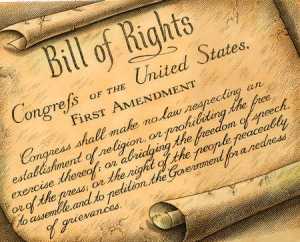
 The words democracy, independence and freedom are frequently used carelessly without a clear understanding of the fundamental conceptual difference between them. They are in fact orthogonal even though they are sometimes correlated. Independence and freedom are used interchangeably, and democracy is automatically assumed to imply independence and freedom. That’s confused and wrong.
 Change is not something that arises out of random chance. If the underlying factors that motivate the electorate don’t change, the outcome will be the same. If party A promoted a certain set of policies as a result of a set of constraints, another party B will have to also adopt the same or a very similar set of policies as well. Why? Because the underlying reality is the same.
  As regular readers of this blog know, I believe that cities are the engines of progress. I am bigly into urbanization. I am delighted that Russ Roberts has
