I love cars and I love driving. Not to brag too much but as it happens, I think I’m the second-best driver in the world. The US is perhaps the best place in the world for road trips. I’ve been fortunate enough to have dozens of road trips under my belt in the US, a few of them across the continent.
Recently a friend in the valley bought a mid-sized SUV, a 2026 Hyundai Palisade Hybrid. It has three rows of seats. This one is very luxurious, with all sorts of bells and whistles. Fancy seats. Great sound system. Cameras and sensors all around. Lots of nice driving assist features. I look forward to driving it one of these days soon. The specs are great.[1]
Hybrids are a very clever idea. They have a gasoline engine and also electric motors and batteries. Pure electric vehicles (EV) don’t have the gas bits and regular cars don’t have the electric bits. Continue reading “Hybrid Cars”
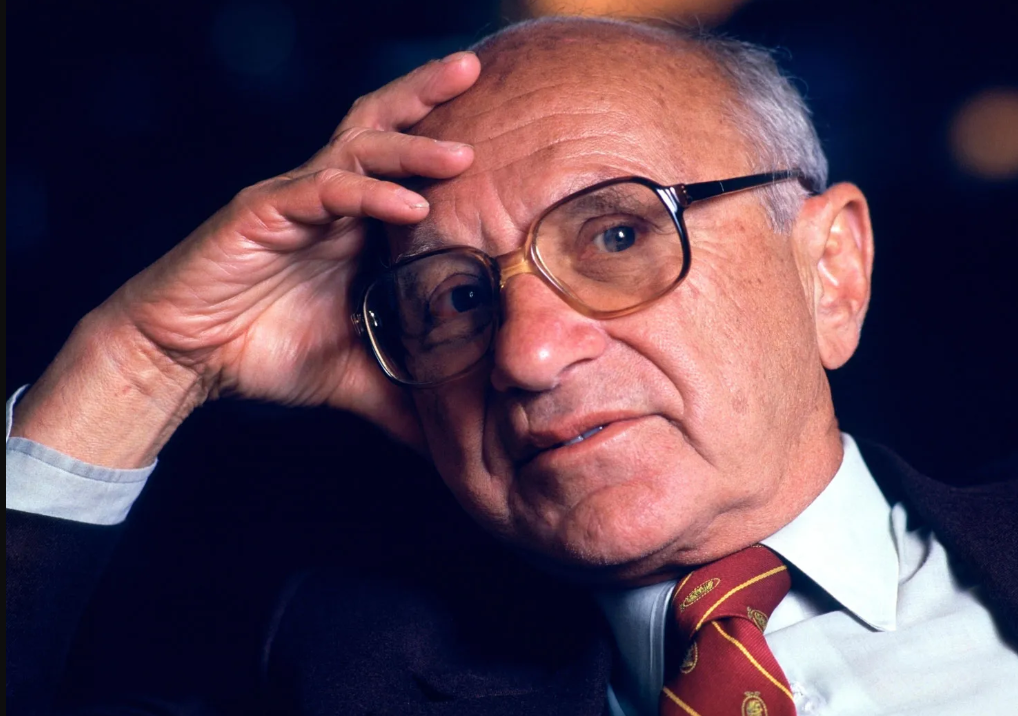
The three men I admire most in my tribe are Friedrich August Hayek, Milton Friedman and James McGill Buchanan. All three were awarded the Nobel prize in economics: Hayek in 1974, Friedman in 1976, and Buchanan in 1986.
Though I never had the good fortune to meet any of them, I am lucky enough to have learned from their wisdom, humanity and scholarship through their books, papers, lectures and interviews. Being able to appreciate their insights is definitely what I like about being an economist. I am proud to belong to that tribe.
It is because of them that I learned the value of liberty. Freedom matters not just for its instrumental role in producing material prosperity but also because being free is what being human is about. One can exist in comfort but still be subject to the will of others. Live free or die.
That is the state motto of New Hampshire. The source is believed to be Patrick Henry’s 1775 March speech in which he said, “Is life so dear, or peace so sweet, as to be purchased at the price of chains and slavery? Forbid it, Almighty God! I know not what course others may take; but as for me, give me liberty or give me death!”
A few years ago I had made serious plans to move to New Hampshire from Delaware but thanks to the evil Dr Fauci and his Chinese virus, that did not materialize. Continue reading “Milton Friedman on Responsibility”
Bill Watterson created one of the most loveable characters in modern American fiction. I suspect that the comic strip Calvin & Hobbes is probably more well-known than Mark Twain’s characters Tom Sawyer & Huckleberry Finn. I conjecture that Twain would have enjoyed Watterson’s creation.
About C&H I wrote in 2022, “The protagonist of our beloved strip is named after the French theologian, John Calvin (1509 – 1564), and his sidekick is named after the English philosopher, Thomas Hobbes (1588 – 1679). I don’t know much about Calvinism but I am familiar with Hobbes’s work Leviathan, as I have an interest in political economy theory.”[1]
Our precocious Calvin’s pronouncements are funny for certain but frequently they are accurate as well: “People think it must be fun to be a super genius, but they don’t realize how hard it is to put up with all the idiots in the world.” I relate to that sentiment all the time. I can’t stand retards.
Though I am not a super genius, or even a genius, I do find average people aggravating. I think geniuses who are also good-natured are extremely rare. Continue reading “Calvin & Hobbes”
Growing up in India, I was taught that democracy was the great good that we have to be eternally grateful for. Democracy was the Holiest of the Holy Cows and it was the gift that Gandhi and his lackeys had given to the people of India through their wisdom and generosity.
It seemed that democracy was so precious that the terrible poverty of India was a price worth paying for it. The link between poverty and democracy was never explained but the claim was that India was poor because it was a democracy.
Allow me a bit of personal reflections. It was pretty late in the day that I learned to think critically about our world. How should we live, how should we organize society to be peaceful and prosperous? How to think about those questions is at least as important—if not more—as the question of the structure of chemical elements and learning calculus. Continue reading “Popper and his Theory of Democracy”
I think that the English have the most delightful sense of humor. It’s dry, irreverent, subtle, often rude but in a sophisticated sort of way, and—most importantly for me—intelligent. An explanation for why I love English humor could be that I grew up reading PG Wodehouse.
On arriving in the US, I got introduced to English sitcoms. This was decades before the internet. Therefore, most of the visual entertainment at home was broadcast TV. We’d gather around the TV in the living room every evening to watch our favorite shows. Public TV carried a lot of BBC programming. I loved a whole bunch of them.
Carl Sagan was one of the greatest popularizers of science the world has seen. Born in Brooklyn, NY in 1934, he sadly passed away relatively young in 1996 in Seattle, WA. A trained astronomer and astrophysicist, he inspired generations of scientists through his popular books and his brilliant TV series, Cosmos, one of the most beloved science programs ever made.
Sagan authored, co-authored, or edited around 20 books total, along with hundreds of scientific papers.[1] One could not read him without being moved by the poetry and the lyrical quality of his prose. It was inspired and inspiring. I believe that reading his popular books is great training on how to express oneself verbally.
He had a distinctive speech style. His soft, resonant voice had a melodic and resonant intonation. It was punctuated with pauses for emphasis. Most memorable was how he said the word “billions” — which he had to do with some regularity since his subject involved astronomical numbers. Though he never uttered the phrase “billions and billions,” it was associated with him in the popular mind. The title of the final book he wrote, “Billions & Billions,” shows that he did not lose his sense of humor even while suffering terminal cancer. Continue reading “Carl Sagan”
Today is “May Day,” the first of May. In many European cultures, it’s a traditional spring festival holiday, celebrated since ancient times. For communists and socialist, it’s the “International Workers’ Day” and they too call it “May Day.”
India being a socialist/communist country, 1st of May is “Labor Day” and is a public holiday.
It’s kind of fitting that the communist/socialist celebrate “May Day” because “Mayday” is the international life-threatening distress call for mariners and aviators. It’s derived from the French m’aider (which means ‘help me’ and is pronounced “mayday.”) That use originated in 1921. Continue reading “First of May”
Buddha Purnima—the first full moon in May—is considered an important day in the life of Siddhartha Gautama, the one who became the Buddha.
Thus have I heard that he was born on this day in north east India in Lumbini over 25 centuries ago, attained enlightenment in Bodh Gaya on this day, and died in Rajgriha on this day.
In 1993, I went on a pilgrimage which I call “Following the footsteps of the Buddha.” Of course, I didn’t walk. I took cars, buses and trains. I spent a day in Lumbini at the place where he was born, sat under the tree (a descendent of the original) under which he attained enlightenment, visited the garden in Sarnath where he gave his first sermon (“the Turning of the Wheel of Dharma”), sat in contemplation at the shrine where he died in Rajgriha at the age of 80.
Of the three dharmas, all of which originated in India, only Buddha dharma left India to become a world religion. Hindu dharma and Jain dharma continued to be nearly exclusively Indian. The dharmas have a family resemblance (just as the religions do.) They share core ideas such as karma, dharma, kama, and moksha. Alan Watts, who knew the dharmas as well as any layperson can, described Buddhism as Hinduism packaged for export. Continue reading “Heart Sutra on Buddha Purnima”
Today is the electron’s birthday. In 1874, Irish physicist George Johnstone Stoney suggested that there existed a “single definite quantity of electricity,” the charge of a monovalent ion. But that was a conjecture. He named the particle an electron.
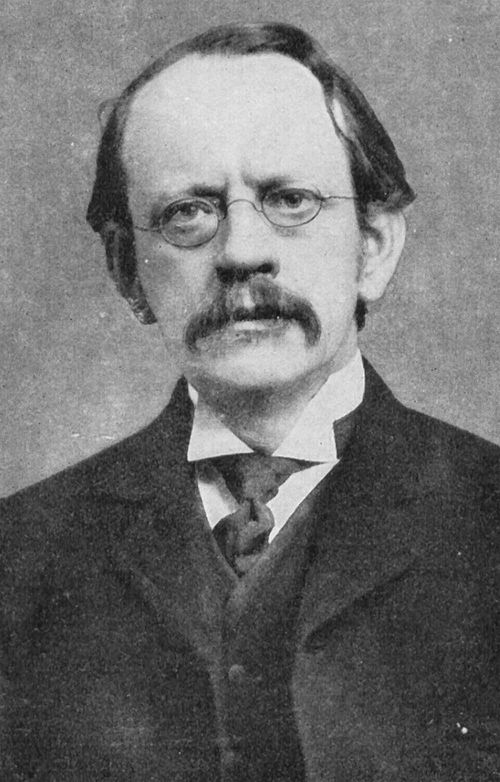
On April 30, 1887 at the Royal Institution, British physicist J. J. Thomson (1856 – 1940) announced the discovery of a particle that is over 1,800 times lighter than a proton. Using a cathode ray tube he found the cathode rays bent in electric and magnetic fields thus showing that they were made of tiny, negatively charged particles were electrons, much smaller than atoms.
As it happened, Thomson’s son, George Paget Thomson (1892 – 1975), experimentally demonstrated electron diffraction in 1927 thus confirming Louis de Broglie’s theory that particles also behave like waves. George Thomson was awarded the Nobel prize in physics in 1937. The father showed that electrons are particles, and the son showed that electrons were waves. Continue reading “Happy Birthday, Electron & WWW”
The plane’s a Boeing 767-300ER, tail number N171DN, which entered service in June 1990. It had been flying since then, with a brief break in storage during the peak of the Covid-19 pandemic. Its last revenue flight was from SFO to ATL on April 9th. It had passed 150,000 hours of flight hours in 2026. Its flying days were done. Its last flight, a ferry flight, from ATL to BHM (an airport in Chicago) was on April 10th, where it will be scrapped.
I did a bit of back-of-the-envelope calculations. Commercial jetliners at cruising altitude do between 500 and 600 mph. This varies depending on the altitude (faster at higher altitudes due to lower air density), the prevailing wind (tail winds help increase the ground speed, head winds lower it.) But their average speed over a flight has to be lower because during both ascent and descent it flies much slower than during cruise.
Assuming that the average cruising speed to be around 550 mph at altitude, I estimate that the average speed would be around 10% lower for the entire duration of the flight — or 500 mph. Going with that conservative speed, during its 150,000 flight hours, the 767 covered around 75 million miles.
The earth’s circumference is 25,000 miles. So the distance it flew is equivalent to 3,000 trips around the earth. The moon is approximately 240,000 miles. So one could say that the plane covered the distance equivalent to 150 round trips to the moon. I hope that like me, you are impressed.
Next, since the plane has been doing a mix of transatlantic flights (around 9 hours long) and domestic flights (around 5 hours long), let’s assume that an average flight for it was 7.5 hours. Therefore I estimate that it has done about 20,000 flight cycles. Meaning it has landed 20,000 times. Only landings count, not takeoffs. Why? For most planes, the two numbers match; for a few planes, the number of landings is (at most) one fewer than takeoffs. But those are extremely rare obviously.
The Boeing 767-300ER has a passenger capacity of 210 to 290, depending on whether it was configured as 1, 2 or 3 class. Let’s say this one could carry 250 people. But the load factor is rarely 100%. Let’s reduce that by 20% and say that on average it carried 200 passengers over the 20,000 flights it did. Therefore, it ferried approximately 4 million passengers during its nearly 36 years of service.
I am always impressed by the build quality of these airplanes and how amazing they are in service. These are modern marvels. Actually, even the older propeller-driven planes were pretty impressive too. Consider the DC-3. It went into production in 1936 and ended in 1950. A few DC-3s continue to fly even after 75 years. Some have racked up over 80,000 flight cycles (over four times that of our Boeing 767.)
They don’t make ‘em like that any more!
An Air India DC-3 in London in 1958 (from Wiki)
No, actually that’s not true.
The DC-3s were not pressurized airplanes; modern jetliners are. Modern jetliners bodies balloon up (slightly) when they are in flight and then the body relaxes after landing. Therefore modern jetliners end up being stressed with every flight cycle because of the pressurization and depressurization. That leads to metal fatigue and the planes have to be retired (scrapped) at the end of their service life of a specified number of flying hours and number of flight cycles.
You might wonder why I’m going on about the retirement of a silly plane. The fact is that I love planes. I have probably taken over 800 flights, around half of them over 10 hours long, and the other half around 4 hours long. I estimate I have therefore spent around 56,000 hours in commercial jetliners. That means I have spent 8 months of my life traveling at 35,000 feet at 500 miles an hour.
And yet — and yet I get myself a window seat and look out of the plane and take pictures and videos of takeoff and landings. If you saw me on flight, you’d think that it was the first time I was on a flight.
Time to say goodbye to dear old N171DN. May parts of you get recycled and may they fly again.
Which reminds me of a song about a river boat.
I know I will remember, when I cannot hear that horn, that would roll up by the mountains, as she took us through the storm. I know they’ve got to take her, but I can’t say I approve, ’cause she’s won so many battles that I hate to see her lose.
Thank you, good night and may your god go with you.






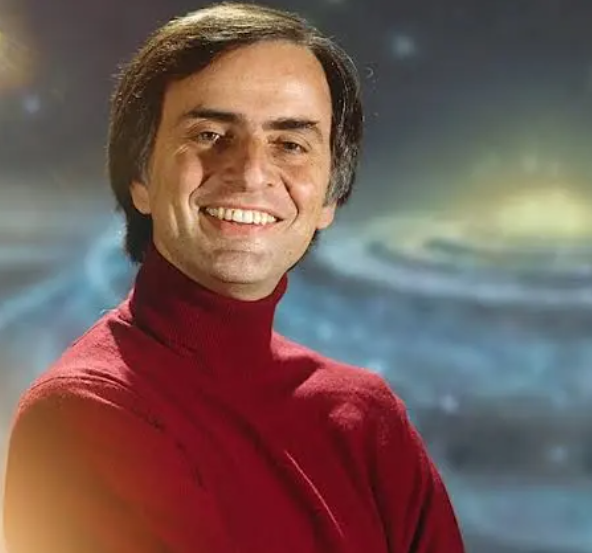 Carl Sagan was one of the greatest popularizers of science the world has seen. Born in Brooklyn, NY in 1934, he sadly passed away relatively young in 1996 in Seattle, WA. A trained astronomer and astrophysicist, he inspired generations of scientists through his popular books and his brilliant TV series, Cosmos, one of the most beloved science programs ever made.



 Atanu Dey : Life is a Random Draw