
Worli Seaface

The Hindustan Times reports “US may end 9-year boycott of Modi, envoy asks for meeting“.
If Shri Modi’s office does receive a request for a meeting from Nancy Powell, it should respond with, “Ms Powell is welcome to seek an appointment. The request will be appropriately considered and processed through the standard channels in the order received.” I don’t see why Narendrabhai should bother to meet Ms Powell, considering that he has other things on his plate — or more precisely in his chai kettle.
I hope @narendramodi politely refuses to meet the US ambassador. NM's office should say that he's busy having rallies, chai and charcha.
— Atanu Dey (@atanudey) February 11, 2014
//platform.twitter.com/widgets.js
Update — 3 PM Feb 11th: I believe that Modi has agreed to meet Ms Powell.
Every day in every which way, Kejriwal figures out a new drama to be in the media spotlight. It seems to me that he is not acting alone — and by that I don’t mean that he does not have a bunch of very able sidekicks. He certainly has visible support. What concerns me is the invisible support. Are invisible hands guiding him? Here’s what I got in a forwarded email. I cannot vouch for its content. You be the judge. I am just posting it for the record. The original was in Hindi and I asked a friend (Thanks, Amit) to translate it into English.
Continue reading “What’s the connection between Aadhar and the Ford Foundation?”
The Italian-born Antonia Maino-led Congress is in deep distress. It appears that the Modi wave tsunami is threatening to smash them to bits and drown the remains. (Previously I had written about the Modi juggernaut.) What are the options open to them? Here is my conjecture.
Continue reading “Will UPA Declare Emergency to Stop Modi?”
The Merriam-Webster says about the word shill that its origins are unknown and the first known usage was in 1914. That makes it one hundred years old. I have usually encountered it in US political commentary. I like the sound of the word and it always brings up the almost similar word shrill to mind. The wikipedia describes the word well —
A shill, also called a plant or a stooge, is a person who publicly helps a person or organization without disclosing that they have a close relationship with the person or organization.
“Shill” typically refers to someone who purposely gives onlookers the impression that they are an enthusiastic independent customer of a seller (or marketer of ideas) for whom they are secretly working. . . .
What brought the word to mind was Medha Patkar. She was on a TV talk show with Arnab Goswami (the same fellow who had that little tête-à-tête with the super-genius, apple of Diggy’s eye, the Italian-Indian shehzada, the pride of the Maino family, etc etc, Raul Vinci aka Rahul Gandhi.) The matter being discussed was Arvind Kejriwal’s hypocrisy.
Kejriwal insists that he will not do something and then goes ahead and does it. He’s gained himself quite a reputation as “Mr U-Turn”. In the current example of a “Kejriwal-turn”, he vehemently, vociferously, publicly insisted that he will not live in a huge government-provided accommodations, but privately he demanded that two huge properties be allocated to him — around 12,000 sqft of living space and 18,000 sqft of lawns.
Among the talking heads was Medha Patkar. She was the sanctimonious shill. Wiki again:
Shill can also be used pejoratively to describe a critic who appears either all-too-eager to heap glowing praise upon mediocre offerings, or who acts as an apologist for glaring flaws. In this sense, the critic would be an implicit shill for the industry at large, possibly because his income is tied to its prosperity.
As an apologist for the lying Arvind Kejriwal, she gave a command performance. She epitomized sanctimonious shill-dom. I tweeted:
Medha Patkar has just demonstrated that she is an unprincipled shill. Shame. Shame. Shame.
— Atanu Dey (@atanudey) February 4, 2014
//platform.twitter.com/widgets.js
I was wrong about Medha Patkar being sanctimonious. She's really a sanctimonious bitch shilling for @ArvindKejriwal
— Atanu Dey (@atanudey) February 4, 2014
//platform.twitter.com/widgets.js
From time to time, I get inspired to tweet about Kejriwal. In November last year, I had called him several names. That was before he became the CM of Delhi. Most people did not realize what a sleazy scumbag he was. Last night I tweeted my view of Kejriwal and attached a screen capture of my November tweet:
Repeat: I don't usually call @ArvindKejriwal a lying hypocritical communal SOB but when I do he richly deserves it pic.twitter.com/swRzqXhmwA
— Atanu Dey (@atanudey) February 4, 2014
//platform.twitter.com/widgets.js
I am sure that I misunderestimate (thanks GW Bush) Kejriwal’s devious genius. He is communal to the core and could probably teach the insufferable Digvijaya Singh a few tricks. Here’s what I noted the other day:
Arvind "Secular" Kejriwal: "All the success is due to Allah's blessings. We are very small people." Not just small, very small-minded.
— Atanu Dey (@atanudey) February 4, 2014
//platform.twitter.com/widgets.js
So there we are watching the train-wreck that is the Delhi government run by #Dramebaaz #U-turnBaba Kejriwal and apologists like Ms Medha Patkar. Don’t these people have any sense or shame? Don’t they realize that they will be reviled by the millions once their nautanki is over?
Anyway, I reserve my severest criticism for the cretins, the brainless dolts, who supported AAP. Their stupidity will impoverish an already poor country.
I like some of the stuff on this blog. Here are a couple.
About a Christian missionary who went to convert a tribe and in the process lost his own faith. (Posted Sept 2010.)
That’s Sri Aurobindo speaking to his disciples in 1938. Sounds contemporary, though.
More to come.
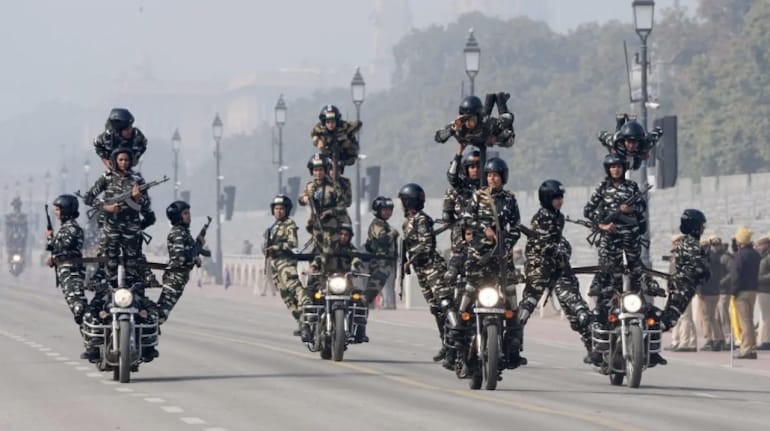 I can understand that India celebrates “Republic Day” — the day on which the Indian constitution came into force in 1950. I am not a huge big fan of the Indian constitution, as you may probably know. But what really bothers me is the ridiculous parade that they put up all over the country, the main sad event being in the capital New Delhi. That grown-ups would participate in something like this puzzles me at times, and then I remind myself that this is consistent with the general stupidity that blankets this place anyway. This ultimate dog and pony show’s absurdity is matched by the hysterical jingoism of the day.
Continue reading “Republic Day Thoughts”
I arrived in India today early morning. The Jet Airways flight from Brussels to Mumbai was delayed because of congestion at Mumbai airport. Passport control and customs were easy, however. For the next few weeks I will be writing from India. Let me know what’s on your mind.
A nation’s prosperity eventually depends on its policies. The policies that obtain, in turn, depend on the objectives of the policymakers. Who these policymakers are is usually determined by the collective — through some democratic process but regardless of the details, the policymakers are ultimately chosen by consensus. No nation can be governed, dictatorially or democratically, without voluntary popular support. The people of India have much to answer for the misgovernance of India. Only when popular sentiment changes can one expect change in the outcome. Shri Narendra Modi appears to be the catalyst that may bring about a change in India.
Continue reading “Shri Narendra Modi’s Address at the BJP National Council Meeting in Delhi”
On my way to India, I am in the university town of Leuven, close to Brussels. I have become quite a regular — last year I was here in February and then again in September. Along the way — I think it was on the flight from SFO to New Jersey — I caught a bug. I had a sore throat upon arrival at NJ and over the next few days it became a chest cold. By the time I left for Brussels, I was running a temperature (confirmed with a thermometer on board the flight) and I declared myself officially sick.
Continue reading “A stage too big for the drama”
 Atanu Dey : Life is a Random Draw