
 Freedom of speech and expression is the indispensable foundation of a society of free individuals. Civilization cannot long survive without it any more than it can survive without food. As Rowan Atkinson so eloquently argued in his defense of free speech, it is the second most essential thing; the first being food in your mouth and the third being a roof over your head. I am afraid that the trend has not been good in that sphere and it is imperative that we fight for our freedoms. The mindless collective is the greatest threat humanity faces, not climate change or even total nuclear war. Continue reading “Cancel Culture — Salem Witch Trials Redux”
Category: Uncategorized
Schopenhauer on the Upanishads
 “Temples and churches, pagodas and mosques, in all lands and in all ages, in splendour and vastness, testify to the metaphysical need of man, which, strong and ineradicable, follows close upon his physical need. Certainly whoever is satirically inclined might add that this metaphysical need is a modest fellow who is content with poor fare. It sometimes allows itself to be satisfied with clumsy fables and insipid tales. If only imprinted early enough, they are for a man adequate explanations of his existence and supports of his morality. Consider, for example, the Koran. This wretched book was sufficient to found a religion of the world, to satisfy the metaphysical need of innumerable millions of men for twelve hundred years, to become the foundation of their morality, and of no small contempt for death, and also to inspire them to bloody wars and most extended conquests. We find in it the saddest and the poorest form of Theism. Much may be lost through translation; but I have not been able to discover one single valuable thought in it. Such things show that metaphysical capacity does not go hand in hand with the metaphysical need. Yet it will appear that in the early ages of the present surface of the earth this was not the case, and that those who stood considerably nearer than we do to the beginning of the human race and the source of organic nature, had also both greater energy of the intuitive faculty of knowledge, and a truer disposition of mind, so that they were capable of a purer, more direct comprehension of the inner being of nature, and were thus in a position to satisfy the metaphysical need in a more worthy manner. Thus originated in the primitive ancestors of the Brahmans, the Rishis, the almost superhuman conceptions which were afterwards set down in the Upanishads of the Vedas.” Continue reading “Schopenhauer on the Upanishads”
The Nietzschean Ladder
 Asking the question “compared to what?” helps in putting things into perspective. The year 2020 was bad. Yes, but compared to what? It looks bad only when compared to what one would have expected from the relatively peaceful and prosperous past few years. Humanity has endured a lot more pain and suffering in many wars and pandemics. It’s far from being the worst year ever in human history. I am afraid that the worst effects of the Covid-19 pandemic are yet to come, and when they do, 2020 will not look as bad.
Friedrich Nietzsche’s aphorism “Was mich nicht umbringt, macht mich stärker” (What does not kill me, makes me stronger) is obviously true of infectious diseases. If an infection does not kill, the organism develops immunity and becomes better at fighting infections. In an analogous way, if a collective is able to survive a shock by developing an appropriate solution, it becomes better than what it was before the shock. Continue reading “The Nietzschean Ladder”
To strive, to seek, to find, and not to yield
 Once in a while I like to review stuff that I have on this blog. Here are some excerpts to fill in the gap while I get around to writing new material. Here’s a bit from Konark and Beyond (January 2007). Continue reading “To strive, to seek, to find, and not to yield”
Happy Winter Solstice
 I missed marking the Winter Solstice of 2020 which was at 10:03 UT yesterday, December 21st. The wiki notes that “the winter solstice is the day with the shortest period of daylight and longest night of the year, when the Sun is at its lowest daily maximum elevation in the sky.” This day onward, the period of daylight will continually increase in the Northern hemisphere until the Summer Solstice (which will be at 3:32 UT on 21st June, 2021) when the process will reverse.
It’s curious that although the night of Dec 21st is the longest night, Dec 21st is not the day with the latest sunrise. Sunrise time depends on the latitude of a place — the more distant from the equator, the later the sunrise and the earlier the sunset (making appropriate adjustments for the differences in the two hemispheres.) Where I live, sunrise was around 7:19 AM on Dec 21st; the latest sunrise will be on January 5th, 2021 at 7:23 AM. After Jan 5th, the sun will rise earlier on each subsequent days. Continue reading “Happy Winter Solstice”
Hauled from the archives: Wikileaks is good for you
 From Dec 2010, here’s the post “Wikileaks is good for you.” Go take a look. If Trump has any sense, he would pardon Assange, Snowden, and Manning while he has the authority and redeem himself a tiny bit. But I have a sneaky suspicion that he wouldn’t do that. He’s too stupid and ignorant.
Please note that I didn’t say that Trump is evil. Trump is a megalomaniac and most certainly a shyster. But I don’t believe he is evil. The guy who won stole the US presidential elections and his running mate Harris are evil. (Just BTW, Biden’s basement is just a few miles from where I live.)
I don’t believe that Biden will serve out his term. I suspect the Democrats have a plan for him. Harris will get the Oval office before half the term is over. They will “retire” him. I don’t know what precise mechanism they’ll use but all I say is that they will do it as surely as the sun will rise tomorrow. This is for the record, and when the time comes, I will say, “I told you so.”
So you may ask, “what’s with that Costco mission picture in this post?” Here’s why. I think the politicians should learn the bit that’s at the top: “Obey the law.” As matters stand now, it appears they don’t give a rat’s ass about the law.
The Bases for a Free Society
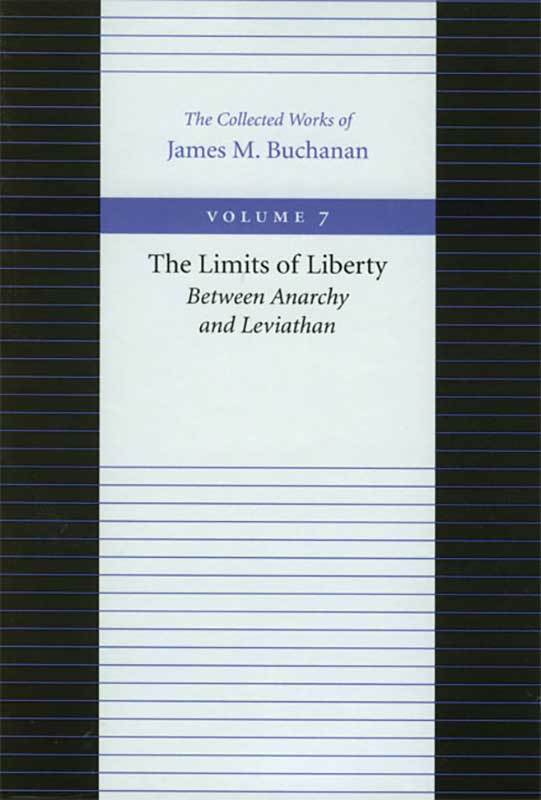 “Precepts for living together are not going to be handed down from on high. Men must use their own intelligence in imposing order on chaos, intelligence not in scientific problem-solving but in the more difficult sense of finding and maintaining agreement among themselves. Anarchy is ideal for ideal men; passionate men must be reasonable. Like so many men have done before me, I examine the bases for a society of men and women who want to be free but who recognize the inherent limits that social interdependence places on them.”[1]
Buchanan’s point is that there is no authority other than us humans and that there’s a tradeoff. Social interdependence cannot be avoided because we necessarily have to cooperate with other humans if we wish to enjoy the gains from trade and the division of labor that it entails. For that we have to arrive at some set of rules that we all agree to abide by through some process of negotiation. These rules will limit our own freedom of action but in exchange for that we will gain greater scope to exercise the freedoms and rights that we do retain. Continue reading “The Bases for a Free Society”
This Policy, Alone – Part 8
 NOBEL PRIZE-WINNING economist Douglass North observed that “economic history is overwhelmingly a story of economies that failed to produce a set of economic rules of the game (with enforcement) that induce sustained economic growth.”
A sound education system is the foundation of sustained growth. Yet, nowhere is the failure to produce a set of economic rules more evident than in the Indian education system. India’s literacy rate of around 60 percent places it in the company of countries such as Uganda, Rwanda, Malawi, Sudan, Burundi and Ghana. Broadly speaking, India accounts for 50 percent of the world’s illiterates even though India has only 17 percent of the world’s population. The failure of India’s primary education is predictably reflected at the higher education level: gross enrolment ratio is a mere six percent. Furthermore, the quality of Indian college graduates is poor to the extent that only about a quarter of them are employable.
Education in India is heavily controlled by the government both at the state and federal levels. Government agencies and regulations dictate every aspect of education, sometimes to the smallest details: who can run educational systems (generally only non-for-profit trusts can), who teaches, what is taught, who learns, what the fees and salaries should be, and so on. Most unfortunately, the entry barriers that the government imposes on the sector lead to such effects as high costs, low quality, and rampant corruption. Continue reading “This Policy, Alone – Part 8”
Amazon is Amazing
 Nothing warms the cockles of this economist’s heart like seeing a market do its bit beautifully. As we say in the trade (pun intended), markets work and incentives matter. That sums up very neatly two of the fundamental insights of economics.
Consider this fact (from a Dec 2013 Quartz article): “Amazon changes its prices more than 2.5 million times a day. By comparison, Walmart and Best Buy changed their prices roughly 50,000 times each in the entire month of November.”
Those numbers for Amazon must have gone up since then. Perhaps Amazon changes its prices 4 million times a day now. Continue reading “Amazon is Amazing”
Walter E Williams, RIP.
Walter E. Williams insisted that the E in his name stood for excellent. He was excellent. He suffered no fools. He passed away today. About him, the wiki says:
Walter Edward Williams (March 31, 1936 – December 2, 2020) was an American economist, commentator, and academic. He was the John M. Olin Distinguished Professor of Economics at George Mason University, as well as a syndicated columnist and author known for his classical liberal and libertarian views.
A few quotes: Continue reading “Walter E Williams, RIP.”
 Atanu Dey : Life is a Random Draw