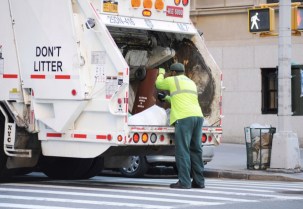
 “Maybe the main function of economics in general is not, as we usually think, the systematic building of theories and models, or their empirical estimation. Maybe we are intellectual sanitation workers. The world is full of nonsense … Maybe the higher function of economics is to hold out against nonsense, … All those theories and models we invent and teach are just nature’s way of making people who know nonsense when they see it.” — Robert Solow[1]
It takes only a bit of economics to realize how much intellectual garbage there is in the world. Learning economics is depressing in that regard. You see piles of intellectual garbage all around. And you cannot do anything about it. You clean up a bit and it keeps piling up. It’s enough for a body to despair.
People’s minds are so full of garbage that it’s a wonder that the world functions at all. That’s when one realizes, if one understands basic economics, how truly marvelous the Smithian invisible hand is: even though people generally systematically believe in all sorts of garbage, their self-interested actions produce an aggregate outcome that they don’t really intend or even comprehend. The good that arises is accidental, not intentional.
Warning: This is a long read — about 12 minutes. Continue reading “Eliminate Poverty, not the Rich”

 In a comment to the post “Not Guilty“, Anirudh wrote:


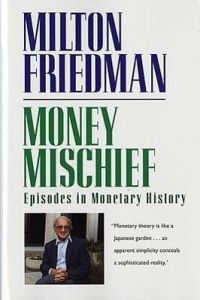 “Perhaps the single most important and most thoroughly documented yet obstinately rejected proposition is that “inflation is always and everywhere a monetary phenomenon.” That proposition has been known by some scholars and men of affairs for hundreds, if not thousands, of years. Yet it has not prevented governmental authorities from yielding to the temptation to mulct their subjects by debasing their money—taxation without representation—while vigorously denying that they are doing anything of the kind and attributing the resulting inflation to all sorts of other devils incarnate.”
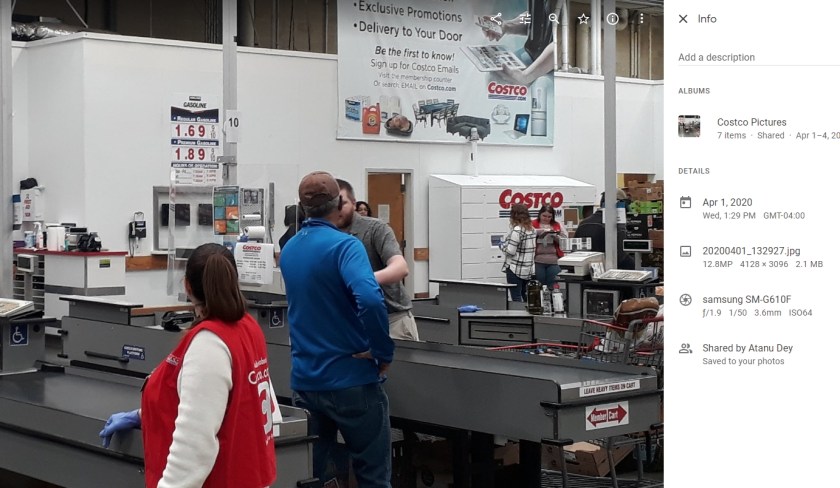 Inflation is what the government does. By printing fiat money, the government imposes a vicious tax on people. Taxation is theft and inflation is the most damaging of theft. Yesterday I paid twice as much for gas as I did just a year and a half ago. In April 2020, I paid $1.69 a gallon (see the image above and note the date stamp; also note it says 1.69 for regular, and 1.89 for premium) and yesterday I paid $3.40 a gallon for regular at the same gas station.
 Prabhudesai, in
  Atanu Dey : Life is a Random Draw