
Marvin Minsky of MIT is a cognitive scientist and an artificial intelligence pioneer. I recently came acros his 1981 paper on “Music, Mind, and Meaning” which I found informative and profoundly thought provoking. Here’s an extended quote from it, for the record.
Continue reading “Minsky on Words”
Category: Quotes
On Making a Difference
We all want to make a difference. That comes effortlessly when one is dissatisfied with the current order of things. As the wise old dipsomaniac Omar Khayyam put it,
“Ah love, could thou and I with fate conspire,
To grasp this sorry scheme of things entire;
Would we not shatter it to bits,
And remold it nearer to our hearts’ desire!”
Continue reading “On Making a Difference”
Wordly Wisdom According to Charlie Munger
The web is a wonderful place where if you have the required smarts, you can get yourself a pretty decent education. Just having a lot of information at the click of a mouse would not do. You have to know what to take and in which sequence. What you get out of a book — or the web — obviously depends on you. But we can safely assume that one is reasonably well educated and can reason effectively at some level. If that is so, then the task becomes one of having to choose which bits you will focus on. With gazillions of pages of information in the web, that is not a trivial challenge.
Continue reading “Wordly Wisdom According to Charlie Munger”
Keith Hudson on Ideas
An excerpt from today’s mail from Keith Hudson, a respected friend who lives in Bath, England. “Ideas in one’s head are slippery, slidery things and it’s not until one acts on them — in the form of changed behaviours or the production of tangible items — that their validity can be fully tested in the real world. Writing about them is only a halfway stage. However, the words one uses (and perhaps the new terms one invents) are rather like seeds that plants produce. They can float away in the air to land and germinate in other minds. Or, if they don’t propagate in this way, ideas seem more like those seeds with hooks that remain passive until picked up by other individuals — such as those I frequently have to pick out from my dog’s fur after her morning walk.”
Continue reading “Keith Hudson on Ideas”
Humble people and good work
Good work is not done by ‘humble’ men. It is one of the first duties of a professor, for example, in any subject, to exaggerate a little both the importance of his subject and his own importance in it. A man who is always asking ‘Is what I do worthwhile?’ and ‘Am I the right person to do it?’ will always be ineffective himself and a discouragement to others. — G H Hardy.
Day Dreaming
“All people dream, but not equally. Those who dream by night in the dusty recesses of their mind, wake in the morning to find that it was vanity. But the dreamers of the day are dangerous people, for they dream their dreams with open eyes, and make them come true.” – T.E. Lawrence
On Failure and Imagination
Without having read a single word of the Harry Potter novels, I guessed that JK Rowling must be an extraordinary person. The possessor of an imagination so remarkable that it captures the hearts of hundreds of millions cannot but be extraordinarily talented.
But I am wary of objects of popular fascination — whether they be religions, politicians, movie stars, cult leaders, popular movements, fads and fashion. I have never been one to judge anyone good merely because millions of people hold him or her in high regard. I am extremely suspicious of the “wisdom of the crowds.” Indeed, whenever I come across a highly regarded public figure, my default assumption is that all cannot be quite right with the person. I admit that I am a cynic.
So while I guessed that Rowling was extraordinarily talented, I did not have an opinion on whether she was good. I am delighted to conclude that she is a good person. The evidence? Her Harvard University commencement address. Here, for the record, are some excerpts: Continue reading “On Failure and Imagination”
On the Road
Go. Profit from exile. To see, listen, walk, pause beside wisemen; question savages and madmen; and listen to stories. It is always pleasant and, sometimes, improves you.
— Jean C. Carriere in his play based on the Indian epic The Mahabharata.
A bit from Einstein
I confess that if there is one human whom I come close to worshiping, it is Albert Einstein.
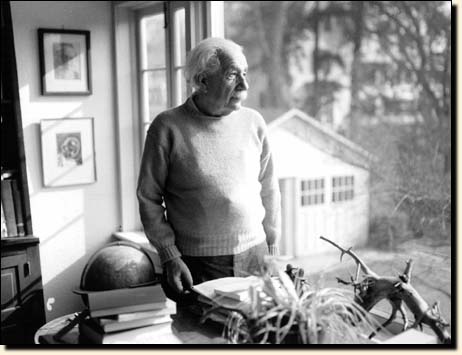
[Picture source.]
“The important thing is not to stop questioning. Curiosity has its own reason for existing. One cannot help but be in awe when one contemplates the mysteries of eternity… Never lose a holy curiosity.”
Continue reading “A bit from Einstein”
Keynes on Economists
Keynes on what it takes to be an economist:
The study of economics does not seem to require any specialized gifts of an unusually high order. Is it not, intellectually regarded, a very easy subject compared with the higher branches of philosophy or pure science? An easy subject, at which very few excel! The paradox finds its explanation, perhaps, in that the master-economist must possess a rare combination of gifts. He must be mathematician, historian, statesman, philosopher–in some degree. he must understand symbols and speak in words. He must contemplate the particular in terms of the general, and touch abstract and concrete in the same flight of thought. He must study the present in the light of the past for the purposes of the future. No part of man’s nature or his institutions must lie entirely outside his regard. He must be purposeful and disinterested in a simultaneous mood; as aloof and incorruptible as an artist, yet sometimes as near the earth as a politician.
You might say he was describing himself. But he was referring to another master economist: Alfred Marshall.
 Atanu Dey : Life is a Random Draw