Pictures and videos of cats and babies makes up for the socialist idiocy one comes across on the internet.
I like baby animals, the most favored being human babies. Human babies in animal suits are the best. So I share with you this picture of a baby in a porcupine suit.
I am not too sure about the suit. It could be a piggy suit — notice the snout and the hoofs. But then it has spiky things all over it. So it could be a porcupine suit. It looks like it to me. And then this old favorite song popped into my head: Porcupine Pie by Neil Diamond. Continue reading “Porcupine Pie”
Dhanteras Greetings. For those who are not familiar with this northern Indian festival, here’s a bit from a 2019 post on Dhanteras.
“The first day of Diwali is called Dhanteras — the thirteenth lunar day of the month of Kartik. On this day, Lord Dhanwantari came out of the ocean with amrut — the nectar of immortality — for the Devas. This day marks the beginning of Diwali celebrations.”
Share lots of sweets with family and friends, and have a wonderful Diwali with fireworks and lights.
Here’s what I am listening to — Roopa Panesar on the sitar, accompanied by Upneet Singh on tabla, and Pirashanna Thevarajah on the mridamgan. Listen. Continue reading “Dhanteras”
Percussion player from South India, Pirashanna Thevarajah plays ghatam and mridangam exceptionally well. Here he introduces another percussion instrument used in Carnatic classical music — the morsing.[1]
NOTES:
[1] It’s the same as jew’s harp. The wiki entry says:
There are many theories for the origin of the name jew’s harp. The apparent reference to Jews or to the Jewish people, which only exists in the English language word for the instrument, is especially misleading since it “has nothing to do with the Jewish people; neither does it look like a harp in its structure and appearance”
I first heard Kitaro in the mid-80s. We used to go to Tower Records in Mt. View to buy CDs. Tower Records is now only an online store. But Kitaro’s music lives on. I even got to see Kitaro in concert at the Zellerbach Hall at UC Berkeley.
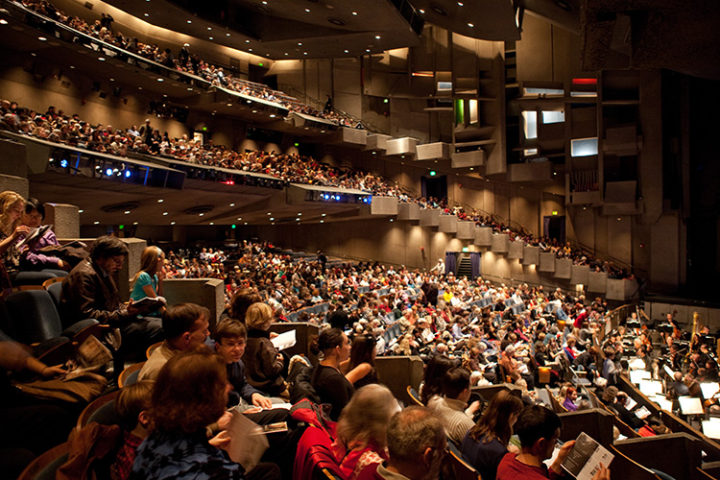
Wiki describes it as “a multi-venue performance facility on the campus of the University of California, Berkeley, completed in 1968. The facility consists of two primary performance spaces: the 1,984-seat Zellerbach Auditorium, and the 500-seat Zellerbach Playhouse. … suitable for dance, theater, and opera, and has a built-in concert shell that provides an excellent acoustical enclosure for symphonic and other classical music performances.” Continue reading “Sundance & Matsuri by Kitaro”
Years ago in Berkeley, I watched this Pedro Almodóvar movie, Talk to Her. My advisor and I would go to the movies every so often. In one scene, Caetano Veloso sings this song, Cucurrucucú Paloma. I don’t understand Spanish but I do know that paloma means dove. The song is heartachingly beautiful. The voice conveys so much loss and longing.
Nice song. Good musicians. Especially the fellow on the piano. As someone remarked in the comments to the video, he shows a lot of promise. I think he should join some band or something. Or maybe take up writing. Anyway, enjoy.
Humans are infinitely varied in their inborn talents and native intelligence. Then given the right training in a nurturing environment, it’s astonishing the heights the lucky few attain. Consider music. In the Western musical canon, Wolfgang Amadeus Mozart epitomizes musical genius. Born in Salzburg in 1756, “Mozart showed prodigious ability from his earliest childhood. Already competent on keyboard and violin, he composed from the age of five and performed before European royalty.” [wiki.]
We don’t have a video of his performance when he was five; we can only imagine. Or we can watch the 8-year old Elisey Mysin perform Morzart’s Concerto No 3 in D major. The youtube video description notes:
The youngest pianist in Russia does not get his feet to the piano pedals, but masterfully performs the most complex musical works. When Elisha Mysin sits down at the piano and music begins to flow from under his fingers, it is hard to believe that he is five years old. He still does not reach his feet to the piano pedals, and the height of the chair for him has to be increased with a pillow. However, talent and hard work have already helped Stavropol Prodigy to win the appreciation of professionals and the love of the public from different parts of the country.
I agree with the great German philosopher Friedrich Nietzsche (1844 -1900) that “without music, life would be a mistake.” Music — together with literature and poetry — helps me keep my balance, beside being a source of pure joy. I love to share what I enjoy.
Here I present to you a perennial favorite, the “Moonlight Sonata” by another German genius, Ludwig van Beethoven (1770 – 1827.) He completed writing it in 1801.
Thus it has been around for nearly 220 years and is one of the crowning pieces of the Western musical canon, and will last as long as that tradition endures, which is likely to be at least a couple of centuries. It’s an example of those rare successful attempts by humans to achieve the sublime. Continue reading “Beethoven’s Moonlight Sonata”

 Pictures and videos of cats and babies makes up for the socialist idiocy one comes across on the internet.
 Dhanteras Greetings. For those who are not familiar with this northern Indian festival, here’s a bit from a

 Atanu Dey : Life is a Random Draw