On Writing Well

This is meta-writing: writing about writing.

Ankan wrote:

You write extremely well. You have very good ideas, but your posts are a joy to read even when I do not agree completely with the ideas.

They say good writing comes as a result of clarity of thought. Is it just that, or can one do something more to improve one’s written ability? Is there any advice you would like to give to someone who wishes to write well?

Thanks for the generous comment.

I am not qualified to give advice on how to write well. Attempting to do so would be presumptuous, as it would imply that I myself know how to write well. By definition, only a few of us can do something well. Much of the time it is a combination of innate talent and years of practice. Little can be done about talent except to accept what one is endowed with gracefully. What one can do is practice enough to become better at something – and perhaps do it well. So what follows is briefly what I believe it takes to become a better writer.
Continue reading “On Writing Well”

Rajesh Jain “On Turning 40”

Go read Rajesh’s mini-autobiography “On Turning 40,” which he did last year on August 15th (but posted it only today because he was on break from blogging.) Please to note that the “Atanu Dey” he mentions in there is indeed yours truly 🙂

I will take this opportunity to publicly recognize that it is an honor working with him. The other day when I was bitching and moaning about how I was dissatisfied with what I was accomplishing, a friend asked me why I don’t just get back to California where I was personally a lot happier. I would do that in a heartbeat. The only problem is that I will never get a chance to work with someone with the vision and integrity of Rajesh.

How we Subsidize the Rich

Yesterday’s Indian Express carried a piece by me on the perverse oil subsidy that the government of India provides. I begin that piece with my favorite Douglass North quote: “Economic history is overwhelmingly a story of economies that failed to produce a set of economic rules of the game (with enforcement) that induce sustained economic growth.” I used that quote in the other piece published in Mint today.

The reason I like that quote it because it goes to the very heart of the problem of India’s economic development. Indians as a collective are no less than other collectives around the world; India is endowed with natural and human resources; yet India is desperately poor. Why? Because we have failed to develop a set of rational rules to play by. Refusing to acknowledge that failing will ensure our continued poverty.

Anyway, here’s the text of that India Express piece.
Continue reading “How we Subsidize the Rich”

Profits are Corporations’ Social Responsibility

The business of business is profit. That’s the whole point in doing business. If a business is following the rules and legally making a profit, it is discharging its social responsibilities. I wrote an opinion piece on corporate social responsibility (CSR) in today’s Mint arguing that corporations are not responsible for solving social problems.

Here’s the text of the article.
Continue reading “Profits are Corporations’ Social Responsibility”

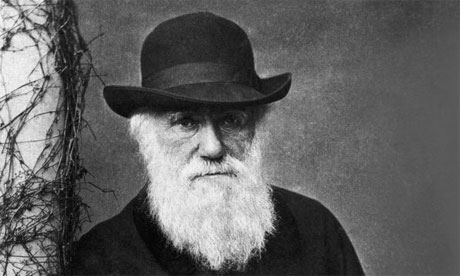
Darwin’s Big Idea

Richard Dawkins summarizes Darwin’s big idea in one sentence: “Given sufficient time, the non-random survival of hereditary entities (which occasionally miscopy) will generate complexity, diversity, beauty, and an illusion of design so persuasive that it is almost impossible to distinguish from deliberate intelligent design.”

Dawkins remarks on the amazing explanatory power of the idea of natural selection. I find reflections of that sort of explanatory power in Adam Smith’s idea that markets work and lead to social welfare gains.

It is interesting that it takes many years of internalizing of a big idea before one can fully comprehend it. It is only after it has been comprehended that one can then express it succinctly and accurately. And to understand why some others find it hard to comprehend certain ideas. Dawkins writes:

It is mainly its power to simulate the illusion of design that makes Darwin’s big idea seem threatening to a certain kind of mind. The same power constitutes the most formidable barrier to understanding it. People are naturally incredulous that anything so simple could explain so much. To a naive observer of the wondrous complexity of life, it just must have been intelligently designed.

I have worked out a model why we find it hard to comprehend — internalize — certain ideas. I will go into it one of these days. For now I would like to note that Charles Darwin (1809 – 1882) was influenced by the ideas of a fellow Englishman, the great economist Thomas Malthus (1766 – 1834).

Great ideas are the greatest achievements of humans. What is worth pondering is why these ideas arise among certain people and not among others. Are there any regularities that characterize the populations within which great ideas arise? In 1776, Adam Smith (1723 – 1790) published his An Inquiry into the Nature and Causes of the Wealth of Nations. In the same year, the founding document of the United States of America, the Declaration of Independence, was written (principally) by Thomas Jefferson (1743 – 1826). And again it was in 1776 that Thomas Paine (1737 – 1809), “The Father of the American Revolution,” published Common Sense.

Why?

[Link: Richard Dawkins on “Why Darwin Matters.”]

My Indian Express column on the OLPC

Yesterday, the Indian Express carried a column by me on the OLPC, a favorite topic of mine. There’s nothing new in there for those who have read my views on the OLPC before. The text of the column below the fold.
Continue reading “My Indian Express column on the OLPC”

Open Thread

Go ahead. Speak your mind. Stop lurking if that is what you have been doing. Bouquets and brickbats. Whatever it is, just say it. This is an open thread but like all other posts, the comments close after 21 days.

By the by, I am in Mumbai tomorrow at at panel which is discussing “Inclusive Growth.”

AtanuDey on MyToday

If you had been wondering when I will get with the new technology, wonder no more. I have created an SMS channel on MyToday.com and so you can keep abreast of announcements related to this blog and yours truly.

It’s simple. If you are in India, send an SMS saying “Start AtanuDey” (case insensitive, and without the quotes) to 575758 or to 098453 98453.

You will start receiving messages that I publish, starting with an acknowledgment message from “ATANUDEY”. What will it cost you? Nothing except whatever it costs to send that single “start” message. Anytime you wish to stop receiving messages from “ATANUDEY”, send an SMS saying “Stop AtanuDey” to 575758 or 098453 98453.

This is what is called the “pub sub”–publish subscribe–paradigm. Basically you are in control and so don’t have to suffer spam.

I intend to use the channel sparingly. Once in a while I will high-light some post of special significance. For instance, I may say, “Go read my opinion piece in today’s Mint”, or “Catch me on BBC World TV at 8 PM.”

I would also publish “Where in the world is Atanu today?” type of SMS. For instance, I am in New Delhi on the 9th and 10th. So I will send an SMS saying “Visiting N Delhi 9th and 10th. Meeting Esther Dyson for a chat about education and technology.”

Catch you on SMS.

By the by, you too can create any channel you want and keep in touch with your friends, family and colleagues. Just go to MyToday.com and get started. It’s the coolest thing to hit the mobile scene since sliced bread.

The Most Important Image Ever Taken

The Hubble Deep Field and the Most Important Image Ever Taken by Humanity.

Watch it and wonder. Wonder how insignificant our concerns are, how parochial our interests, how utterly immaterial even our greatest conflicts are. Watch it and wonder how ignorant the so-called sacred scriptures of humanity are. The visible universe is 78 billion light-years across. Our galaxy is huge — with about 5 billion stars, one of which is our sun. There are hundreds of billions of galaxies.