Prediction: Will Britian Exit? No.

EU So tomorrow (I am writing this on Wednesday at 4 PM Pacific), Thursday, British voters would choose to remain or leave the European Union. I think it should leave. I don’t think it will.

The reason I think it should leave is summed up in this piece over at HumanProgress.org: Britain’s Democracy is a Sham. Reason I think that it will remain is that I don’t hold voters (all voters, not just British) in very high regard. They are generally ignorant, myopic and gullible.

Ignorance, like mortality, is universal. All of us are mortal, all of us are ignorant. We are necessarily ignorant because the amount that is collectively known exceeds the capacity of any individual to know by several orders of magnitude. Each of us probably knows about 10 billionth of what there is to be known. My claim about voters being ignorant, though, has a different emphasis.

I think voters are ignorant about the specific issues that they are usually asked to indicate their preferences through their votes. Some of the smarter voters understand that they don’t understand the issues. That is they are not ignorant of their ignorance.

Richard Dawkins falls into that group. He confessed that he is not qualified to vote on the EU matter: “I don’t have a degree in economics. I’ll try to make up the deficiency by reading. But in a representative democracy we pay MPs to do such detailed homework for us. There may be simple issues for which a plebiscite is appropriate (fox hunting, perhaps). But why does anyone think an issue as complex as membership of EU is one of them?”

So there.
Competition and the Creation of Wealth

This is a continuation of the brief piece about what’s wealth and where does it come from. Wealth, defined broadly, is important to us because it’s useful for our material well-being. Material well-being is not an end in itself but it is instrumental in providing the irreducible basis for our happiness and therefore it is a means to all other higher human aspirations and goals. Without a sufficiently wealthy foundation, it is hard if not impossible to live in peace and harmony with oneself and with others.
Continue reading “Competition and the Creation of Wealth”

PSA: Use the Wayback Machine, Luke

sz255One of the occasionally useful but not very well known resource on the web is related to the web itself. It’s the Internet Archive Wayback Machine.

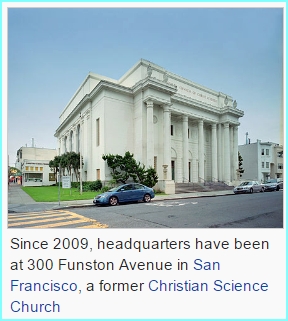
As the name indicates, it saves snapshots of the internet content as it appeared at some times in the past. As of now, it has saved 487 billion pages. The wiki has more details, which is definitely worth a read. Where is it physically located? Wiki says:

“The Archive has data centers in three Californian cities, San Francisco, Redwood City, and Richmond. Its collection is mirrored for stability and endurance at both the Bibliotheca Alexandrina in Egypt and at another facility in Amsterdam.”
Continue reading “PSA: Use the Wayback Machine, Luke”

Responding to the latest AMA

sz253I got asked a few questions in the latest “ask me anything“, including some via email. “You have questions, I have answers” is my motto 🙂
I will address the emailed questions later.
Continue reading “Responding to the latest AMA”

California is the 6th Largest Economy

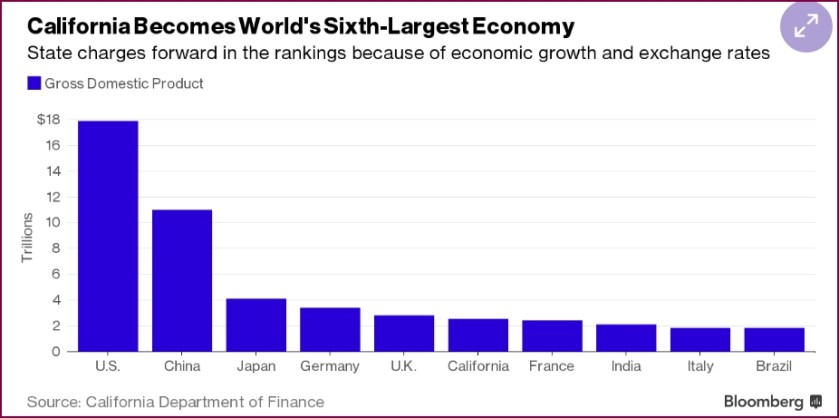
sz234California has overtaken France as the world’s sixth-largest economy, reports Bloomberg.

  • California GDP of $2.5 trillion. Larger than France. Much larger than India.
  • Population (million):
    California       30
    France             66
    India             1300
  • California is home to four of the world’s 10 largest corporations, including Alphabet Inc (Google) and Facebook.

Continue reading “California is the 6th Largest Economy”

Squandering India’s Greatest Opportunity

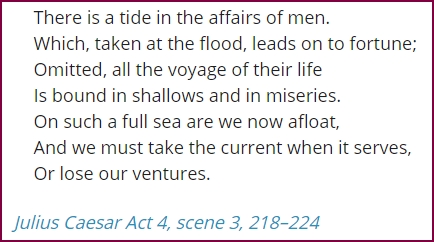
sz191 “There is a tide in the affairs of men. Which, taken at the flood, leads on to fortune . . .” Shakespeare used a sailing metaphor of tides for what in modern terminology we call “a window of opportunity” or ” an inflection point”. There are inflection points in the affairs of countries too.

India has had a number of those. One was in 1947. Then came another when Nehru died (and not a day too soon.) Then another when Indira Gandhi lost the elections following the imposition of “Emergency” and assuming dictatorial powers. Then another when she paid for her misadventures in Punjab by being shot by her bodyguards. Then another when her son Rajiv was killed by a suicide bomber. All of them were inflection points, amazing opportunities for India to change tack. All were not taken at the flood and India continued to be bound in shallows and miseries.
Continue reading “Squandering India’s Greatest Opportunity”

Eddie Izzard on Language

Time for a comic relief from all the seriousness this place has descended to. The typewriter monkeys have been complaining. A bit of levity would do them good. So here’s a bit of humor and silliness. It’s one of my favorite stand-up comics, the incomparable Eddie Izzard. Since I mentioned typewriter monkeys, this excerpt from one of his shows is appropriate. To fully appreciate it, it is good to know a bit of French. I understand only a bit — un peu — of French. Mostly safe for work but he does use the occasional 4-letter word.

“An Eye for an Eye” is Deterrence Against Violence

The concept of deterrence is the credible commitment to retaliation by one party to convince another party to not initiate force. If one party can convincingly persuade another party that any act of unprovoked violence will be met with equal or greater violence, that would constitute effective deterrence. The assumption is that both parties are rational. Here rational is defined as apprehending a situation accurately and acting in one’s own self-interest. Gandhi did not understand this simple idea, being blinded by his admiration of the Christian bilge about “turning the other cheek”.

Gayatri Jayaraman (‏@Gayatri__J) wrote this on twitter:

“an eye for an eye will leave the world blind” – Mahatma Gandhi. Why ahimsa is the only force that can win us our wars

Continue reading ““An Eye for an Eye” is Deterrence Against Violence”

Guns are Instruments, Not Sentient Volitional Beings

In yesterday’s Ask Me Anything, Abhay Rajan asked what I thought of the Second Amendment, no doubt prompted by the horrific mass shooting in a gay nightclub in Orlando, Florida, on Saturday night/Sunday morning at 2 AM Eastern. So far there are 50 people dead, and some from the critically injured may push that number up. The dead terrorist has been identified as Omar Mateen, a supporter of the Islamic State.

The 2nd amendment to the US constitution says, “A well regulated Militia, being necessary to the security of a free State, the right of the people to keep and bear Arms, shall not be infringed.” [See the Cornell University Law School page on the 2nd Amendment for a brief discussion of it.]

My view on “the right of the people to keep and bear arms” is based on the principle that people should have the right to protect themselves against aggression. My ethical and moral position is that initiating aggression or coercion is almost[1] never justified, and one is perfectly justified to resist, violently if necessary, anyone who initiates force against one. The right to bear arms is therefore instrumental in keeping the peace by deterring those who would initiate violence.
Continue reading “Guns are Instruments, Not Sentient Volitional Beings”