
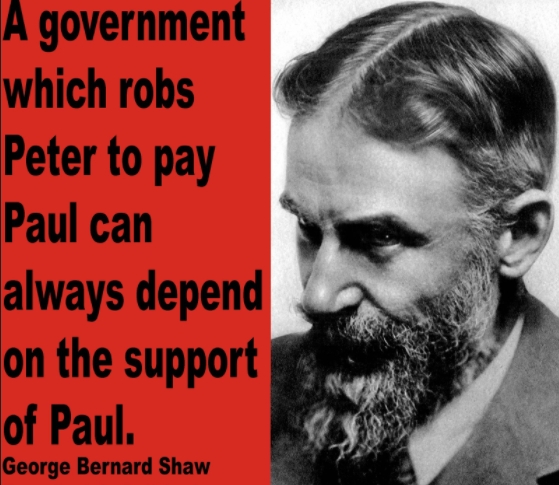
 In an essay titled “Sham Battle” published in October 1936 in the Baltimore Evening Sun, H. L. Mencken enunciated a truth that is one of the core axioms of public choice theory. That axiom is the homely truth that politicians are people just like the rest of us. Homely truths, as Mark Twain recognized, are unpalatable. But they are true nonetheless.
People are motivated by their self-interest in their private lives. That is not to say that they are narrowly selfish but rather that they do what they believe to be in their interest, whatever those interests may be — including altruism if that is what interests them.
Homely truths endure. In 1936 Mencken wrote, “The state—or, to make the matter more concrete, the government—consists of a gang of men exactly like you and me.”
James Buchanan and Gordon Tullock developed public choice theory (PCT) in the 1960s. One of the assumptions of PCT is of behavioral symmetry: people behave the same way in their public capacity as they do in their private capacity. The person in the marketplace is the same person in the voting booth. A person is not transformed from a self-interested being with imperfect knowledge, foresight and morality in his private capacity into an other-directed being with perfect knowledge, foresight and goodwil in his public role as a politician, bureaucrat or a voter. By being elected or appointed to a public office, a person does not magically get endowed with the ability to know “the public good” and pursue that diligently. In other words, politicians are just like the rest of us. Don’t expect them to be better than you’d expect people to be. Continue reading “An Auction of Stolen Goods”
 To me it appears to be true that servitude of the masses have to be largely voluntary because the serfs always outnumber the masters. Two quotes on servitude follow but first a bonus quote from Ayn Rand.
 There are a couple of things I find remarkable about US elections. First, the date of practically all elections is fixed and therefore predictable. Every year, all elections at all levels of government — city, county, state and federal — are held on the Tuesday following the first Monday of November. If the first Monday of November falls on the 1st, then election is on Nov 2nd — the earliest possible date; and the lastest possible date will be Nov 8th. That happens every year, and every four years, it is a presidential election year. That too is totally predictable.
 Today it’s Sharad Purnima, a Hindu tradition. It is a harvest festival that is celebrated on the full moon day of the lunar month of Ashvin. It’s also called Kojagiri Purnima. It’s the birthday of Devi Lakshmi, and she is worshipped on this day. Also worshipped are Indra, and Shiva and Parvati. Lots of worshipping going on among Hindus.
 Economists are uniquely qualified in their understanding of one particular aspect of human activity, and that activity is unique to humans. No other animal trades, or exchanges, among its kind. Adam Smith wrote that “the propensity to truck, barter and exchange one thing for another is common to all men, and to be found in no other race of animals.” And no other discipline focuses on trade as much as economics does. Indeed, the most parsimonious description of economics is that it is the systematic study of trade, and trade-offs.
 In school I learned the basics of reading, writing and arithmetic reasonably well. That may be partly due to competent teachers, a stable family and school environment, and my being somewhat diligent. However, I am convinced that I would have learned a whole lot more if I had had access to the enormous number of excellent teachers and the virtually infinite amount of content on every conceivable subject we have available today: not in person but over the internet.
 If you need any more evidence that people in government are generally incompetent and cause immense harm due to their ignorance and stupidity, not to mention for the moment their obvious cupidity and greed, there’s no greater example of that incompetence than their handling of the Chinese virus, aka Covid-19, pandemic.
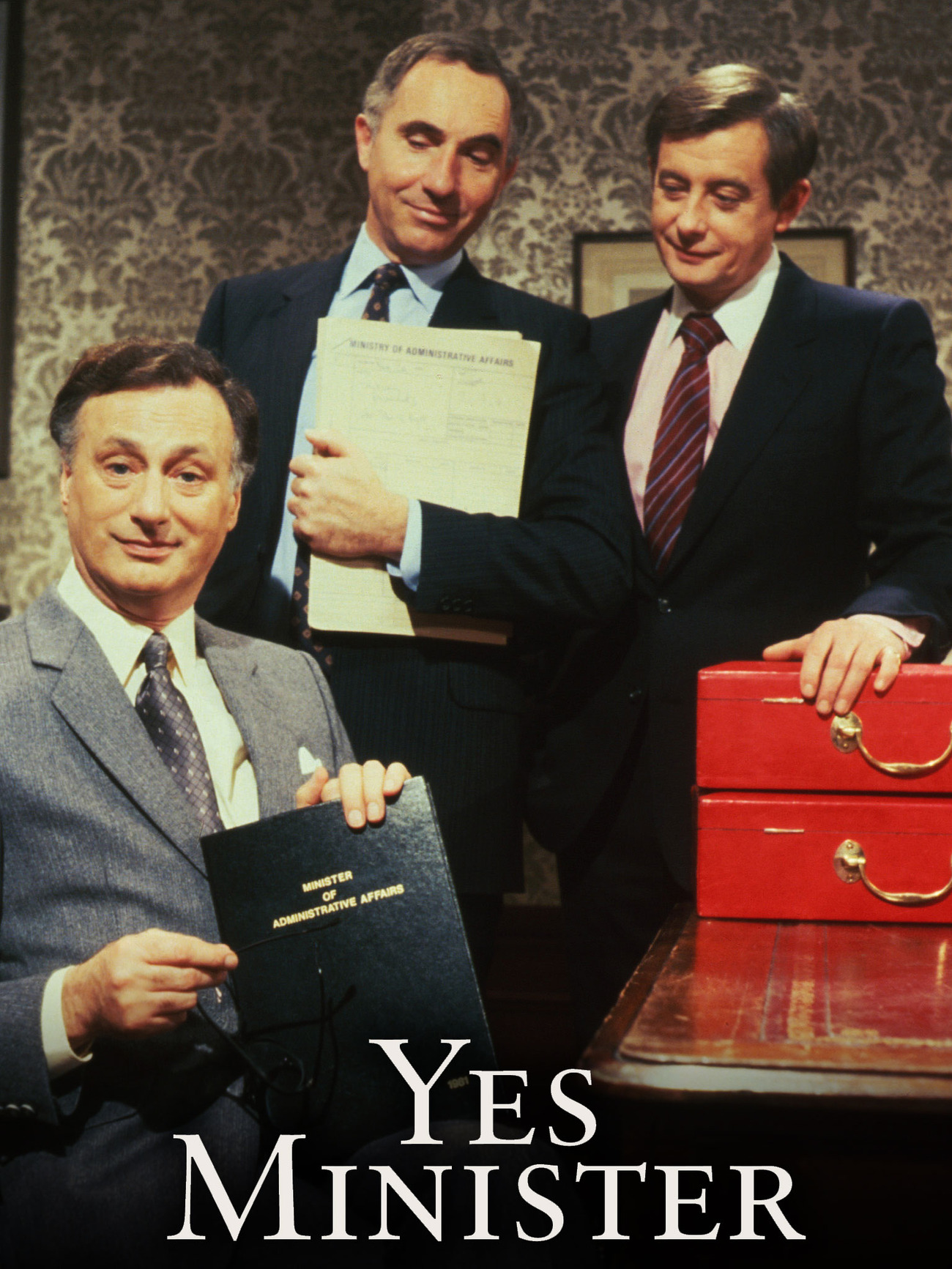 The cliché “they don’t make ’em like that anymore” can’t be more true about political satire than about the Yes, Minister (1980-84) and Yes, Prime Minister (1986-88) BBC TV series. When I first watched them on PBS, I didn’t have a clue about economics, and more particuarly about public choice theory — which Buchanan described as “politics without romance.” Now that I know the basic principles of economics and political economy, my appreciation of the series has deepened.
 Atanu Dey : Life is a Random Draw