“The voting public cannot understand foreign policy, so the electorate cannot hold the government accountable in any meaningful way. That being the situation, what are the incentives for a democratically elected government to conduct a foreign policy beneficial for the nation? Who should hold the government accountable in matters of foreign policy? And how?”
This post is in response to the above and other comments to the previous AMA post. In Prabhu Desai‘s response, he noted that government is an abstraction and not a real entity which has goals and incentives. In reality what we call the government is just a bunch of people, and people have various goals and motivations. The people who constitute the government can be broadly classified as politicians (who are periodically elected) and bureaucrats (who are unelected and enjoy lengthy tenures.) Continue reading “Government”
“It is difficult to make predictions, especially about the future.”[1] It’s common for most predictions not to age well. Consider the one made by one Mr Clifford Stoll exactly 27 years ago in Feb 1995. He was not bullish about the web.
Thomas Jefferson, a Founding Father of the United States of America, wrote in 1807, “Nothing can now be believed which is seen in a newspaper. Truth itself becomes suspicious by being put into that polluted vehicle. The real extent of this state of misinformation is known only to those who are in situations to confront facts within their knowledge with the lies of the day.” Continue reading “Misinformation”
I have always loved high speed rail, ever since I first traveled on the French TGV about 30 years ago. Here’s an interesting video that I came across today. Maybe one day India too would have high speed rail but I am not sure when that may be.
One major concern is that high speed rail is expensive — both in capital and operating costs. If India continues to be a very poor country, people won’t be able to afford the high cost tickets. India’s advancement is dependent on it becoming rich — which means that the government will have to let go of its stranglehold over the economy. I doubt that that would happen. Continue reading “High Speed Rail in India”
It is rare that an author puts the summary of his subject matter at the beginning of the introduction of the book. It’s what David Reisman does in his 2015 book titled James Buchanan (part of the Palgrave Macmillan Great Thinkers in Economics Series.)
At the top of my list of the great in economics, I put Buchanan, Hayek and Mises. Their works have informed my understanding of economics. The sad fact is that it was only after I finished my formal training in economics that I began to read them. Better late than never, though.
Back to the book by Reisman. Since I am familiar with Buchanan’s work, I found the summary concise and accurate. I realize that it may not mean much to someone who is not familiar with Buchanan’s ideas. But here it is, for the record.
The Human Freedom Index 2021is out. Published by the Fraser Institute, HFI presents a broad measure of human freedom, understood as the absence of coercive constraint. It is the most comprehensive freedom index so far representing 98.1 percent of the world’s population. On a scale of 0 to 10, where 10 represents more freedom, the average human freedom rating for 165 jurisdictions in 2019 was 7.12. Here are some highlights:
Shinjuku skyscrapers and Mount Fuji (Credit: Morio}
India needs new cities for it to urbanize at a rapid rate. These new cities have to be deliberately created. They would be “mega Indian new cities” or MINCs. Since the government has no understanding of this matter, it has to be an entrepreneur’s job. The idea has to be fully defined and the plan for implementation created.
Vision: Create 20 new cities across India, each with a (final) capacity of 10 million residents. They will account for 200 million people in 20 years. Begin the project in 2025 and complete it by 2045. Land for a fully-developed city will need to be allocated at the start but brought into development over the 20-year life of city construction. On average, each city will grow by half a million every year, for a total of 10 million at completion. Each city will be high-density by design. Around 1,000 sqkm in land area, population density will be 10,000 per sqkm. (Mumbai population density is 20,000 per sqkm.)
The current Indian cities have grown randomly over the last century and are a total mess. Urban planning has advanced a lot over the last half a century or so. People’s knowledge of how cities should be planned has grown, and there have been tremendous advances in construction technologies. Today’s urban designers will design cities that are as different from the cities their counterparts did 100 years ago as today’s airplane designers differ from their counterparts of a century ago.
The new designed cities will be more efficient and more beautiful than current cities. Cities are engines of growth. The new cities will be more efficient, cleaner, greener “engines” — they will use less fuel, run cleaner and require very little maintenance.
Parks and recreation areas will be designed into each neighborhood; transportation links set in place (some below ground), underground utilities (water, waste disposal, etc.) will be done before the above ground facilities — in short, the infrastructure will be future-proof.
The new cities will catalyze economic growth. Construction of residential and commercial buildings, factories, transportation facilities like subways and airports — all of which will require labor and machines.
If the average annual per capita income of the residents of new cities is $5k more than that of residents of old cities, then each 1 million people in a new city will add $5 billion per year to the GDP. At full capacity, the additional annual aggregate income of 200 million will be (200m x 5k) $1 trillion. Note that the $1 trillion is over and above what it would have otherwise been.
Is $5k per capita average additional income per year reasonable? Yes, because people in urban areas are more productive in general, and because people in the presently dysfunctional cities are unable to produce as much as they are capable of. People living in modern cities across the world are highly productive and there is every reason to believe that Indians can also reach a higher level of productivity than they currently do in poorly constructed cities.
The land needed for new cities is currently held by the public — but of course controlled by the central and various state governments. If they were to grant the land for green-field urban development, the cities would generate the wealth that would be needed to pay for the development. See “Land Value Capture”[1] below.
Suitable financial instruments can be created for monetizing the increase in the value of the land as the cities grow to their full size. This value can be distributed to the people annually, after paying off part of the cost of the development. This will be the foundation for Dhan Vapasi.
Proposal
This is a coordination problem. An entrepreneur has to produce this. The primary function of an entrepreneur is to see an opportunity that others have overlooked. He has to aggregate the under-utilized resources and create the product that has a higher value than the value of the uncombined inputs. The factor owners — land, capital — are paid their dues from value created.
Here are a few steps:
Create an institution for “21st Century Modern Indian Cities.
Hire the best brains in the world to come up with a blueprint for the whole project. Time: about six months
Present the blueprint to the central and state governments.
Get large institutions as partners.
Start building the cities.
This is a combination of super-sized RISC and Dhan Vapasi. Just getting a big idea off the ground w0uld be worth doing. Paul Romer has done a lot of thinking about this. And of course there are fabulous urban planners. And people who know how to finance mega projects.
The problem is that India lacks entrepreneurs who have grand vision and the courage to make things happen. Someone who is able to do this will make a huge difference to the world.
Calvin and Hobbes ran for only a little over 10 years — from Nov 18th, 1985 to Dec 31st, 1995. But what an amazing success of a comic strip.
The wiki says,”At the height of its popularity, Calvin and Hobbes was featured in over 2,400 newspapers worldwide. In 2010, reruns of the strip appeared in more than 50 countries, and nearly 45 million copies of the Calvin and Hobbes books had been sold worldwide.” Continue reading “Calvin and Hobbes”
An hour of listening to Stephen Kotkin provides more insight than is contained in the average big fat book. So here he is answering five questions that Peter Robinson had for him —
what Xi Jinping, the president of China believes;
what Vladimir Putin believes;
whether nuclear weapons are a deterrent in the 21st century;
the chances of another American renewal;
and Kotkin’s rational basis for loving the United States.

 People are sometimes surprisingly good. This is heartwarming. Rescue of ducklings from a storm water drain.
 “The voting public cannot understand foreign policy, so the electorate cannot hold the government accountable in any meaningful way. That being the situation, what are the incentives for a democratically elected government to conduct a foreign policy beneficial for the nation? Who should hold the government accountable in matters of foreign policy? And how?”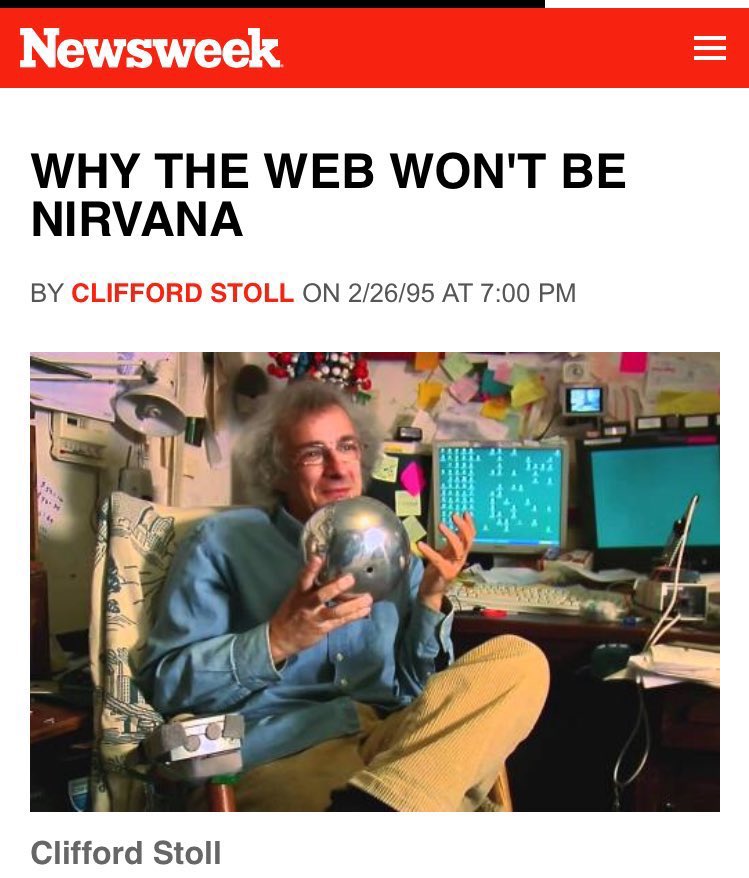


 The
The 
 Calvin and Hobbes ran for only a little over 10 years — from Nov 18th, 1985 to Dec 31st, 1995. But what an amazing success of a comic strip.
 An hour of listening to Stephen Kotkin provides more insight than is contained in the average big fat book. So here he is answering five questions that Peter Robinson had for him —
 Atanu Dey : Life is a Random Draw