
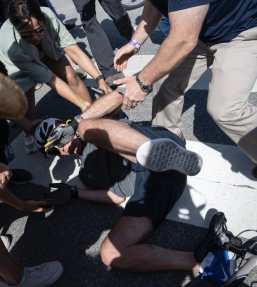
 This is totally off-the-wall irrelevant since this has nothing to do with any contemporary event. But we do need a break from all the doom and gloom. What gloom, you ask!
Moments ago a Silicon Valley friend of mine sent me a picture which I couldn’t figure out. That’s the picture on the left. What’s that, I asked. He said that that was my neighbor (well, these days he lives at 1600 Pennsylvania Ave in Washington DC) falling off his bicycle.
Imagine if that guy dies or become incapacitated. God forbid but that would mean Ms Kamala Harris becomes the POTUS. So let’s all pray that to the Lord of the Universe and ask him to keep the senile old man alive till Jan 2025. Please. Continue reading “The Netherlands Welcomes DJT”
 Do you like music? I do. Intensely and passionately. All sorts of music. The range is unlimited. From Hindustani classical vocals to modern composers to Western classical. From old Hindi film songs to rock ‘n roll and heavy metal. I am so glad that I live in an age that I can have access to a virtually unlimited amount of music at my command. It’s magical and amazing.
 If something looks like a duck, walks like a duck and quacks like a duck, it’s a duck. I am not a fan of bitcoin because it looks like a ponzi scheme, works like a ponzi scheme and sounds like a ponzi scheme.


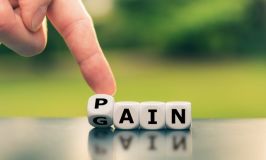 The adage “no pain, no gain” is broadly true with two main exceptions. One is that some people put in the pain but because of misguided effort (which is only evident ex post, not ex ante) or being simply unlucky, end up with no gain. The other being that some people put in little effort but with sheer good luck or cunning criminality end up with big gains. Unsuccessful entrepreneurs who are uncountably many belong in the first category, and politicians and gangsters (but I repeat myself) belong to the second.
 I am not against cryptocurrencies. In fact, I am all in favor of alternative currencies, private currencies, LETS, etc. I believe that people should have the freedom to choose what assets they want to hold, and what to use as a medium of exchange for their market transactions. But I have never been in favor of Bitcoin. I think it is a stupid ponzi scheme.
