Julian Simon

Julian Simon (1932 – 1998). American economist.

      • This increase in the world’s population represents humanity’s victory against death.
      • We now have in our hands — really, in our libraries — the technology to feed, clothe, and supply energy to an ever-growing population for the next seven billion years.
      • Progress toward a more abundant material life does not come like manna from heaven, however. My message certainly is not one of complacency. The ultimate resource is people — especially skilled, spirited, and hopeful young people endowed with liberty — who will exert their wills and imaginations for their own benefit and inevitably benefit the rest of us as well.

LED Blues

We are nearly almost totally unaware of the technological marvels that surround us. But we should be in awe of them. They don’t magically fall unbidden from the skies like manna from heaven. Real people have to work really hard, often in obscurity, to bring those amazing things to life. Today I learned the details about the making of one such innovation: that of the blue LED.

I knew that the blue LED was a big deal and that the inventors got the 2019 Physics Nobel Prize. But I didn’t know of the struggles that one of them — Shuji Nakamura — went through to make it happen. Thanks to a Veritasium video, I have a new hero: Dr Nakamura. His innovation had transformed the world. Continue reading “LED Blues”

ChatGPT AI

Artificial intelligence is perhaps the most transformative technological advancement of our time, poised to revolutionize industries, reshape societies, and redefine the very fabric of human existence.

It is fundamentally changing the way we work, communicate, and interact with the world around us, pushing the boundaries of what we thought possible and opening up new frontiers in fields ranging from healthcare and finance to transportation and entertainment. With its ability to analyze vast amounts of data, learn from experience, and make autonomous decisions, artificial intelligence is poised to drive profound societal shifts and shape the future in ways we are only beginning to imagine. Continue reading “ChatGPT AI”

War is hell

War is hell, as many people who have been in wars and witnessed its horrors have concluded. That includes General William Tecumseh Sherman (1820 – 1891) of the US civil war Union army who wrote “War is cruelty and you cannot refine it.”

But people don’t seem to get it. Those who start wars are never the victims of wars. The leaders start wars and ordinary people pay with blood and treasure. However there are people who stand up to the war mongers; they are specially targeted by the war mongers for their opposition to war and the futility of war.

What puzzles me is this: why is it that people don’t get the bloody scam that is perpetrated against them by the war mongers? It isn’t as if there have been no senseless wars and as if there haven’t been people warning against them since antiquity. Continue reading “War is hell”

Marxism

Richard Wolff, professor emeritus, is a celebrated Marxist.[1] Being a Marxist is not a crime, although it ought to be considering the suffering, death and destruction that Marxism causes wherever and whenever it is tried.

Prof. Wolff is a fine example of an educated man who is totally lacking common sense and critical reasoning faculties. I am not generally so blunt but I think he’s an idiot too stupid to even realize the extent of his idiocy. It’s painful to think of the thousands of young minds he has ruined with his nonsense.

Where’s the supporting evidence, one may ask. OK. Try this. Continue reading “Marxism”

Biology and Economics

Charles Darwin at age 7 in 1816.

The relationship between economics and biology is historically important. The core idea in biology is Darwin’s theory of the origin of species through natural selection. Charles Darwin (1809 – 1882) was not the only one to come up with that. Around the same time, Alfred Russel Wallace (1823 – 1913) also proposed the mechanism.

Wallace was “an English naturalist, explorer, geographer, anthropologist, biologist and illustrator. He independently conceived the theory of evolution through natural selection; his 1858 paper on the subject was published that year alongside extracts from Charles Darwin’s earlier writings on the topic. It spurred Darwin to set aside the “big species book” he was drafting and quickly write an abstract of it, which was published in 1859 as On the Origin of Species.” [wiki] Continue reading “Biology and Economics”

Javier Milei

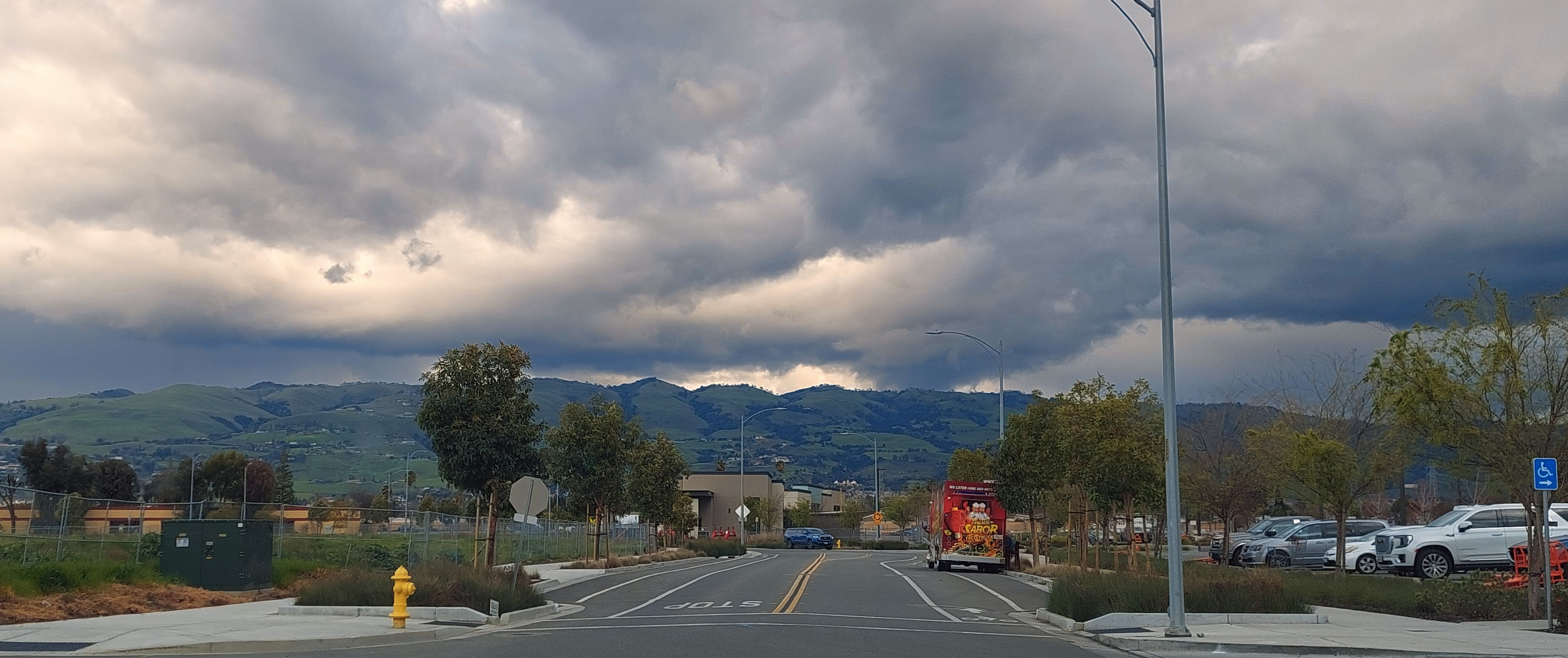
Tully Road San Jose CA

I was delighted to hear Javier Milei’s address to the 2024 annual meeting of the World Economic Forum at Davos, Switzerland. He was absolutely devastating in his support of free-market capitalism and his opposition to big government. After becoming the president of Argentina last month, as a committed libertarian he wants to set his country on a path to economic growth by reducing the size of the government. Continue reading “Javier Milei”

Marwa Blues

Click to embiggen

Rashid Khan, a preeminent Hindustani classical vocalist of the Rampur-Sahaswan gharana,  passed away on Jan 9th. He was only 55 years old. The man was incredibly good. Here’s a traditional song sung by Rashid Khan and Saurabh Kadgaonkar. It’s from the movie “Me Vasantrao“. Lots of great music there. I note that they included a harp in the composition — unusual in Hindustani classical. Continue reading “Marwa Blues”

Humans

J. B. S. Haldane had gloomily observed that “the world shall perish not for lack of wonders, but for lack of wonder.” The world is overflowing with wonders, and yet we take them all for granted, seldom stopping to marvel at them.

Fortunately we have the means literally at our fingertips to learn about them and how they came to be. I spend a good deal of time on the internet (Youtube channels, particularly) appreciating the advances humans have made in science, technology and engineering that made the wonders possible.

The economics point of view is particularly helpful in understanding how the modern world works. Except for the most recent dozen or so generations, all previous 10,000 generations of our ancestors lived lives of extreme poverty and deprivation that we cannot even imagine. We are the fortunate ones. Continue reading “Humans”

Happiness

My dear friends F and D in India have two teenage sons. The older one is an undergrad in a reputed art college in Paris, and the younger one, in high school in India, is aiming to become a professional drummer. I mention this as a contrast to the career choices open to me when I was a teenager in Nagpur so many decades ago.

Born in a middle-class family in a tier-two city in India, I was limited to studying either engineering or medicine. Since I could not stomach the sight of blood or any pain and suffering, I chose engineering. Becoming an artist or a musician was inconceivable. Economist? I didn’t even know such a discipline existed.

But times have changed. In the last half century or so, career options have exploded, and not just those related to computer technology and the internet. Jobs exist in every field today, surely in hardware and software, that one could not have imagined a generation ago. Continue reading “Happiness”