Reading: Waypoints in the Sky

It’s delightful to read well-written prose. In the following, the author Mark Vanhoenacker, a professional pilot, writes like a poet. I love everything related to aviation. Hence I recommend this to you.

A Pilot Explains Waypoints, the Hidden Geography of the Sky

An airplane navigates through the sky along a route composed of beacons and waypoints. Waypoints are defined by geographic coordinates or their bearing and distance from a beacon, and by a name, which typically takes the form of a five-letter capitalized word—EVUKI, JETSA, SABER. The idea is that they will be pronounceable and distinct to controllers and pilots regardless of their first language. The pilot’s map of the world, and the flight computers’ too, is atomized into these waypoints. They are the smallest nuggets of aerial geography, and in some sense the only such unit that matters once you leave the runway. They are the sky’s audible currency of place. … Continue reading “Reading: Waypoints in the Sky”

Ask Me Anything — The Bodhidharma Edition

Porcelain statuette of Bodhidharma from the late Ming dynasty, 17th century

I am partial to Zen stories and koans. Zen is a Japanese tradition but I delight in the fact that its roots are Indian. That great tradition actually started in India as dhyana — which in English roughly translates into meditation. From India, the practice was taken to China. There is a famous Zen koan which says, “Why did Bodhidharma come from the West?” Meaning, why did Bodhidharma go from India to China.

The all knowing wiki quotes some esoteric source:

The Dharma Master was a South Indian of the Western Region. He was the third son of a great Indian king. His ambition lay in the Mahayana path, and so he put aside his white layman’s robe for the black robe of a monk […] Lamenting the decline of the true teaching in the outlands, he subsequently crossed distant mountains and seas, traveling about propagating the teaching in Han and Wei. Continue reading “Ask Me Anything — The Bodhidharma Edition”

Wealth and Poverty — Past, Present and Future

That’s the Ford Model T. The fanciest car that you, as a fairly well-off American, could have bought in 1925 — the year it went on the market. Pretty neat, eh? Well, not as neat as a present day BMW or Jaguar, or Benz, or even any average sedan or SUV. No billionaire of 1925 could have bought a Honda CRV even.

Just a 100 years ago, even billionaires could not afford any of the gazillion things we average folks can order from the comfort of our bedrooms and have it delivered the next day. We are immensely richer than even the richest emperors. The Palace of Versailles, the principal royal residence of France from 1682, under Louis XIV, did not have air conditioning or refrigerators. No telephones. No surround sound, no 4K UHD video system. Not even ice cream in summer. I am richer than Louis XIV. [See note 1.] Continue reading “Wealth and Poverty — Past, Present and Future”

Happy 120th Birthday, Prof Friedrich Hayek

Alles Gute zum Geburtstag, Herr Professor Doktor Friedrich August von Hayek.

Since Hayek was an Austrian, the birthday greetings in German is appropriate, wouldn’t you say? He was born May 8th, 1899, and died 23rd March at the age of 92 in 1992.
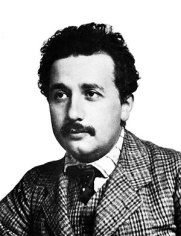
Hayek was the greatest philosopher of liberty and freedom of the 20th century CE. He was an economist but like Adam Smith, he was a master of moral philosophy. In celebration, here are a few quotes that I like you to read. Continue reading “Happy 120th Birthday, Prof Friedrich Hayek”

Economic Theory is a Theory of Collective Choice

Any theory of collective choice must attempt to explain or to describe the means through which conflicting interests are reconciled. In a genuine sense, economic theory is also a theory of collective choice, and, as such, provides us with an explanation of how separate individual interests are reconciled through the mechanism of trade or exchange. Indeed, when individual interests are assumed to be identical, the main body of economic theory vanishes. If all men were equal in interest and in endowment, natural or artificial, there would be no organized economic activity to explain. Each man would be a Crusoe. Economic theory thus explains why men co-operate through trade: They do so because they are different.

The above is a quote from the book The Calculus of Consent: Logical Foundations of Constitutional Democracy, by James M. Buchanan and Gordon Tullock, published in 1962 (available for free at the Online Library of Liberty.) Continue reading “Economic Theory is a Theory of Collective Choice”

A Bunch of Fun Facts

  • We individually consume practically nothing of what we produce
  • No one knows how to make a smartphone or a commercial jetliner
  • Planning mostly does not work
  • Some dictatorships work
  • Poverty will be over across the world by 2035
  • The so-called “natural resources” are all man-made
  • We will never run out of natural resources — we will keep making more natural resources
  • Ideas matter more than stuff
  • The poor of today are richer than the richest of yesterday — and the richest of today will be poorer than the poor of tomorrow
  • Climate change is not a problem, just like the population problem before it
  • DEMOCRACY has little to do with FREEDOM


Pat Condell on “The Anti-American Dream”

Without a doubt, Pat Condell is one of the most articulate, hard-hitting commentators in the English-speaking world. He certainly has the gift of the gab together with a sharp intellect that sees it like it is. Here’s a video of his which speaks to me. It’s central focus is on the First Amendment of the US Constitution, which as you may know is the first in the Bill of Rights. It’s 45 words, as Condell points out, “are among the most important ever written in the English language.”

That’s a tall claim but undeniably true. Read — no, not just read but memorize — the 1st Amendment and judge for yourself:

Congress shall make no law respecting an establishment of religion, or prohibiting the free exercise thereof; or abridging the freedom of speech, or of the press; or the right of the people peaceably to assemble, and to petition the Government for a redress of grievances.

Continue reading “Pat Condell on “The Anti-American Dream””

Einstein — The Physics Giant and the Economics Dwarf

When it came to science and theoretical physics, Einstein was no dummy. Indeed Einstein’s contribution to science is unparalleled. Many of the technological tools we routinely depend on would not exist without Einstein’s theories of relativity. Examples abound: cellular telecommunications, GPS, space travel.

Without doubt Einstein was a smart cookie. With reference to him, the year 1905 is called Annus Mirabilis  (in English “miracle year”, in German Wunderjahr). That year, he published four papers in the Annalen der Physik scientific journal on the photoelectric effect, Brownian motion, Special relativity, and Mass-energy equivalence. They dramatically changed our understanding of space, time, mass and energy, thus building one of the pillars of modern physics (the other pillar being quantum mechanics built by Planck, Schrödinger, Heisenberg, Born, et al.) The Nobel Prize in Physics in 1921 was awarded to Albert Einstein “for his services to Theoretical Physics, and especially for his discovery of the law of the photoelectric effect.” (Fun fact:  The 1921 Physics prize was actually awarded a year later in 1922.)

Einstein was clever. But when it comes to understanding how that great big enterprise we call society operates in terms of production, distribution, exchange and consumption, Einstein was evidently clueless. His basic instincts of compassion, generosity, and altruism combined with his ignorance of economics, political economy, and economic history led him to fundamentally flawed conclusions about capitalism and socialism. It appears that he perhaps read a bit of Marx — just enough to get the wrong ideas. The kind of ideas that instinctively appeal to bleeding-heart teenagers, but which with some maturity, are discarded with a “I can’t believe that I actually believed in that pile of horse manure. Was I stupid or what?” Continue reading “Einstein — The Physics Giant and the Economics Dwarf”

Mr Bill Gates, you have a call from one Mr Bayes on line 1

Here’s a nice example of smart people saying dumb things in a momentary lapse of reason.

The dumb enters in not recognizing that what matters is the likelihood of an encounter (with a shark or a mosquito) being fatal, given that an encounter has happened. If you happen to be bitten by a shark, you are more likely to die than if you are bitten by a mosquito. But the probability of getting bitten by a shark is very low, while the probability of being bitten by a mosquito is very high. Continue reading “Mr Bill Gates, you have a call from one Mr Bayes on line 1”

One World Everybody Eats

My friend Prakash told me about a movement which runs cafes where the rule is pay-what-you-can. The One World Everybody Eats has “more than 60 pay-what-you-can community cafes operating in America, and over 50 others are in the planning stages in six countries.”

The deal is that you eat what’s on offer at the cafe and then pay whatever you wish. They claim that no one is turned away. They note on their website,

Healthy, dignified dining is available to everyone who walks into our cafes, including the nearly 50 million people in America who are experiencing food insecurity, utilizing social programs, and who don’t know where their next meal will come from.

Prakash wanted to know what I thought of the idea. He said that the cafes are “overall profitable.” Continue reading “One World Everybody Eats”