 Will Durant (1885 – 1981) the wiki informs us “was an American writer, historian, and philosopher.” He wrote the 11-volume The Story of Civilization, published between 1935 and 1975, written in collaboration with his wife, Ariel Durant. His work The Story of Philosophy (1926) helped to popularize philosophy. “He sought to unify and humanize the great body of historical knowledge, which had grown voluminous and become fragmented into esoteric specialties, and to vitalize it for contemporary application,” the wiki notes.
Indians may find his view of India interesting. Once again let’s refer to the wiki:
In 1930, he published The Case for India while he was on a visit to India as part of collecting data for The Story of Civilization. He was so taken aback by the devastating poverty and starvation he saw as result of British imperial policy in India that he took time off from his stated goal and instead concentrated on his polemic fiercely advocating Indian independence. He wrote about medieval India, “The Islamic conquest of India is probably the bloodiest story in history. It is a discouraging tale, for its evident moral is that civilization is a precious good, whose delicate complex of order and freedom, culture and peace, can at any moment be overthrown by barbarians invading from without or multiplying within.”
Sadly hundreds million Indians continue to suffer “devastating poverty and starvation” nearly a century after Durant made the case for India’s release from British imperialism. Among the many causes for this immense tragedy is an important one missed by most Indians — that while British imperialism ended in 1947, imperialism did not end. The British designed and constructed the machine that imposed grinding poverty on India but Indians not only maintained the machine in good working order but improved its efficiency.
India’s heart-breaking poverty is entirely indigenous, made in India by Indians for Indians. Continue reading “Will Durant on Great Minds and Ideas”

 Two things bring the KGB propaganda expert Yuri Bezmenov (1939 – 1993) to mind — the pandemic and the progressive/woke movement in the US.
 Quite often I enjoy the pleasure of shocking people with my contrarian viewpoints. For some people, the shock is replaced with the pleasure of understanding something that goes against plain common sense. When that happens, I am very gratified but when it doesn’t, I feel sad.
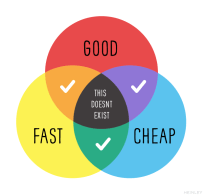 It would be best if we had zero crime, or zero pollution, or zero inequality (of wealth, income, health, beauty, intelligence, lifespans), or zero transportation deaths, et cetera. That is, it would be best if we could obtain the best and not have to pay too much for it. But, alas, the real world refuses to comply with our wishes. For anything good that the real world grudgingly gives us, it exacts a cost.
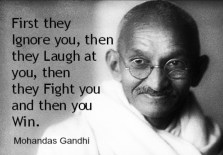 Here’s the last bit from Hayek’s Dec 11
  People all across the world are just the same. Granted there are cultural, geographical, climatic, water and mineral endowment differences among various nations but those differences are not as stark as the differences in economic performance and the level of prosperity. A Somali (2021 annual
  It’s safe to say that every rational individual — one who is emotionally and intellectually competent — values freedom over enslavement by others. Then why do so many people choose “voluntary servitude”? Why don’t they struggle against their oppressors? What do they hope to gain by their voluntary submission? Why don’t they understand that most of the misery they suffer is because they lack freedom?
 Magic tricks are fun. It could be because it is fun to be deliberately fooled and there’s the bonus we get when we figure out how and why we get fooled. I have spent long hours watching videos of magic tricks. An outstanding show is Penn & Teller’s “Fool Us” series. The format is standardized: magicians do their act, and then Penn & Teller have a shot at figuring out how the trick was done. If they can’t guess — if they get fooled — then the successful magician gets a trophy and gets to appear on P&T’s Las Vegas show.
 Siddhartha Gautam, aka Sakyamuni (the sage of the Sakyas), became a buddha around 2,500 years ago. Today, known as Buddha Purnima, the day of the full moon in May, is celebrated as his birthday. Here’s the Chinese singer Imee Ooi singing the Prajna Paramita Hridaya Sutra, aka The Heart Sutra. Listen.
 I am persuaded that the word ‘democracy’ is one of the most abused words in India (another being ‘secular’.) The common people certainly don’t know what it really means or entails, but even the “intellectuals” (second-hand dealers of ideas, as Hayek defined them) and assorted pundits have only a feeble grasp of the concept at best.
