
 Freedom is a potent word that evokes strong emotions and motivates major upheavals in human society. The degree of freedom around the world that humans enjoy has been steadily on the rise, although with the occasional temporary declines.
It’s worth noting that not all societies have the same attachment to freedom. Some societies systematically value freedom a lot more than others. That presents us with an empirical fact: the positive correlation between freedom and human flourishing. If one assumes that all humans value flourishing, then the question arises why some societies appear to not value freedom, even though they suffer as a consequence of a lack of freedom. Continue reading “Economic Freedom”

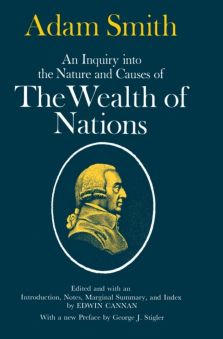 Adam Smith was a giant figure of the Scottish Enlightenment and his two major works — The Theory of Moral Sentiments (1759) and In Inquiry into the Nature and Causes of the Wealth of Nations (1776) — have advanced our understanding of what motivates us and how human society works.

 On the matter of the war in Ukraine, one of my favorite historians, Stephen Kotkin, is my go-to person. Here’s Peter Robinson of the Hoover Institution in conversation with Kotkin.
 “The voting public cannot understand foreign policy, so the electorate cannot hold the government accountable in any meaningful way. That being the situation, what are the incentives for a democratically elected government to conduct a foreign policy beneficial for the nation? Who should hold the government accountable in matters of foreign policy? And how?”
 Atanu Dey : Life is a Random Draw