
Until a few months ago, China was doing spectacularly well in terms of economic growth, and the power and influence that the new wealth bought. But I think China’s goose is cooked, thanks to the Chinese virus that causes the Wuhan flu aka Covid-19. There’s going to be a backlash. OECD countries’ manufacturers who were off-shoring their production in China will pull out as fast they can. In all likelihood, electronics majors will cut their China-based supply chains.
This is not mere wishful thinking. It was economics that led to China becoming the global manufacturing destination. But the world has learned a lesson that will be hard to ignore — that putting all eggs in one basket is not a sound strategy. In any event, it was time for manufacturing to return to the OECD countries; the Wuhan flu just advanced the move a few years.
And one more thing. I think these institutions have to be given a quick burial: the FDA, the WHO and the UN. They are all evil. Continue reading “Well, China, the Game is Up”
 Apollo 1
 The Chinese Virus
 I love music
 I think one of the main reasons why I find economics so fascinating is that I am a contrarian (adj. taking an opposing view, especially a view opposite to that taken by the majority; n. a person who habitually takes a view opposite to that held by the majority.)
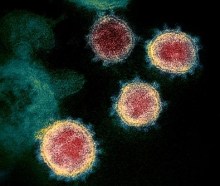 The Covid-19 pandemic is caused by the virus SARS-CoV-2. It’s highly contagious with an R0 around 2 — an infected person passes the virus on to two others on average. Exponential growths always end up in large numbers pretty rapidly, contrary to our basic intuition. They are explosive, like in uncontrolled nuclear reactions. Once a few people in a population get the virus, nearly everyone gets it without proper containment.
 The phrase “property rights” appears to refer to the rights of property. That of course is meaningless because property aren’t people, and therefore property cannot have rights. Property rights refers to the notion that humans have the right to their private property. Therefore to place property rights in some form of opposition to human rights — as I did in
  Should society (through its institutions such as the government) defend property rights or human rights? That question is of course meaningless if one of the sets includes the other as a proper subset. But let’s assume for the moment that they are indeed distinct, and therefore the question makes sense.
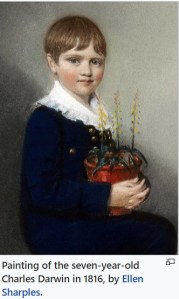 What are the chances that two of the greatest figures of history would be born on the same day? I would leave that to the statisticians and only remark on the fact that in 1809 on this day, February 12th,
  Atanu Dey : Life is a Random Draw