Of all the American holidays I like Thanksgiving the best. For starters, it’s a secular holiday. Secular in the true sense of the term — not religious — and not in the way that secular is understood in India where it means “not Hindu.” In India, Islamic or Christian is secular but Hindu is not secular. In India, Diwali is not secular but Christmas is secular. But in the US, Christmas is not secular but Thanksgiving is secular. That is an important distinction.
But the main reason I like Thanksgiving is that it represents something that should be our perrenial attitude — that of gratitude for what we have. Certainly we wish we had more of the goodies of life but let’s also frequently pause and give thanks for all the good things we already have. I pause quite frequently and observe the simple fact that things are pretty good as they are. I ask myself “Isn’t this good?” and answer, “Yes, it’s good.”
That’s what I learned a long time ago. In Hesse’s book Siddhartha, the protagonist says to his friend Govinda, “the world is perfect in every moment.” The same idea is expressed thus in Desiderata: “And whether or not it is clear to you, no doubt the universe is unfolding as it should.”
I am always struck by the variations in human capacities. We humans are strikingly unequally endowed in physical and mental capabilities. Non-human animals of a particular species are generally very similar. For instance, individual members of the species common pigeon are quite indistinguishable; if you’ve seen one, you’ve seen them all. The pigeons from Germany are not that different from the ones in India. Can you tell which one is a German pigeon and which one Indian?
But we humans are different. The range of human physiology is vast even though all humans belong to the same homo sapiensspecies. People from different regions of the world look different and we easily distinguish between Germans and Indians. Not just across regions, individuals vary within regions too. That is not an earth shattering fact but it is worth noting.
I believe that the range of mental variations is much wider than physical variations among humans. We are seriously unequally endowed when it comes to brains. Most of us are sort of average but among us there are outliers who are a few sigmas above the mean. The outliers also are varied. There are geniuses in chess, and in music, and mathematics, and physics, … the list goes on indefinitely. Continue reading “Wisdom, Genius, Knowledge and Intelligence”
In a recent email exchange, my correspondent wrote, “they say if everyone consumed like the US, we would need 2.5 earths.” That sort of claim is commonly made and readily accepted as true. A June 2015 BBC magazine article titled “How many Earths do we need?” begins with the claim “that if everyone on the planet consumed as much as the average US citizen, four Earths would be needed to sustain them.”[1]
Those types of claims are half-truths, and like most half-truths, they confuse rather than clarify. Fortunately, a little bit of reasoning and checking the facts are sufficient to get closer to the truth.
Earth is an Open System
The undeniable fact is that the earth is finite, which means nothing on earth — soil, water, minerals, etc. — is infinite. But for all practical purposes what we need is virtually infinite. The reason for virtual infinity in a finite earth is that the earth is not a closed system.
If you have some content in a finite box, that content has to be finite too. If you can neither add anything to the box or take anything out of the box, it is a closed system. Conversely if you can add or remove stuff from the box, it’s an open system.
The earth is an open system because it receives energy from the sun. That makes an enormous difference in that it enables material to be recycled. A simple example of that is water. We never “use up” the water we use. Though the amount of water is finite, the amount of rainfall on earth is unbounded because of the hydrological cycle: the sun’s energy continually evaporates water into the atmosphere and that falls back to earth as rain. This cycle has been going on for billions of years and will continue for the indefinite future. We cannot “use” up the limited water because it gets naturally recycled. Continue reading “Finite System, Infinite Cycles”
In an essay titled “Sham Battle” published in October 1936 in the Baltimore Evening Sun, H. L. Mencken enunciated a truth that is one of the core axioms of public choice theory. That axiom is the homely truth that politicians are people just like the rest of us. Homely truths, as Mark Twain recognized, are unpalatable. But they are true nonetheless.
People are motivated by their self-interest in their private lives. That is not to say that they are narrowly selfish but rather that they do what they believe to be in their interest, whatever those interests may be — including altruism if that is what interests them.
Homely truths endure. In 1936 Mencken wrote, “The state—or, to make the matter more concrete, the government—consists of a gang of men exactly like you and me.”
James Buchanan and Gordon Tullock developed public choice theory (PCT) in the 1960s. One of the assumptions of PCT is of behavioral symmetry: people behave the same way in their public capacity as they do in their private capacity. The person in the marketplace is the same person in the voting booth. A person is not transformed from a self-interested being with imperfect knowledge, foresight and morality in his private capacity into an other-directed being with perfect knowledge, foresight and goodwil in his public role as a politician, bureaucrat or a voter. By being elected or appointed to a public office, a person does not magically get endowed with the ability to know “the public good” and pursue that diligently. In other words, politicians are just like the rest of us. Don’t expect them to be better than you’d expect people to be. Continue reading “An Auction of Stolen Goods”
Even though it is just a couple of days to the US elections, it is still uncertain whether Trump will keep his job come January 2021. The opinion polls favor Biden but they can be wrong, since it is a closely contested race. I hope Biden loses, and I hope Trump wins because that would be better for the US and better for the world.
There are a couple of things I find remarkable about US elections. First, the date of practically all elections is fixed and therefore predictable. Every year, all elections at all levels of government — city, county, state and federal — are held on the Tuesday following the first Monday of November. If the first Monday of November falls on the 1st, then election is on Nov 2nd — the earliest possible date; and the lastest possible date will be Nov 8th. That happens every year, and every four years, it is a presidential election year. That too is totally predictable.
The second remarkable fact relates to the election of a US president. The US president is not elected through a popular vote. Voters don’t actually directly vote for a presidential candidate. The voters in each state determine through their popular vote what the state’s “electors” would do when they go to Washington DC in December. These electors form the electoral college. Here’s a bit from the Wiki on the US electoral college: Continue reading “US Presidential Elections”
Lots of stuff happening on (and around) the same day.
Sharad Purnima
Today it’s Sharad Purnima, a Hindu tradition. It is a harvest festival that is celebrated on the full moon day of the lunar month of Ashvin. It’s also called Kojagiri Purnima. It’s the birthday of Devi Lakshmi, and she is worshipped on this day. Also worshipped are Indra, and Shiva and Parvati. Lots of worshipping going on among Hindus.
Jack-o’-lantern (Click to embiggen)
Today it’s Halloween, a Christian tradition. The all-knowing Wiki says, “Halloween is the evening before the Christian holy days of All Hallows’ Day on 1 November and All Souls’ Day on 2 November, thus giving the holiday on 31 October the full name of All Hallows’ Eve (meaning the evening before All Hallows’ Day). … These three days are collectively called Allhallowtide and are a time for honoring the saints and praying for the recently departed souls who have yet to reach Heaven.”
Today we will also have a blue moon. And talking of time, today is the last day of Daylight Saving Time. Tomorrow morning at 2 AM, the clock will be set back to 1 AM. That will bring us back to Standard Time. I think this shifting of clocks business is insanely stupid. It makes no sense to keep shifting between DST and ST. Just stop this crap, people. Continue reading “Once in a Blue Moon”
Today it’s Maha Ashtami in India, two days before Vijay Dashami, the final day of Durga Puja. I like to listen to some Indian classical vocals based on Raga Durga. Here are two. The first is by Ustad Ghulam Mustafa Khan, and the second by everyone’s favorite Veenatai (Veena Sahasrabuddhe).
.
.
Indian classical vocals are out of this world. Listen.
In school I learned the basics of reading, writing and arithmetic reasonably well. That may be partly due to competent teachers, a stable family and school environment, and my being somewhat diligent. However, I am convinced that I would have learned a whole lot more if I had had access to the enormous number of excellent teachers and the virtually infinite amount of content on every conceivable subject we have available today: not in person but over the internet.
Though I am not very good at it, I like mathematics a lot. Over the years, I was required to learn some bits. In my undergraduate engineering classes, I learned the calculus and some linear algebra but nothing to write home about. Then while studying computer science, I learned an entirely different area of mathematics: discrete maths, particularly combinatorics. Then for my post-graduate work in economics, I got to learn a lot more of the calculus, and some statistics (because of econometrics, a subject that I hate with uncharacteristic passion) and probability theory. Continue reading “This Policy, Alone – Part 7”
If you need any more evidence that people in government are generally incompetent and cause immense harm due to their ignorance and stupidity, not to mention for the moment their obvious cupidity and greed, there’s no greater example of that incompetence than their handling of the Chinese virus, aka Covid-19, pandemic.
You are probably as sick of the relentless coverage of the pandemic as I am but please humor me for a bit. I beseech you to take a good listen to what Tom Woods had to say recently on the topic. I reiterate that I am aware that you have probably overdosed on the topic but for heaven’s sake, do this if you have any confidence in my judgement. Continue reading “The Covid Dystopia”
The cliché “they don’t make ’em like that anymore” can’t be more true about political satire than about the Yes, Minister (1980-84) and Yes, Prime Minister (1986-88) BBC TV series. When I first watched them on PBS, I didn’t have a clue about economics, and more particuarly about public choice theory — which Buchanan described as “politics without romance.” Now that I know the basic principles of economics and political economy, my appreciation of the series has deepened.
The characters are priceless, the writing flawless, the casting brilliant. The principals are Jim Hacker, the minister and later the prime minister, played by Paul Eddington; Hacker’s permanent secretary, Sir Humphrey, played by Sir Nigel Hawthorne; and Sir Humphrey’s principal private secretary, Bernard, played by Derek Fowlds. Here’s a scene that tells you more about what governments actually do, quite contrary to popular romantic notions about governments.
Sir Humphrey is the consummate cynic. He doesn’t question the ends — he just gets on with getting things done.
“Bernard, I have served eleven governments in the past thirty years. If I had believed in all their policies, I would have been passionately committed to keeping out of the Common Market, and passionately committed to going into it. I would have been utterly convinced of the rightness of nationalising steel. And of denationalising it and renationalising it. On capital punishment, I’d have been a fervent retentionist and an ardent abolitionist. I would’ve been a Keynesian and a Friedmanite, a grammar school preserver and destroyer, a nationalisation freak and a privatisation maniac; but above all, I would have been a stark, staring, raving schizophrenic.”
Sometimes I think that if every politician and bureaucrat were to watch the whole series, perhaps governance would not be so pathetic. They should make it required viewing in the Indian Administrative Services, at the very least. The babus may learn something. But then maybe they won’t learn anything. Still, we non-babus get a better understanding of how babu-dom works. Thank goodness.
PS: I forgot to point out to a brilliant pun in the conversation.
Humphrey: The sale of arms abroad is one of those areas of government that we do not examine too closely. Hacker: Well I have to, now that I know. Humphrey: You could say you don’t know. Hacker: You’re suggesting I should lie? Humphrey: Oh, not you, minister. Hacker: Who should lie? Humphrey: Sleeping dogs.

 Of all the American holidays I like Thanksgiving the best. For starters, it’s a secular holiday. Secular in the true sense of the term — not religious — and not in the way that secular is understood in India where it means “not Hindu.” In India, Islamic or Christian is secular but Hindu is not secular. In India, Diwali is not secular but Christmas is secular. But in the US, Christmas is not secular but Thanksgiving is secular. That is an important distinction.
 I am always struck by the variations in human capacities. We humans are strikingly unequally endowed in physical and mental capabilities. Non-human animals of a particular species are generally very similar. For instance, individual members of the species

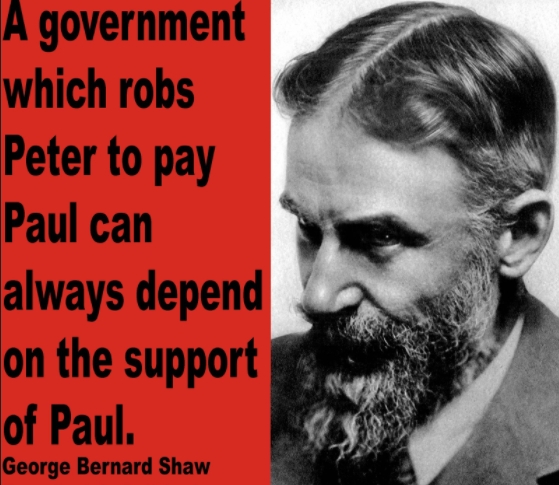 In an essay titled “Sham Battle” published in October 1936 in the Baltimore Evening Sun, H. L. Mencken enunciated a truth that is one of the core axioms of public choice theory. That axiom is the homely truth that politicians are people just like the rest of us. Homely truths, as Mark Twain recognized, are unpalatable. But they are true nonetheless.
 There are a couple of things I find remarkable about US elections. First, the date of practically all elections is fixed and therefore predictable. Every year, all elections at all levels of government — city, county, state and federal — are held on the Tuesday following the first Monday of November. If the first Monday of November falls on the 1st, then election is on Nov 2nd — the earliest possible date; and the lastest possible date will be Nov 8th. That happens every year, and every four years, it is a presidential election year. That too is totally predictable.
 Today it’s Sharad Purnima, a Hindu tradition. It is a harvest festival that is celebrated on the full moon day of the lunar month of Ashvin. It’s also called Kojagiri Purnima. It’s the birthday of Devi Lakshmi, and she is worshipped on this day. Also worshipped are Indra, and Shiva and Parvati. Lots of worshipping going on among Hindus.
 In school I learned the basics of reading, writing and arithmetic reasonably well. That may be partly due to competent teachers, a stable family and school environment, and my being somewhat diligent. However, I am convinced that I would have learned a whole lot more if I had had access to the enormous number of excellent teachers and the virtually infinite amount of content on every conceivable subject we have available today: not in person but over the internet.
 If you need any more evidence that people in government are generally incompetent and cause immense harm due to their ignorance and stupidity, not to mention for the moment their obvious cupidity and greed, there’s no greater example of that incompetence than their handling of the Chinese virus, aka Covid-19, pandemic.
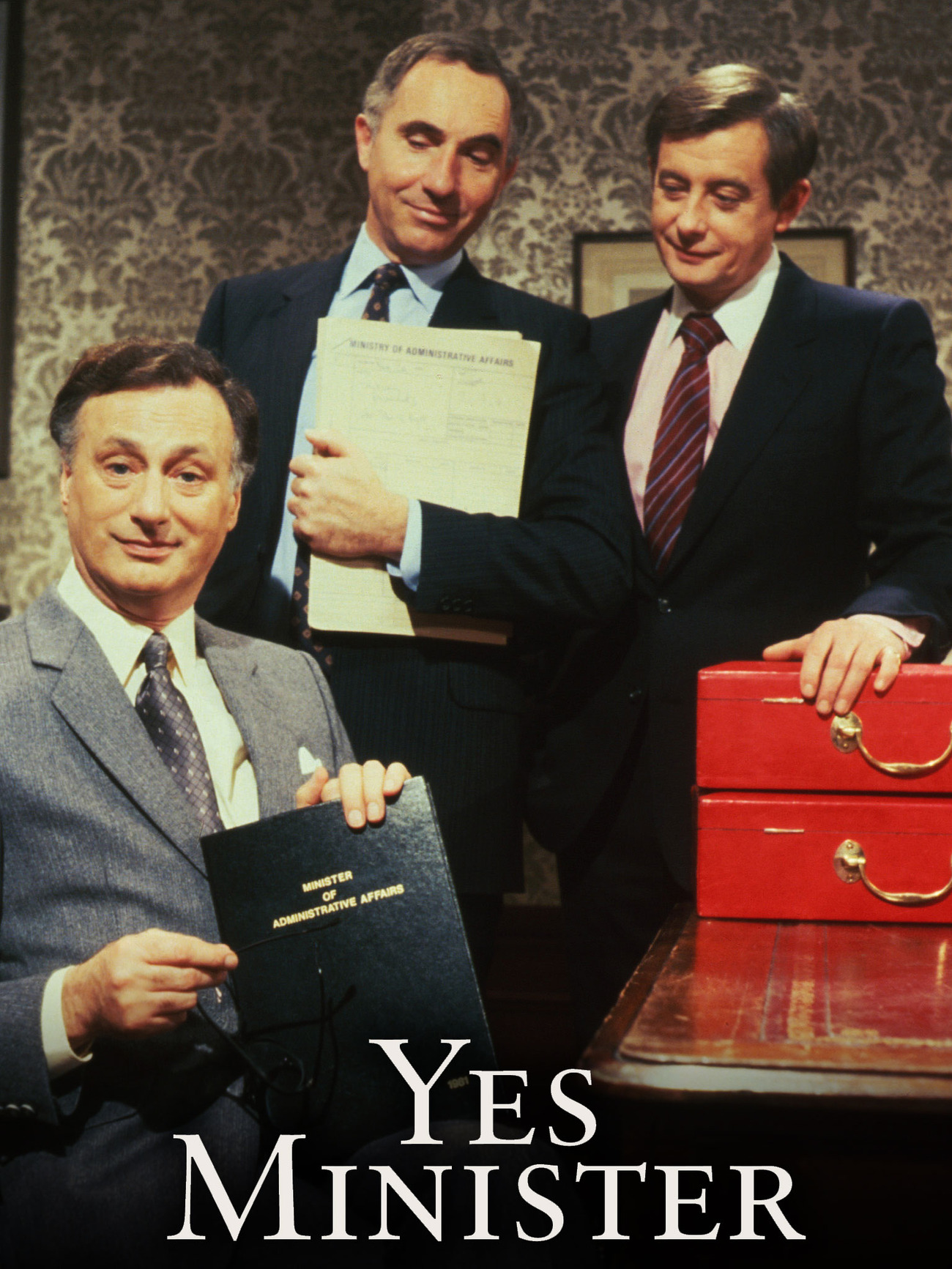 The cliché “they don’t make ’em like that anymore” can’t be more true about political satire than about the Yes, Minister (1980-84) and Yes, Prime Minister (1986-88) BBC TV series. When I first watched them on PBS, I didn’t have a clue about economics, and more particuarly about public choice theory — which Buchanan described as “politics without romance.” Now that I know the basic principles of economics and political economy, my appreciation of the series has deepened.
 Atanu Dey : Life is a Random Draw