 Oscar Wilde in his play Lady Windermere’s Fan has Lord Darlington describe a cynic as “a man who knows the price of everything, and the value of nothing.”
Economists have frequently been accused of that character flaw, and that all that they care about is money. “For the love of money,” says the Christian bible, “is the root of all evil.” Unfortunately, many non-Christians also subscribe to that tripe.
Here’s a joke. An American and a Russian were boasting about their respective countries. The Russian says, “You Americans only care about money. We Soviets care about people.” The American says, “That’s true. That is why we lock up our money and you lock up your people.”
I am happy to note that ancient Indian tradition did not suffer from that delusion. See, for example, how the Panchatantra approached the matter of money in this post here. But people rarely understand what money actually represents, what it signifies and why. Ayn Rand provides a spirited defense of the importance of money in her book Atlas Shrugged. She had a character, Francisco, say:
“Let me give you a tip on a clue to men’s characters: the man who damns money has obtained it dishonorably; the man who respects it has earned it.
“Run for your life from any man who tells you that money is evil. That sentence is the leper’s bell of an approaching looter. So long as men live together on earth and need means to deal with one another – their only substitute, if they abandon money, is the muzzle of a gun.”
The extended excerpt follows. Continue reading “Money”

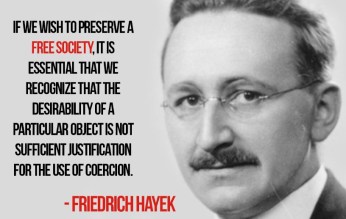 Friedrich August von Hayek was born 123 years ago on March 8th, 1899 in Vienna. His profile at Mises.org says that “Born to a distinguished family of Viennese intellectuals, Hayek attended the University of Vienna, earning doctorates in 1921 and 1923. Hayek came to the University at age 19 just after World War I, when it was one of the three best places in the world to study economics (the others being Stockholm and Cambridge).
 Happy Mother’s Day, all. May all beings be happy, may all beings be free of suffering, may all beings become enlightened.
 Democracy is a sacred word in India. As a concept, it is poorly understood (not just in India but across the world) but like people’s attitude towards their own religion, they uncritically subscribe to it without bothering to understand what it is, what it implies, what its premises are, whether or not those premises are true, whether it delivers what it promises, what its track record is, what the alternatives to it are, and whether or not they would be better off without it.

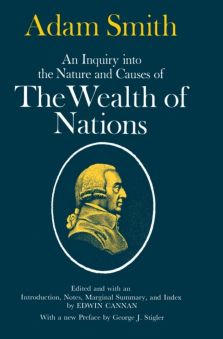 Adam Smith was a giant figure of the Scottish Enlightenment and his two major works — The Theory of Moral Sentiments (1759) and In Inquiry into the Nature and Causes of the Wealth of Nations (1776) — have advanced our understanding of what motivates us and how human society works.

 Atanu Dey : Life is a Random Draw