
 “When you are inspired by some great purpose, some extraordinary project, all your thoughts break their bonds. Your mind transcends limitations, your consciousness expands in every direction, and you find yourself in a new, great and wonderful world. Dormant forces, faculties and talents become alive, and you discover yourself to be a greater person by far than you ever dreamed yourself to be.”
― Sage Patanjali’s Yoga Sutras. “Method of Enlightenment.” Compiled ca. 2C BCE to 5C CE.
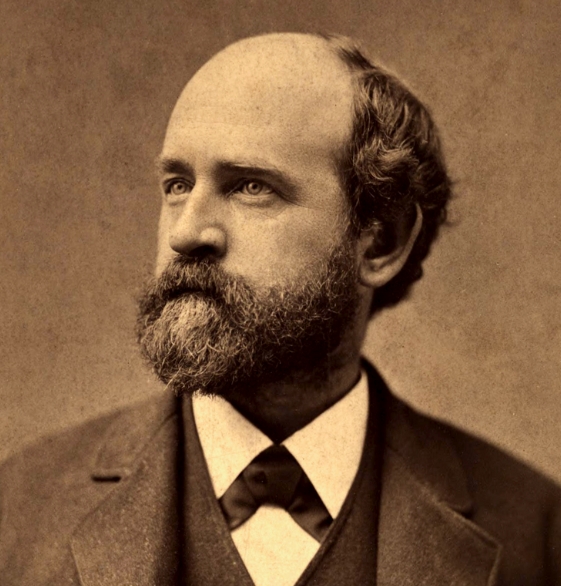 “Here is a difference between the animal and the man. Both the jay-hawk and the man eat chickens, but the more jay-hawks the fewer chickens, while the more men the more chickens. Both the seal and the man eat salmon, but when a seal takes a salmon there is a salmon the less, and were seals to increase past a certain point salmon must diminish; while by placing the spawn of the salmon under favorable conditions man can so increase the number of salmon as more than to make up for all he may take, and thus, no matter how much men may increase, their increase need never outrun the supply of salmon.”
― Henry George (1839 – 1897). American political economist. He inspired the economic philosophy called Georgism. The above quote is from his 1879 book Progress and Poverty. Continue reading “Selected Quotes – 27”


 Ever wondered why is it that the Scottish moral philosopher David Hume (1711 – 1776) is usually portrayed wearing what appears to be a tea cozy? Puzzling and funny.

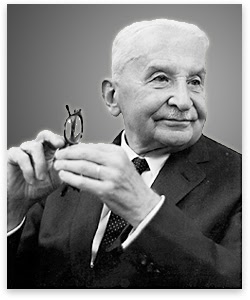
 About quotations, the German-born American actress Marlene Dietrich said, “I love them, because it is a joy to find thoughts one might have, beautifully expressed with much authority by someone recognizedly wiser than oneself.”
 “The technologies which have had the most profound effects on human life are usually simple. A good example of a simple technology with profound historical consequences is hay. Nobody knows who invented hay, the idea of cutting grass in the autumn and storing it in large enough quantities to keep horses and cows alive through the winter. All we know is that the technology of hay was unknown to the Roman Empire but was known to every village of medieval Europe. Like many other crucially important technologies, hay emerged anonymously during the so-called Dark Ages. According to the Hay Theory of History, the invention of hay was the decisive event which moved the center of gravity of urban civilization from the Mediterranean basin to Northern and Western Europe. The Roman Empire did not need hay because in a Mediterranean climate the grass grows well enough in winter for animals to graze. North of the Alps, great cities dependent on horses and oxen for motive power could not exist without hay. So it was hay that allowed populations to grow and civilizations to flourish among the forests of Northern Europe. Hay moved the greatness of Rome to Paris and London, and later to Berlin and Moscow and New York.” ― Freeman Dyson, Infinite in All Directions
  Atanu Dey : Life is a Random Draw