
Of Freedom, Markets, and the Future of India

Markets Work, Incentives Matter

The two broadest generalizations one arrives at from a study of economics are that markets work and that incentives matter. People respond to incentives because that is at the core of what it means to be rational. To the extent that humans are rational, their behavior is predictably in the direction that existing incentives point to. Trade between humans is rational because both parties in any voluntary trade benefit. The abstract mechanism which enables trade is called the market. Markets work in the sense that they maximize the gains from trade among an arbitrary number of entities. There are other methods of enforcing trade among people, such as the command and control mechanism often employed by communist governments. But they are at a distinct disadvantage relative to the market because the latter is based on the premise that rational actors respond to incentives.
Continue reading “Of Freedom, Markets, and the Future of India”
Guest Post: Reservations on Reservation in Indian Education

India is a country that’s renowned for its diversity – the country is a potpourri of different languages, religions, castes and cultures. While this variety makes the nation more interesting and intriguing, it’s kicking up a storm in the sphere of education. The country’s government-aided institutions all allow a certain quota of seats to be reserved for educationally and socially backward classes and for Scheduled Castes and Scheduled Tribes.
Continue reading “Guest Post: Reservations on Reservation in Indian Education”

Ranking Universities on Web Visibility

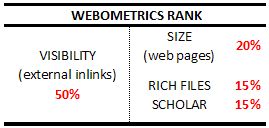
Webometric.info analyzes about 15,000 universities world wide and ranks 5,000 of them on their “web performance” which is a weighted combination of

Their objective:

We intend to motivate both institutions and scholars to have a web presence that reflect accurately their activities. If the web performance of an institution is below the expected position according to their academic excellence, university authorities should reconsider their web policy, promoting substantial increases of the volume and quality of their electronic publications.

Continue reading “Ranking Universities on Web Visibility”

Begging for a World Class University — Part 2

This is a follow up to the previous post, “Begging for a World Class University.” In this I will address two responses to the post: one, the comment left by Aditya, and two, a post by Pramode titled “A Question (or two) for Atanu“.
Continue reading “Begging for a World Class University — Part 2”

Begging for a World Class University

Consider this scenario. Someone you know imprisons his grown up children and does not allow them to go out and do jobs that they are fully capable of doing. He also locks up his productive assets and prevents his children from using them. Then he goes around begging his neighbors for help with feeding his family as he does not have any income. The words that spring to mind upon considering this man’s behavior are words like contemptible, immoral, stupid, pathetic, pitiable, and sad.
Continue reading “Begging for a World Class University”

India’s Desperate Talent Search

Ramesh Menon’s article “India’s Talent Crunch” in DNA makes shocking reading but is news only if one has not been in touch with the reality of the desperate situation that employers face in India in their search for employable people. Continue reading “India’s Desperate Talent Search”

Reservations in the Indian educational system — Part 3

Previous posts: Part 1, Part 2

Reservations in educational institutions for specific groups are essentially a flawed response to a problem. It is flawed for a number of reasons. The first and foremost is that it does not even begin to address or even recognize the actual problem, namely, that there is a mismatch between supply and demand. Any attempts at allocating a limited supply among the competing demanders for it is definitely not going to succeed in correcting the basic problem. This follows from a general principle that to solve a problem, one should address the cause(s) of the problem rather than merely attempting to suppress the symptoms that give evidence of the problem.
Continue reading “Reservations in the Indian educational system — Part 3”

Reservations in the Indian educational system — Part 2

Previous post: Part 1.

I find it hard to comprehend very large numbers. For instance, when I consider that India has 1.12 million schools (primary and secondary), I am dumbstruck. I have to translate it down to relative numbers because the absolute numbers are beyond me. So, I would roughly estimate that out of population of approximately one billion people, about 200 million are in the school-going age. If you have one school per 200 kids, that means India must have approximately a million schools. Now the number of schools makes sense to me.
Continue reading “Reservations in the Indian educational system — Part 2”

Reservations in the Indian educational system — Part 1

Yesterday morning I got to the Pune railway station early because I had yet to buy a ticket for Mumbai. A notice at the ticket counter informed me that the train – Deccan Queen – was full. Disappointed, I walked to the nearby intercity bus stop.

As one can expect, the place is a sort of transportation hub where you get trains, buses (both private and public), taxis, and rental cars. Walking along that stretch of the road is like running a gauntlet. A dozen people descend on you, each offering to immediately transport you to Mumbai in great comfort, quickly and cheaply. They compete for your attention and tell you why you should take their bus or their car. One over here says the new Innova (a comfortable Toyota minivan) is about to depart and will be in Mumbai before 10 AM; the other over there insists that the Neeta Volvo will charge much less and they will not even stop midway, and so on. The competition is loud and enthusiastic.
Continue reading “Reservations in the Indian educational system — Part 1”

Education Spending

This is a follow up to the post on Indian spending on education abroad.

The actual spending may not be $13 billion annually but the argument does not change even if the figure was much lower. What matters is that it is indicative of a problem and we should be concerned about it. It should be noted that this spending is an outflow of resources. That in itself is not a bad thing, however. We need to ask if this is a net outflow in the education sector. That is, what is difference between the inflow and outflow.
Continue reading “Education Spending”