Violence and Development

A couple of quotes related to violence and development.

“. . . all societies must deal with the problem of violence. In most developing countries, individuals and organizations actively use or threaten to use violence to gather wealth and resources, and violence has to be restrained for development to occur. In many societies the potential for violence is latent: organizations generally refrain from violence in most years, but occasionally find violence a useful tool for pursuing their ends. These societies live in the shadow of violence, and they account for most of human history and for most of today’s world population. Social arrangements deter the use of violence by creating incentives for powerful individuals to coordinate rather than fight.”

Source: In the Shadow of Violence: Politics, Economics, and the Problems of Development. Edited by Douglass C. North, et al. Cambridge Univ Press 2013.

“Political development occurs when people domesticate violence, transforming coercion from a means of predation into a productive resource. Coercion becomes productive when it is employed not to seize or to destroy wealth, but rather to safeguard and promote its creation.”

Source: Prosperity and Violence: The Political Economy of Development. Robert H. Bates. (2001)

A related post worth a read is “Of Kakistocracies, Principals and Agents.

Governments Don’t Create Corporations

Governments of successful economies don’t create large corporations.

The economic prosperity of a country is usually the consequence of the economic freedom that its citizens have. Entrepreneurs create a large number of small enterprises. Some of these grow up to become giant globe-spanning multinationals not because of government largesse but because some of those small enterprises created value for its customers and grew organically as more people found its goods and services worth buying.

Google, Facebook, etc etc, were not conjured up by some politician, or a bureaucracy, or through government diktat, or any “Make in India” type marketing campaign. For large corporations to grow in India, what is needed is an environment that is conducive to the small enterprise. This will of course not happen because there’s little hoopla one can engage in by freeing the little guy.
Continue reading “Governments Don’t Create Corporations”

Adam Smith on the Division of Labor

This is from An Inquiry into the Nature and Causes of the Wealth of Nations [1776] by Adam Smith (1723 – 1790), the great Scottish moral philosopher and the granddaddy of classical economics.
Continue reading “Adam Smith on the Division of Labor”

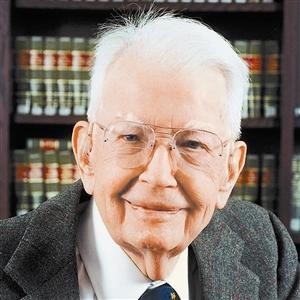
Reading Ronald Coase

ronaldcoase Are you a well-read economist?

You aren’t if you cannot appreciate the Coase Theorem. (That theorem is one of the most cited in all of academic literature. Note, not just econ literature but all academic literature.) In other words, understanding the Coase theorem is part of being a complete economist.

Here are a few references to Ronald Coase, winner of the Economics “Nobel” Prize 1991, and his work:

Ronald Coase (Dec 1910 – Sep 2013) wiki page.

The Nature of the Firm” (1937) wiki page.

The Problem of Social Cost” wiki page.

Continue reading “Reading Ronald Coase”

Money is the root of all Evil

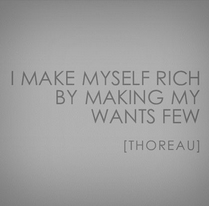
Thoreau_wants Many people — including some economists — often confuse money with wealth. This frequently leads to avoidable errors and bad policies. It is best to take money out of most discussions and focus on wealth, unless of course one is specifically discussing money. Continue reading “Money is the root of all Evil”

The Unbearable Stupidity of Controlling Prices

amazonlogoAn astonishing fact about Amazon, the giant retailer which aims to sell everything to everybody, is that it adjusts its prices over 2.5 million times daily. Let that sink in: two thousand five hundred thousand times a day. Around 100,000 price changes an hour. Granted Amazon has over 250 million SKUs (stock keeping units) on its catalog in the US. (See the data on US and other countries here, as of Aug 2014.) Still, that fact bears witness to what technology can do and what market competition can achieve in terms of economic efficiency.
Continue reading “The Unbearable Stupidity of Controlling Prices”

Notes on GDP, money and wealth

Considering how ubiquitous talk about GDP and growth rates is, it is noteworthy that as a concept it is of fairly recent vintage. The idea of having a measure of the “income” of a country was invented by the American economist Simon Kuznets for use in a US Congressional report in 1934. The “product” part of gross domestic product refers to the production of goods and services. It is an aggregate measure — and hence a macroeconomic measure. It is a measure of the total amount of goods and services that an economy produces. Full disclosure: I am not a macroeconomist and find the subject painfully boring. But here I am only discussing the limited idea of GDP.
Continue reading “Notes on GDP, money and wealth”

Central Planners and Wooden Boards

In my favourite Bruce Lee movie Enter the Dragon (which I have watched at least a dozen times) there’s a very telling scene. Just before a particular fight, Bruce Lee’s opponent, to demonstrate how awesomely tough he is, holds up a wooden board and with one swift punch smashes it to bits. Bruce Lee impassively looks him in the eye and calmly says, “Boards don’t hit back.”
Continue reading “Central Planners and Wooden Boards”

Money, Wealth, The Lion and Albert

Let me tell you a funny story about young Albert and Wallace the lion. The final lines of the poem surprisingly express a profound economic truth which gets too often ignored by government officials. As it happens, we can learn quite a bit if we care to look below the surface of simple tales. So here’s the story.

Continue reading “Money, Wealth, The Lion and Albert”

Happy 101st Birthday, Milton Friedman

Today is the 101st birthday of Prof Milton Friedman (1912 – 2006). His erudition, eloquence and dedicated struggle for human freedom and dignity have helped advance civilization. Here he is on Phil Donohue’s show in 1979. In this 2-minute extract, Donohue asks him about capitalism and greed. The response is classic Friedman — devastating but funny, profound and based entirely on common sense. Happy 101st birthday, Milton Friedman. May your tribe increase. Your eloquence has illuminated the world.