
The recent Princeton University Press book by former Harvard president Derek Bok titled “The Politics of Happiness: What Government Can Learn from the New Research on Well-Being” got some reviewers unhappy, as this article in the Atlanticwire.com reports. I have only read that article and the reviews of the book quoted by the publisher, not the book itself. Here I want to focus on the concept of “Gross National Happiness” which crops up in discussions of this nature. Continue reading “GDP is Not a Measure of Happiness”
Category: Economics
Kaushik Basu: “Words Don’t Feed the Poor”
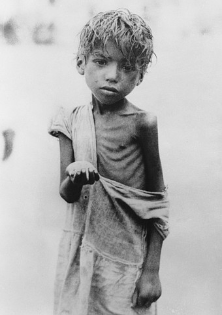 Among economists who can explain economics to anyone even remotely interested in the subject, Prof Kaushik Basu is in a league of his own. Many years ago as a graduate student at Berkeley, I had had the privilege of hosting him for dinner together with Profs deJanvry and Sadoulet. I occasionally re-read his columns to learn how to write. Here I present an extended excerpt from a 1997 India Today column of his. {Click on image for source.} Continue reading “Kaushik Basu: “Words Don’t Feed the Poor””
The Wedge between Mandi and Retail Prices of Vegetables
A item in the Times of India reports on “Retail loot: Mandi prices are a fraction of retail prices. What explains the wedge in prices? Continue reading “The Wedge between Mandi and Retail Prices of Vegetables”
Krugman became an economist because of Science Fiction
Excellent profile of Paul Krugman in the New Yorker by Larrisa MacFarquhar. It is long and interesting. A few excerpts below the fold. This is a must read if you have even a passing interest in economics. Economics is about people and it is done by people. Among contemporary economists, Krugman is as good as they come. Continue reading “Krugman became an economist because of Science Fiction”
Enabling Rural Innovations
Navi Radjou’s blog post titled, “India’s Rural Innovations: Can They Scale?” in harvardbusiness.org concludes with:
I strongly believe that the only way India can sustain its long-term economic growth is by unleashing and harnessing the creativity of its grassroots entrepreneurs, especially in rural areas. But here is the challenge: these grassroots inventions don’t scale up. Indeed, most rural innovation initiatives such as DesiCrew and grassroots inventions like Mitti Cool, however impressive they may be, are sadly limited in their impact to a local or regional market of a few hundred customers, and end up employing no more than a dozen workers in the local community. What is missing is a mechanism to cross-pollinate and scale up these bright ideas among India’s 250-million-strong agricultural community which lives scattered across more than 600,000 villages.
I find the paragraph interesting. Continue reading “Enabling Rural Innovations”
The “$10 Laptop” and Radical Ignorance
The radical ignorance displayed by those who claimed that the government had created a laptop costing Rs 500 (~US $10) is jaw-dropping spectacular. How on earth can one for even one moment entertain the idea that any entity — least of all the government and a bunch of students — could produce something for an order of magnitude less cost than currently possible is unfathomable.
As the photoshopped image in my first post on this matter previously states, “I see stupid people . . . they don’t even know that they are dumb.” And now we note the furious back-peddling. I had noted in the followup post that the claim is that it was a typo. It seems that India’s Minister of State for Higher Education D Purandeswari’s claim that a $10 laptop was a reality was based on a simple typo, a dropped “0”. (H/t: Sudipta)
Continue reading “The “$10 Laptop” and Radical Ignorance”
Michael Heller: The Gridlock Economy

The book, The Gridlock Economy, gets added to the growing pile of stuff to read.
Every so often an idea comes along that transforms our understanding of how the world works. Michael Heller has discovered a market dynamic that no one knew existed. Usually, private ownership creates wealth, but too much ownership has the opposite effect—it creates gridlock. When too many people own pieces of one thing, whether a physical or intellectual resource, cooperation breaks down, wealth disappears, and everybody loses. Heller’s paradox is at the center of The Gridlock Economy. Today’s leading edge of innovation—in high tech, biomedicine, music, film, real estate—requires the assembly of separately owned resources. But gridlock is blocking economic growth all along the wealth creation frontier.
And here’s Heller speaking at Google:
Continue reading “Michael Heller: The Gridlock Economy”
ICT, Choice and Democracy 2.0
Upstream and Downstream Choices
It is fairly well understood that information and communications technologies (ICT) tools expand choice. We all have access to a very large set of information and have the freedom to choose what we want to read, watch, listen to, etc., etc. ICT expands our “downstream” choice. What is not as well understood is that it expands our “upstream” choice also. It is a two-way medium, unlike say broadcast and print media which only allows us downstream choice: using ICT we send back information indicating our choice and thus guiding what comes downstream.
In other words, ICT expands the menu of options we have and also gives us the ability to change that menu. Options that are not exercised fall off the menu and this leads to more efficient outcomes since resources are not wasted on things that people don’t value. All this is trivially true and one can be guilty of stating the obvious except for the fact that we have yet to make full use of the power of upstream choice that ICT affords in scores of areas which would make economic and political freedom more meaningful.
Continue reading “ICT, Choice and Democracy 2.0”
Incentives and Policies
Capturing Externalities
It’s an economics truism that generally people respond to incentives. If you truly and deeply understand that, you know a fundamental truth about the world.
Continue reading “Incentives and Policies”
On Competition and Ideas
The Dance of Creative Destruction
At the shining bright core of our galaxy of ideas lie a bunch of super-massive ideas that are tightly bound to each other. The core’s gravitational attraction holds the galaxy together, draws in stuff and transmutes them into higher elements.

Exploring the metaphor a bit further is interesting. At the center of galaxies dwell huge black holes which destroy both matter and time. And like the great god Shiva — the Mahadeva as Nataraja, the king of dancers, dancing the Tandava, the cosmic dance of creative destruction — the galaxy core produces novelty and thus advances the evolution of the entire galaxy. Black holes, just like Shiva, destroy time. Curiously, the Sanskrit word for time is the same for black: “kala”. The universe evolves because ceaseless change is imposed upon it through the dance of creative destruction.
Evolution. It is hard to escape the gravitational pull of the idea of evolution. The idea goes back into antiquity. But it was only recently (in terms of historical time) in the mid-1800s that Charles Darwin (1809 – 1882) pondered the biological variant of evolution and figured out the mechanism. It was natural selection. That is one of the superstar ideas that populate the core of our ideas galaxy. Everything that is known about biological evolution can be explained through natural selection.
Continue reading “On Competition and Ideas”

