 “I am confused about the correctness of government interference to break monopolies. Sometimes I think this is good. I do believe that a free market without competition is terrible. But if the government starts deciding what a “monopoly” is and what is not, we have just let in a thin wedge that can corrupt free markets beyond any limit. But then, if the government does not break monopolies, who will? Can the free-markets self-correct? Has it ever happened in practice?”[1]
Those are not easy questions to answer in a blog post since the issues involved are many and far from trivial. Volumes have been written on the definition and analysis of the economic concept of monopoly, and experts frequently disagree on what, if any, harm monopolies do, and what should the policy response be.
My thinking has evolved since I first began learning economics. Trained in the neoclassical tradition, I used to think that monopolies were harmful for the economy, and therefore government intervention was required to break them up for economic efficiency and consumer protection. However, the more I studied Austrian economics, the more I realized that monopolies weren’t the great threat to economic health as they were made out to be. Continue reading “On Monopoly”

 Richard Wolff, professor emeritus, is a celebrated Marxist.[1] Being a Marxist is not a crime, although it ought to be considering the suffering, death and destruction that Marxism causes wherever and whenever it is tried.
 Vocabulary
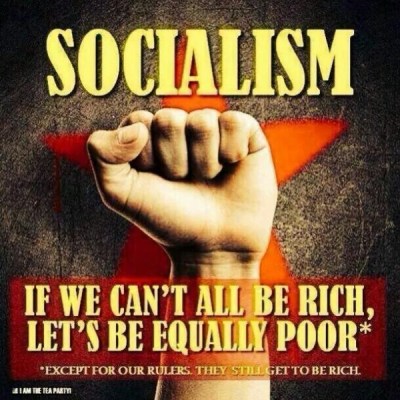 Robert Heilbroner (1919 – 2005) defined socialism as “a centrally planned economy in which the government controls all means of production.”
 Atanu Dey : Life is a Random Draw