
Of Freedom, Markets, and the Future of India

Markets Work, Incentives Matter

The two broadest generalizations one arrives at from a study of economics are that markets work and that incentives matter. People respond to incentives because that is at the core of what it means to be rational. To the extent that humans are rational, their behavior is predictably in the direction that existing incentives point to. Trade between humans is rational because both parties in any voluntary trade benefit. The abstract mechanism which enables trade is called the market. Markets work in the sense that they maximize the gains from trade among an arbitrary number of entities. There are other methods of enforcing trade among people, such as the command and control mechanism often employed by communist governments. But they are at a distinct disadvantage relative to the market because the latter is based on the premise that rational actors respond to incentives.
Continue reading “Of Freedom, Markets, and the Future of India”
Urbanization and Development of India

The following is an article by me that appeared in ISB’s in-house magazine insight June 2008 issue.

There is a definite positive relationship between the size of the habitation and the productivity of the population.”

The full article is below.
Continue reading “Urbanization and Development of India”

Data on Criminals in the Indian Parliament

Anyone familiar with the disastrous state of India should not be overly surprised to learn that the Indian parliament has an overwhelmingly greater percentage of criminals than the general population. How effectively a nation functions and how successful it is depends on its leaders who make public policy and thus critically determine the outcome. India’s failure to develop and achieve its potential is proof positive that its leadership is lacking.

Underdevelopment, poverty, and all other ills that plague India are an unavoidable consequence of poor public policies and choices.
Continue reading “Data on Criminals in the Indian Parliament”

The Price of Oil and the Wages of Stupidity

I have argued in the past that India is poor by choice — not by necessity, nor by a heavenly compulsion, or a divine thrusting upon, or an enforced obedience of planetary influences [1].

“Of course, that does not mean that every poor Indian has chosen to be poor. Someone else in a position of power made choices whose consequences are evident. India’s leaders – past and present – have consistently made choices that have had, and are having, a disastrous effect on the lives of hundreds of millions of human beings.” [From a post made in June five years ago.]
Continue reading “The Price of Oil and the Wages of Stupidity”

Begging for a World Class University — Part 2

This is a follow up to the previous post, “Begging for a World Class University.” In this I will address two responses to the post: one, the comment left by Aditya, and two, a post by Pramode titled “A Question (or two) for Atanu“.
Continue reading “Begging for a World Class University — Part 2”

Begging for a World Class University

Consider this scenario. Someone you know imprisons his grown up children and does not allow them to go out and do jobs that they are fully capable of doing. He also locks up his productive assets and prevents his children from using them. Then he goes around begging his neighbors for help with feeding his family as he does not have any income. The words that spring to mind upon considering this man’s behavior are words like contemptible, immoral, stupid, pathetic, pitiable, and sad.
Continue reading “Begging for a World Class University”

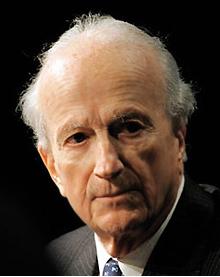
Gary Becker on Human Capital

From the Chicago Graduate School of Business magazine a brief talk with Gary Becker, “one of the first economists to study topics traditionally considered the purview of sociologists including racial discrimination, crime, family organization, and drug addiction. His work on those subjects earned him the Nobel Prize in economic sciences in 1992.”

Becker is big on human capital. He talks about the importance of human capital in organizations. Economists consider human capital to be critical to development of economies. Education is therefore directly implicated in development. Here are a few quotes from Becker. (The Becker-Posner blog is worth reading.) Continue reading “Gary Becker on Human Capital”

Global Poverty and the Cell Phone

A magazine article in the New York Times of April 13th has the rather mistaken and misleading title “Can the Cell Phone End Global Poverty?” (Hat tip: Abhishek Sarda). The article title is misleading because it doesn’t even remotely attempt to answer that question. It is instead about what is called a “human-behavior researcher” or “user anthropologist,” in this case someone who works for Nokia and essentially tries to figure out how people actually use their phones and thus how phone companies should design phones for greater usability.
Continue reading “Global Poverty and the Cell Phone”

Dr Adam Smith, I presume

The other day I sat down to have a conversation with the spirit of Dr Adam Smith (1723-1790), professor of moral philosophy at the University of Glasgow and Fellow of the Royal Society of London and Edinburgh. A stellar observer of the human condition, his book, “An Inquiry into the Nature and Causes of the Wealth of Nations,” was published in the same year, 1776, as the Declaration of Independence of the United States. Opinion is divided on which of the two events is of greater importance for the subsequent evolution of the world we live in.

What follows is a rough transcript of our talk.
Continue reading “Dr Adam Smith, I presume”

India Spends $13,000,000,000 on Education Abroad

That’s what a report in the Hindustan Times claims: US $13 billion each year. Figures such as these are unbelievable but I suppose someone must have done the numbers. In any case, I had estimated that number to be around $10 billion a few years ago.

Let’s pause for a moment and figure. $13 billion every year. Or in the last 10 years, about $100 billion. Imagine what you could buy for that money. How about 100 colleges with first class infrastructure with housing, classrooms, labs? Each year India could have an additional capacity for 10,000 college students and in 10 years you could have 100,000 additional capacity. Imagine the multiplier effect of that spending — in construction, in salaries to teaching and non-teaching staff. Imagine the boost to the industry from creating human capital. The imagination boggles at the sheer waste.

Imagine how much infrastructure you could build for $100 billion.

One of the principal lessons one learns as one studies economic development is that success or failure depends largely on the set of economic policies that govern the economy. India, for instance, is poor and economically a failure because its economic policies are extremely brain-dead. Of course one can explain why these brain-dead economic policies exist. We will not visit that now. Here I would only mention that the policy on education is the most brain-dead and that educational policy is largely to blame for why India is poor today, and if the policy is not changed, then it will certainly doom India in the future.
Continue reading “India Spends $13,000,000,000 on Education Abroad”